
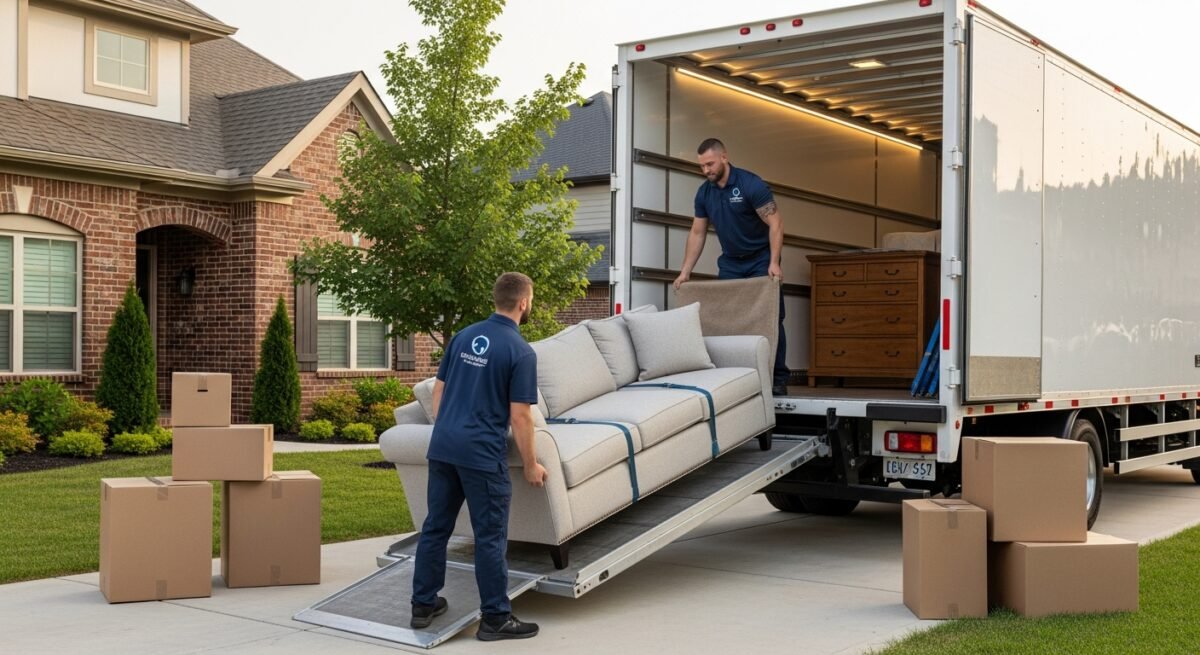
How to Choose the Best Interstate Moving Companies
Learn the key criteria for selecting reliable interstate moving companies to ensure a smooth, stress-free cross-country relocation. Protect your belongings and budget with expert insights.

By Author 1
Moving across state lines is a monumental task, one that involves more than just packing boxes and renting a truck. It is a complex logistical operation that requires careful planning, trust in your service providers, and a significant financial investment. The stakes are high, as your entire household’s worth of possessions will be traveling hundreds or thousands of miles. Choosing the right partner for this journey is the single most important decision you will make in your relocation process. The best interstate moving companies distinguish themselves not just through competitive pricing, but through a proven track record of reliability, transparency, and customer care that transforms a potentially stressful experience into a smooth transition.
Defining Excellence in Interstate Moving
What separates a good moving company from a truly great one in the context of a long-distance move? The criteria extend far beyond a simple quote. Excellence is built on a foundation of licensing, insurance, and a commitment to professional standards. For interstate moves, federal regulations come into play. Reputable companies must have a USDOT number issued by the Federal Motor Carrier Safety Administration (FMCSA). This number is your key to verifying their safety record, insurance status, and complaint history through the FMCSA’s online database. It is non-negotiable. Beyond this baseline, the best interstate movers invest heavily in training their crews, maintaining a modern fleet of trucks equipped for long hauls, and developing robust tracking systems so you know where your belongings are at all times.
Transparency is another critical pillar. The moving industry has, unfortunately, been plagued by stories of low-ball estimates that balloon into final bills three times the original quote. The top-tier companies avoid this practice entirely. They provide binding estimates, or at the very least, binding not-to-exceed estimates, which guarantee the final cost will not be higher than the quoted price (provided the inventory list does not change). They take the time to conduct thorough in-home or virtual surveys, cataloging every item to be moved. This meticulous approach allows them to provide an accurate estimate and demonstrates a professional respect for both your belongings and your budget. When evaluating companies, look for this detailed survey process as a positive indicator of their operational integrity.
The Critical Evaluation Process
Your search for the best interstate moving company should be methodical. Start by gathering recommendations from trusted sources, such as friends, family, or real estate agents who have recently managed a cross-country move. Online review platforms like the Better Business Bureau (BBB), Google Reviews, and Trustpilot offer valuable insights into customer experiences over time. Pay attention not just to star ratings, but to the content of the reviews. Look for patterns: are there consistent complaints about damaged items, communication breakdowns, or hidden fees? Conversely, are there repeated praises for careful handling, proactive updates, and problem-solving attitudes? This qualitative data is often more revealing than a numerical score alone.
Once you have a shortlist of three to five potential movers, initiate the quote process. Be wary of any company that offers a firm quote over the phone or email without seeing your inventory. A professional estimator will want to conduct a visual survey. Prepare for this survey by having all items accessible and being ready to discuss any special handling requirements, such as for pianos, artwork, or antique furniture. During the survey, ask pointed questions. Inquire about their dispute resolution process, their policy on delays, and the specifics of their valuation coverage (released value vs. full value protection). The estimator’s knowledge and willingness to answer these questions thoroughly is a strong signal of the company’s overall customer service ethos. After receiving written estimates, compare them line by line. The cheapest option is rarely the best when it comes to protecting your life’s belongings. Consider the value of peace of mind, which often comes with a moderately higher price tag from a more reputable firm.
Understanding Services and Pricing Models
Interstate moving companies typically offer a range of service levels, and understanding these is key to selecting the right one for your needs and budget. The primary model is full-service moving, where the company handles everything from packing your home (with materials they supply) to loading, transportation, unloading, and even unpacking and debris removal at your new home. This is the most comprehensive and, consequently, the most expensive option, but it maximizes convenience and minimizes your physical labor. Another popular model is you-pack, they-drive, often offered through portable storage containers or trailer services. You load a container at your pace, the company transports it, and you unload it at destination. This can offer flexibility and potential cost savings.
Pricing for interstate moves is primarily based on weight and distance. The final cost is calculated by multiplying the total weight of your shipment (in pounds) by the rate per pound per mile, plus any accessorial services. This is why the in-home survey is so important for an accurate estimate. Be sure you understand what is and is not included in the base quote. Common additional charges, or accessorial fees, can include:
- Long carry fees: If the movers cannot park within a certain distance of your door.
- Stair carry fees: For apartments or homes without elevator access.
- Shuttle service: If a large truck cannot access your home and a smaller shuttle truck is needed.
- Storage-in-transit: If there is a gap between your move-out and move-in dates.
- Special handling: For items like pianos, pool tables, or large safes.
A trustworthy company will explain these potential fees during the estimate. To reduce moving stress and ensure the safe transport of your most valuable belongings, partnering with experienced professional moving services is a worthwhile investment. Their expertise in navigating these complex pricing structures and physical challenges is invaluable.
Red Flags and How to Protect Yourself
While most moving companies operate ethically, it is crucial to be aware of common red flags that signal a potentially problematic mover. The most glaring warning sign is a demand for a large cash deposit or full payment upfront before loading. Legitimate interstate movers typically require payment upon delivery, not before. Other major red flags include a company that does not have a physical address or local warehouse, uses rental trucks instead of their own branded fleet, or is reluctant to provide their USDOT number and proof of insurance. Be extremely cautious of estimates that seem too good to be true, as they often are, and are used as bait to secure a booking before hitting customers with massive hidden fees later.
Protecting yourself starts with documentation. Before moving day, you will receive a packet of documents from your chosen mover, most importantly the Bill of Lading. This is the legal contract for your move. Read it carefully before signing. It should detail the pickup and delivery dates, the agreed-upon pricing method, the mover’s liability for your goods, and all other terms. On loading day, the crew chief will create an inventory sheet listing every item and its condition. Do not sign this until you have reviewed it thoroughly and noted any pre-existing damage on the sheet itself. Take photos or video of high-value items before they are packed. On delivery day, inspect your items as they come off the truck. If anything is damaged, note it clearly on the inventory sheet before you sign the receipt. This documentation is essential for filing any subsequent claim.
Preparing for a Seamless Long-Distance Move
Your preparation in the weeks leading up to the move plays a huge role in its success. Begin by decluttering aggressively. The cost of your move is directly tied to weight, so selling, donating, or discarding items you no longer need is one of the most effective ways to save money. Create a “first-night” box containing essentials like toiletries, medications, a change of clothes, phone chargers, pet food, and basic kitchen supplies. This box should travel with you in your personal vehicle, not on the moving truck. Clearly label all boxes with the room they belong in and a brief description of contents. For extra important boxes, use a unique color or symbol.
Communication with your moving company is vital in the final days. Confirm the scheduled pickup window and the estimated delivery date range. Provide clear, detailed directions and parking instructions for both your old and new homes. If there are any changes to your inventory (adding or removing items), inform your moving coordinator immediately, as this can affect the cost and truck space. Finally, plan your own travel thoughtfully. If you are driving to your new state, build in buffer time. If you are flying, ensure your travel dates align with the moving truck’s estimated delivery window. Having a flexible plan for your first few days in the new home, in case of minor delays, will help manage expectations and reduce anxiety.
Frequently Asked Questions
How far in advance should I book an interstate mover? For peak moving season (May through September), you should aim to book at least 8 to 12 weeks in advance. For off-peak moves, 4 to 6 weeks is usually sufficient. Booking early ensures you get your preferred date and allows time for thorough planning.
What is the difference between released value and full value protection? Released value protection is the basic, no-cost option required by law. It provides minimal coverage, typically 60 cents per pound per article. Full value protection is supplemental insurance that covers the actual cash value or replacement cost of any lost or damaged items. There is an additional cost, but it offers far greater financial protection for your belongings.
Can I pack my own boxes for an interstate move? Yes, most companies allow you to pack your own boxes (often referred to as a “PBO” or Packed By Owner” shipment). However, be aware that the mover’s liability for items you pack may be limited. They are also not responsible for damage caused by improper packing or fragile items packed in cartons. If you choose this route, use high-quality boxes, pack securely, and label everything clearly.
What happens if my new home is not ready when the moving truck arrives? This is a common scenario. Most interstate moving companies offer storage-in-transit (SIT) services. Your belongings can be placed in a secure warehouse until your new home is ready for delivery. There is a daily or weekly fee for this service, and it must be arranged in advance. Discuss this possibility with your mover during the planning stage.
How are moving delays handled? The Bill of Lading will specify agreed-upon pickup and delivery dates. While reputable movers strive to meet these, factors like weather, mechanical issues, or logistical complications can cause delays. A good company will communicate proactively about any delays. If a delay is excessive and causes you financial harm (e.g., hotel costs), you may have recourse depending on the terms of your contract and the reason for the delay.
Selecting one of the best interstate moving companies is an investment in a successful relocation. It requires diligent research, clear communication, and an understanding of the process. By focusing on companies with solid credentials, transparent practices, and a culture of customer service, you empower yourself to make an informed choice. This decision lays the groundwork for a move that is not merely a transfer of possessions, but a positive first step in your new chapter. The right mover acts as a reliable partner, handling the heavy logistics so you can focus on the excitement of a new beginning.