
How to Choose a Moving Company for Fragile Antiques
Learn the critical steps to select a specialist moving company for fragile antiques, ensuring the safe transport of your valuable heirlooms with professional packing and insurance.

By Amanda Lewis
Moving a household is a significant undertaking, but relocating a collection of fragile antiques elevates the challenge to an entirely different level. These are not merely objects, they are pieces of history, art, and personal legacy. The thought of a beloved grandfather clock, a delicate porcelain vase, or a centuries-old wooden desk being jostled in the back of a standard moving truck is enough to cause genuine anxiety. The stakes are high, and the margin for error is virtually zero. This is why selecting the right moving partner is not just a matter of convenience, it is an essential act of preservation. The process requires moving beyond standard moving company checklists and seeking specialists who understand the unique demands of high-value, delicate items. This guide will walk you through the critical steps to identify, vet, and partner with a professional moving company for fragile antiques, ensuring your treasures arrive at their new home in the same condition they left.
Understanding the Specialized Nature of Antique Moving
Standard residential movers are experts in efficiently transporting furniture and boxes from point A to point B. A moving company for fragile antiques, however, operates in a different realm. Their expertise is not just in transportation, but in conservation-grade handling. They view each item through the lens of its material composition, age, structural vulnerabilities, and intrinsic value. For instance, wood reacts to humidity and temperature changes, which can cause cracking or warping. Gilded finishes are susceptible to flaking. Upholstered antique furniture may have fragile fabrics and stuffing that require special wrapping to avoid tears and compression. A true specialist understands these material sciences and plans the entire move, from packing materials to transit environment, around them. This foundational knowledge is the first and most critical filter in your search, separating general movers from true custodians of your collection.
The Essential Vetting Process for Your Antique Mover
Once you understand the need for specialization, the next step is a rigorous vetting process. This due diligence is your primary defense against damage and loss. Start by verifying credentials. The company should be fully licensed and insured, but for antiques, standard released value protection is often insufficient. Inquire explicitly about specialized insurance options for high-value articles. They should be able to provide a certificate of insurance and explain the claims process in detail. Next, investigate their experience. How long have they been handling antiques specifically? Can they provide references from previous clients with similar collections, such as art collectors, museums, or galleries? A reputable moving company for fragile antiques will be transparent and eager to share this information.
A pivotal part of vetting is the on-site survey. Never accept a quote for moving antiques over the phone or via a virtual survey. A qualified representative must visit your home to inspect each piece. During this survey, observe their process. Do they examine items closely, noting existing condition flaws on a detailed inventory? Do they ask informed questions about the pieces’ history or materials? Do they discuss specific packing and crating techniques for different items? This interaction is a telling preview of their care and expertise. Furthermore, understanding how to interpret a company’s reputation is crucial. In our guide on how to read and trust moving company reviews, we explain how to look beyond star ratings for detailed mentions of antique handling, communication, and problem resolution.
Specialized Packing and Crating: The Cornerstone of Safety
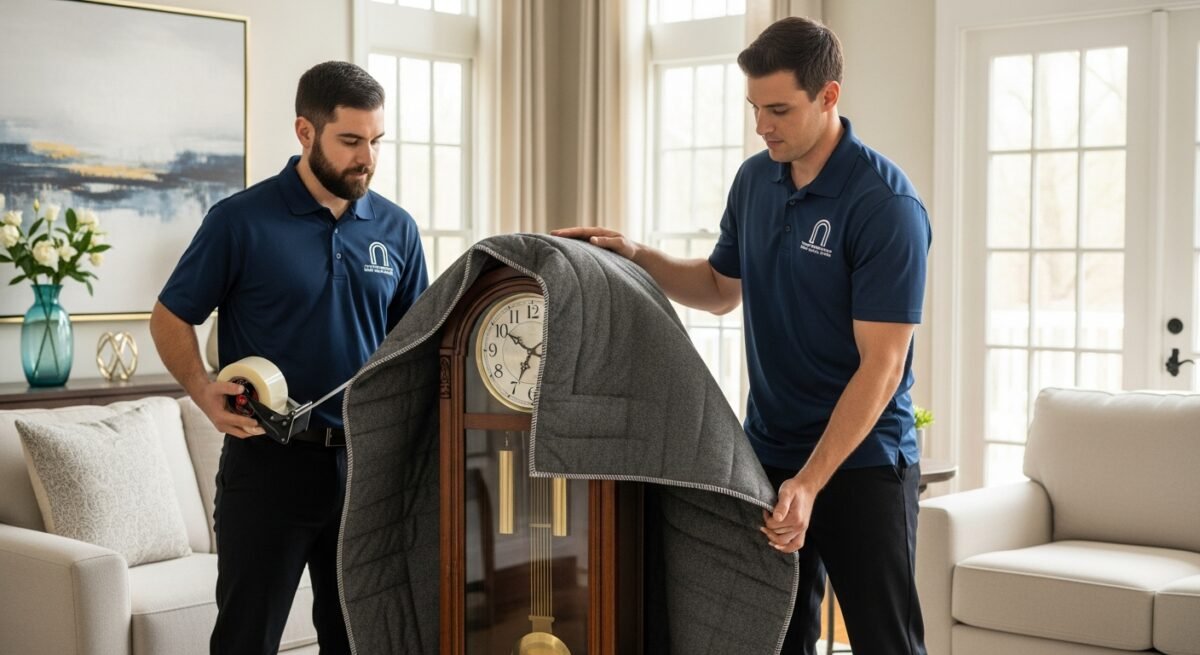
Packing is where the theoretical expertise of a moving company for fragile antiques becomes physical practice. This is not a task for bubble wrap and cardboard boxes from a big-box store. Professional antique movers use a suite of museum-grade materials and techniques. For example, glass fronts on cabinets are often protected with a special adhesive film that holds shattered glass in place if impact occurs. Furniture is wrapped in quilted cotton moving pads, then often in a layer of plastic shrink wrap to protect against moisture and dust, never in abrasive materials. Mirrors and framed art are placed in custom-built cardboard or wooden picture packs with corner protection.
The most critical technique for extremely fragile, high-value, or oddly shaped items is custom crating. A craftsman-built wooden crate is designed to suspend an item within its structure, isolating it from any external shock or pressure. The interior is lined with foam that is custom-cut to cradle the item’s exact contours. This crate is then securely strapped within the moving truck, ensuring it does not shift during transit. The following list outlines key packing materials and methods you should expect a specialist to use:
- Custom Wooden Crating: Built-to-order for sculptures, marble tops, and extremely delicate furniture.
- Acid-Free Tissue and Paper: Used to wrap fine porcelain, silver, and textiles to prevent chemical reactions.
- Climate-Controlled Transit: For items sensitive to humidity and temperature, like certain woods or paintings.
- Furniture Blankets and Padding: High-quality, soft cotton or padded blankets to prevent scratches and dents.
- Specialized Dollies and Lifting Equipment: To safely navigate staircases and tight spaces without tilting or dropping items.
Understanding these methods allows you to have an informed conversation with potential movers and assess whether their proposed approach meets the needs of your collection.
Logistics and Transportation for Delicate Items
The journey itself requires meticulous planning. A specialist moving company for fragile antiques will often schedule your move on a dedicated truck, meaning your belongings are the only cargo. This eliminates the risk of damage from other clients’ items shifting during transit. The loading process is methodical. Heavier, sturdier items form the base of the load, while fragile pieces are strategically placed and secured with specialized straps and load bars to prevent any movement. For long-distance or interstate moves, inquire about the truck’s suspension system and whether they use air-ride vans. Air-ride suspension significantly cushions the cargo from road vibrations and bumps, a critical feature for delicate joinery and finishes.
Timing is also a factor. If possible, avoid moving during extreme weather conditions, be it summer heat or winter cold, which can affect the truck’s internal environment. A professional will discuss these logistics with you and may recommend a climate-controlled trailer if your route or move date presents environmental risks. The goal is to control every variable possible, transforming a potentially hazardous journey into a secure, monitored transit.
Cost Considerations and Valuation Protection
Moving fragile antiques is an investment. Costs will be significantly higher than a standard move due to the labor-intensive packing, specialized materials, dedicated transportation, and high-level insurance. It is vital to get detailed, written estimates from at least three specialist companies. This estimate should break down costs for packing, crating, transportation, and insurance. Be wary of estimates that seem too good to be true, they often indicate a lack of proper specialization or insurance. When budgeting, view this cost not as an expense, but as a premium for risk mitigation and peace of mind. Protecting a priceless heirloom is worth the professional fee. To begin comparing costs from qualified providers, you can get a free moving quote to understand the market rate for these specialized services.
Valuation protection is arguably the most important financial aspect. Standard moving insurance typically covers only a minimal amount per pound (e.g., $0.60 per pound), which is meaningless for a 10-pound vase worth $10,000. You must purchase full value protection or a separate declared value policy for your antiques. This requires providing appraisals, receipts, or professional valuations for your high-value items. The mover will charge a premium for this coverage, but it guarantees that in the unlikely event of damage, you will be compensated for the item’s actual appraised value or the cost of professional restoration.
Pre-Move Preparation: Your Role as the Client
Even when hiring the best moving company for fragile antiques, your preparation is crucial. Begin by creating a detailed inventory. Photograph each antique from multiple angles in good lighting, capturing any pre-existing flaws. Gather any appraisals, provenance documents, or conservation reports. This documentation is essential for insurance and establishes the pre-move condition. Next, decide what absolutely must be moved by the professionals. Some items, like very small, extremely precious jewelry or irreplaceable documents, may be better transported personally. Clear a path in your home. Ensure hallways, staircases, and doorways are free of obstructions to give the movers safe, easy access. This minimizes the risk of accidents during carrying. Communicate clearly with the moving team on move day. Point out items of particular concern and ensure they have access to the inventory and condition notes.
Frequently Asked Questions
Q: How far in advance should I book a mover for my antiques?
A: For a specialist moving company for fragile antiques, book as soon as you have a firm move date, ideally 8-12 weeks in advance. Their schedules fill quickly due to the time-intensive nature of their work.
Q: Should I clean my antiques before the move?
A: No. Do not apply polishes, oils, or cleaners immediately before moving. Some products can make surfaces slippery or require time to cure, making items harder to handle. Leave cleaning to after the move, unless you have specific conservation advice.
Q: What if an antique is too large or fragile to move out of the house intact?
A: Professional antique movers are often skilled in partial disassembly (removing legs, tops, or mirrors) and reassembly. For items that truly cannot exit, they work with conservators to explore safe options, which is a key reason for the essential in-home survey.
Q: Who is responsible for unpacking and placement?
A: Many full-service antique movers offer unpacking and placement services. This is highly recommended, as they will carefully remove the professional packing, reassemble items, and position them in your new home, providing a true white-glove experience.
Q: What happens if something is damaged?
A: Immediately note any damage on the mover’s copy of the inventory sheet before signing. Take photographs. Then, file a claim with the moving company according to their stated process, providing your pre-move photos and appraisal documents. A reputable company will have a clear claims procedure.
Entrusting your fragile antiques to a moving company is a profound act of trust. By focusing your search on true specialists, conducting thorough vetting, understanding the processes of packing and transportation, and securing proper valuation, you transform a nerve-wracking ordeal into a managed, professional operation. The right moving company for fragile antiques acts not as a mere transporter, but as a partner in preservation, ensuring that your cherished pieces continue their story safely in your new home for generations to come.