
How to Choose a Fragile Item Moving Service for Your Valuables
A specialized fragile item moving service uses custom crating, professional packing, and expert handling to ensure your valuables arrive safely. Learn how to choose the right provider.

By Lisa Anderson
Moving is inherently stressful, but the anxiety multiplies when you have to transport irreplaceable, delicate, or high-value items. A single misstep with a family heirloom, a prized art piece, or a delicate electronics setup can lead to heartbreak and significant financial loss. This is where generic moving services fall short, and the specialized expertise of a dedicated fragile item moving service becomes not just a luxury, but a necessity. These services transform a high-risk logistical challenge into a secure, managed process, providing peace of mind that your most treasured possessions will arrive at your new home in the same condition they left.
What Defines a True Fragile Item Moving Service?
Not every company that offers to wrap your china qualifies as a specialized fragile item mover. A genuine service in this niche is defined by a specific mindset, training, and toolkit. The core philosophy shifts from simple transportation to conservation-grade handling. The team views each item not as a box to be moved, but as a unique object with specific vulnerabilities, whether they are structural (like a marble sculpture), surface-based (like a polished grand piano), or internal (like the delicate components of a high-end stereo system). This approach dictates every subsequent action, from the initial assessment to the final placement in your new home.
The distinction lies in proactive prevention versus reactive insurance. While standard movers might rely on basic padding and hope for the best, a specialized service anticipates the forces of a move, such as vibration, sudden shifts, changes in humidity and temperature, and potential impacts. They employ techniques and materials designed to counteract these forces directly. This often involves custom-crating, where a protective wooden shell is built to the exact dimensions of the item, isolating it from shocks. It includes the use of archival-quality packing materials that won’t off-gas or damage sensitive surfaces, and specialized equipment like piano boards, glass-panel carriers, and air-ride suspension vehicles that absorb road vibrations.
The Critical Process: From Assessment to Delivery
Engaging a fragile item moving service is a collaborative process that begins long before moving day. It starts with a detailed in-home consultation. A specialist will walk through your home with you to identify every item requiring special care. This is the time to point out not just the obvious items like artwork and crystal, but also collectibles, musical instruments, sensitive electronics, antique furniture, and even large plants. The consultant will assess each piece’s size, weight, material, existing condition, and specific points of weakness. This assessment forms the basis for a customized plan and a transparent, binding quote.
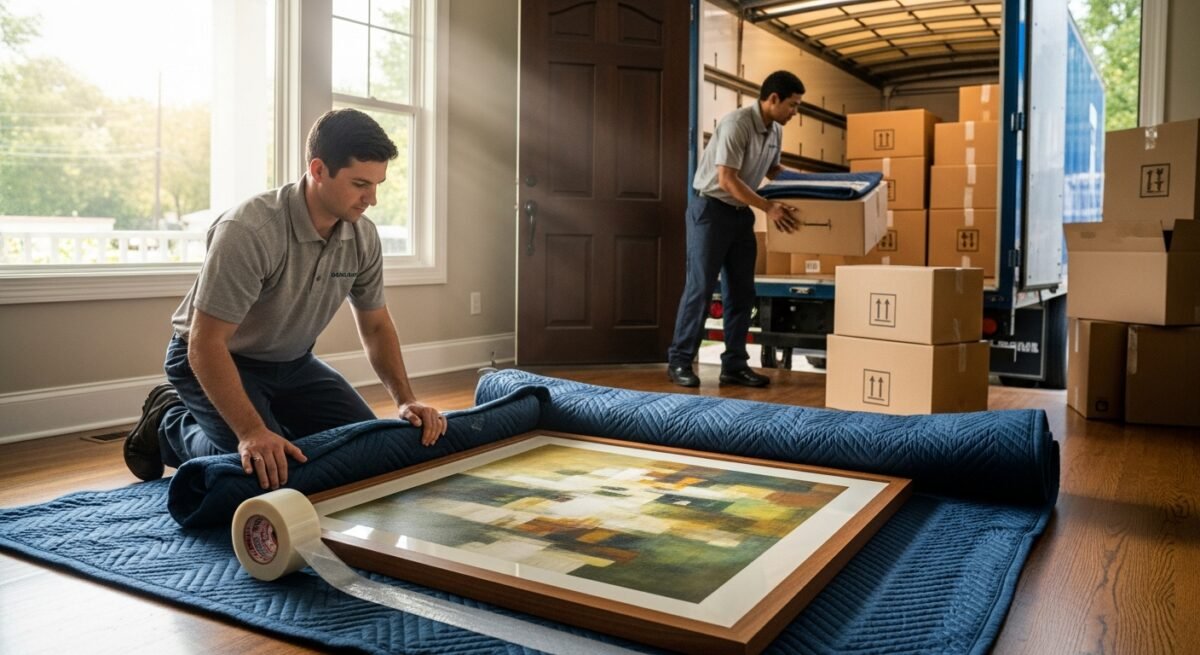
Following the assessment, the pre-packing and packing phase begins. This is where expertise shines. Professionals use a layered approach, often starting with a soft, non-abrasive inner wrap, followed by cushioning materials like foam sheeting or bubble wrap (with the bubbles facing outward to avoid impressions on delicate surfaces), and finally a rigid outer structure. For extreme fragility, items are immobilized within their custom crate using foam-in-place systems that expand to fill every void, cradling the object securely. Each crate is clearly labeled with its contents, orientation arrows, and specific handling instructions.
The transportation phase utilizes dedicated vehicles and careful logistics. High-value fragile shipments are often transported separately from general household goods to minimize handling points and risk. Vehicles may be equipped with climate control to protect items sensitive to temperature or humidity swings, and air-ride suspension to provide a smoother ride. The loading process is methodical, with crates and items secured using straps and load bars to prevent any movement during transit. For interstate moves, real-time tracking is often provided. Upon delivery, the white-glove service completes the cycle. Technicians will not only bring the items into your home but also unpack them, assemble them if necessary (like a disassembled chandelier), and place them precisely where you want them, removing all packing materials.
Items That Demand Specialized Moving Services
Understanding what constitutes a “fragile” item in a moving context is key. It extends beyond what might shatter. Here is a breakdown of common categories that necessitate a fragile item moving service.
- Fine Art & Sculptures: Paintings (canvas and frame are vulnerable), works on paper, photographs, and sculptures of any material require climate control, absolute protection from punctures and pressure, and often custom crating.
- Grand & Upright Pianos: These are heavy, complex instruments with thousands of delicate internal parts sensitive to bumps and climate changes. They require specific tools (piano boards, skids) and techniques to prevent damage to the legs, lid, and internal mechanisms.
- Antique & Heirloom Furniture: Veneers, inlays, fragile legs, marble tops, and old joinery are easily damaged. Proper disassembly, padding, and support are crucial.
- Crystal, China & Glassware: Stemware, dinner services, and decorative glass require individual wrapping, partitioned boxes, and generous cushioning to prevent contact and vibration damage.
- Electronics & Home Theaters: Large-screen TVs, premium speakers, turntables, and component systems need anti-static packing, original packaging when possible, and careful securing to prevent jostling of internal components.
- Musical Instruments: From violins to drum kits, instruments are calibrated for specific tensions and climates. They often need humidity-controlled environments and hard-shell cases.
- Scientific & Medical Equipment: Microscopes, dental chairs, or other precision instruments require technical knowledge for safe disassembly and transport.
Evaluating and Choosing the Right Service Provider
Selecting a company to entrust with your priceless items requires diligent vetting. Start by verifying essential credentials: a valid Department of Transportation (DOT) number for interstate moves, and proof of insurance. Crucially, ask about their valuation coverage or declared value program specifically for high-value items. Standard mover’s insurance (released value protection) offers minimal compensation, often just cents per pound. You need full-value protection or a separate policy for fragile items. Any reputable professional moving services company will be transparent about these options and provide documentation.
Experience is paramount. Ask for references or case studies related to items similar to yours. How many grand pianos did they move last year? Do they have experience with large-scale artwork? Inquire about their team’s training. Are packers and movers trained in specific fragile handling protocols, or is it on-the-job learning? During the estimate, observe their attention to detail. Do they ask probing questions about the items, or do they give a quick glance and a generic price? A trustworthy estimator will take notes, measurements, and photographs to build an accurate plan.
Finally, review the contract meticulously. It should detail every service included in the quoted price: the consultation, all packing materials (specify custom crating if needed), specialized equipment, transportation method, white-glove delivery, and unpacking. It should clearly state the insurance valuation you have selected and the claims process. Beware of lowball estimates that seem too good to be true, as they often lead to hidden fees or corner-cutting on materials and care. For urgent relocations involving delicate items, the principles of careful planning still apply, though expedited, as outlined in our resource on emergency same day moving services.
Cost Factors and Investment Considerations
The cost of a fragile item moving service is understandably higher than standard moving, reflecting the labor, materials, and expertise involved. It is an investment in security. Several primary factors influence the final price. The most significant is the item itself: its size, weight, fragility, and the need for custom crating. A large painting needing a custom-built crate will cost more than a box of individually wrapped stemware. Distance is another major factor, with long-distance moves incurring higher transportation costs. The level of service you choose, such as full packing and unpacking versus you packing under guidance, also affects the price.
While the upfront cost is higher, it must be weighed against the potential cost of damage. Repairing a cracked marble tabletop, restoring a scratched painting, or recalibrating a grand piano can far exceed the premium paid for specialized moving. Furthermore, for items of sentimental value that are irreplaceable, the cost is about preserving memories and heritage, not just material value. When budgeting, get at least three detailed, in-home estimates from reputable specialists. This allows for comparison not just of price, but of the scope of services and the professionalism of each company’s approach.
Frequently Asked Questions
Q: Can’t I just pack my fragile items myself to save money?
A: You can pack some items, but for high-value or extremely delicate pieces, professional packing is strongly advised. Specialists have the correct materials and techniques you likely don’t have access to, and their work may be required to validate the insurance coverage. Improper packing is a leading cause of damage.
Q: How far in advance should I book a fragile item moving service?
A> As far in advance as possible, especially during peak moving seasons (summer, weekends, end of month). For complex moves with many high-value items, booking 6-8 weeks ahead is prudent to secure your date and allow time for custom crate fabrication if needed.
Q: What happens if something gets damaged during the move?
A> The process should be clearly outlined in your contract. Immediately note any damage on the mover’s inventory sheet before signing the delivery receipt. Then, file a claim in writing with the moving company as soon as possible, providing photos and documentation. This is why understanding your valuation coverage before the move is critical.
Q: Do movers disconnect and reconnect electronics?
A> A full-service fragile item mover specializing in electronics will often handle disconnection, packing, transport, and reconnection. However, this is a specific service that must be confirmed during the estimate. They typically will not repair in-wall wiring or complex home theater setups that require a licensed electrician or AV technician.
Q: Are there items a moving company will not transport?
A> Yes. Most movers, by law, cannot transport hazardous materials like aerosols, chemicals, or propane tanks. They also typically will not move perishable food, live plants (over long distances), or extremely high-value items like jewelry, cash, or important documents unless under a specific, separate high-security shipment. These items should travel with you personally.
Choosing a dedicated fragile item moving service is a decision that prioritizes care over convenience, and preservation over speed. It acknowledges that some possessions carry value that transcends their physical form. By understanding what these services offer, how they operate, and how to select a qualified provider, you empower yourself to make an informed choice. The result is more than just a successful move, it is the profound confidence that comes from knowing your treasures are handled with the respect and expertise they deserve, allowing you to focus on the excitement of beginning a new chapter in your home.