
How Tiny House Movers Relocate Small Homes Safely
Professional tiny house movers use specialized equipment and permits to safely relocate small homes. Understanding the process is key to a stress-free move.

By Kevin Morris
Imagine your entire home, complete with your bed, kitchen, and cherished belongings, being gently lifted onto a trailer and driven down the highway. For the growing community of tiny house dwellers, this isn’t a fantasy, it’s a practical reality of their chosen lifestyle. The ability to relocate a tiny house is one of its most appealing features, offering freedom and flexibility that traditional homeownership cannot. However, the process of moving a small home is a complex logistical operation that requires specialized knowledge, equipment, and planning. It’s a task far removed from a standard residential move and sits in a unique category between moving a mobile home and transporting an oversized load. Understanding how tiny house movers operate is crucial for any current or prospective tiny homeowner looking to harness the true mobility of their compact dwelling.
The Specialized World of Tiny House Moving Services
Tiny house movers are not your average moving company. While a standard mover handles boxes and furniture, a tiny house mover is responsible for the entire structure itself. This requires a different set of skills, licenses, and equipment. These professionals specialize in understanding the unique stresses placed on a small home during transit, from wind resistance on the highway to the vibrations and jolts of uneven roads. They must be adept at securing the structure to a trailer in a way that prevents shifting, which could cause catastrophic structural damage. Furthermore, they navigate the complex web of state and local regulations governing the transport of oversized loads, which a tiny house almost always qualifies as. Permits, escort vehicles, and travel restrictions are all part of their daily workflow. Hiring experienced tiny home moving services is the single most important decision a homeowner can make to ensure a safe and legal relocation.
Critical Pre-Move Preparation and Planning
Long before the moving truck arrives, a significant amount of preparation must occur. This phase is collaborative, involving both the homeowner and the moving company. The first step is a thorough assessment of the tiny house itself. The mover will need to know its exact dimensions (height, width, length, and weight), its point of balance (axle placement), and the location of any vulnerable protrusions like lofts, roof overhangs, or porches. They will also inspect the structural integrity of the frame, trailer, and hitch system. For the homeowner, interior preparation is paramount. Every single item inside the home must be securely packed, fastened, or removed. Imagine the force of a sudden stop, everything not secured becomes a projectile. This goes far beyond bubble wrap, it involves creating a rigid interior where nothing can move.
Here is a critical pre-move checklist for tiny homeowners:
- Secure All Furniture and Appliances: Use ratchet straps, blocking, or braces to anchor large items like refrigerators, cabinets, and beds directly to the wall studs or floor.
- Empty and Secure All Cabinets and Drawers: Remove all contents and either tape drawers shut or remove them entirely. Cabinet doors should be latched or taped closed.
- Protect Windows and Glass Surfaces: Apply protective film to windows and glass doors to prevent shattering from road vibrations or flying debris.
- Disconnect All Utilities: Ensure the home is fully disconnected from water, sewer, electricity, and gas lines. Drain all water lines and holding tanks to reduce weight and prevent freezing or sloshing.
- Document the Condition: Take extensive photos and videos of the home’s interior and exterior from all angles to document its pre-move condition.
This level of detail mitigates risk and prepares the structure for the journey. For those feeling overwhelmed by this process, enlisting professional moving services that offer packing and securing as part of their package can significantly reduce moving stress and ensure nothing is overlooked.
The Logistics and Equipment of the Actual Move
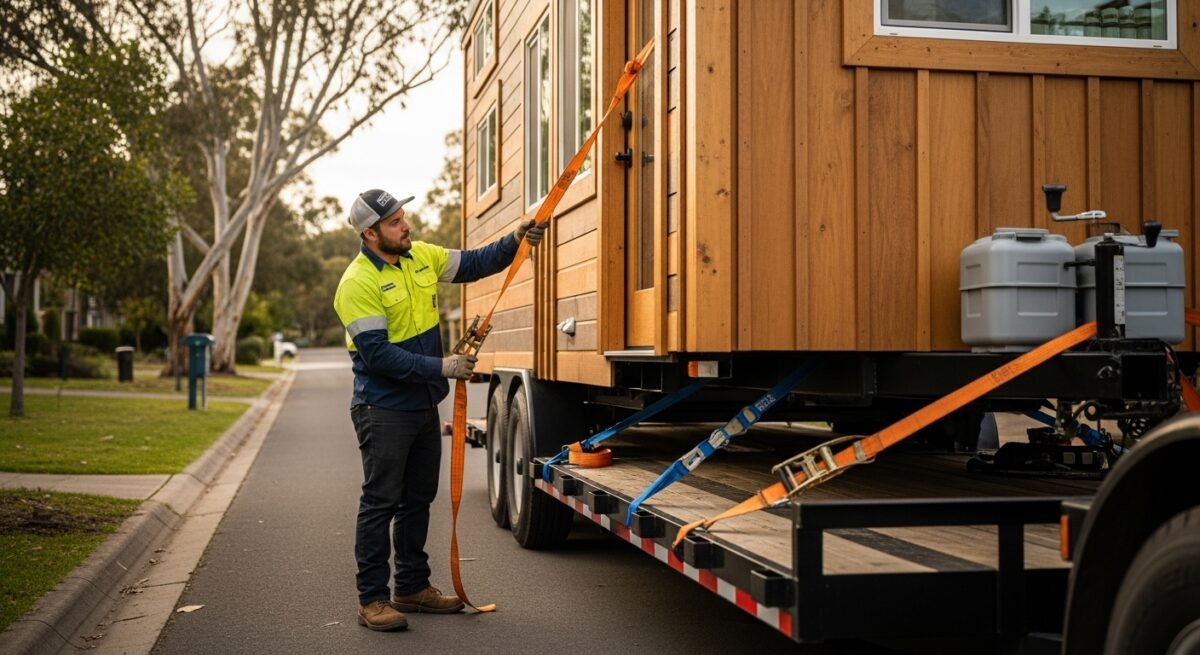
On moving day, the specialized equipment comes into play. Most tiny houses built on trailers (THOWs, or Tiny Houses on Wheels) are moved using a heavy-duty pickup truck with the appropriate towing capacity. However, larger or heavier tiny houses, especially those on foundations that require lifting, need a full-size semi-truck and a lowboy or flatbed trailer. The mover’s first task is to safely hitch the tiny house to the tow vehicle. This involves checking the coupler, safety chains, breakaway system, and trailer brakes. For homes not on wheels, they use hydraulic lifts and dollies to gently position the structure onto the transport trailer. Once loaded, the house is meticulously strapped down using heavy-duty ratchet straps and chains, often attached to dedicated tie-down points on the house’s steel frame. The goal is to create a unified, rigid mass that moves as one with the trailer, eliminating any independent sway or bounce.
The route planning for this journey is a science in itself. The mover must account for low bridges, tight turns, narrow roads, and weight-restricted bridges. They obtain the necessary travel permits, which often dictate the time of day they can move (e.g., only during daylight hours) and may require pilot cars or escort vehicles with “Wide Load” or “Oversize Load” signage. These escorts help warn other drivers and assist the driver in navigating tricky sections of road. The process shares similarities with how mobile home movers operate, though on a typically smaller scale. For a deeper look into the regulations and safety protocols for larger structures, our guide on how mobile home movers relocate manufactured homes provides useful parallel insights.
Navigating Legalities, Insurance, and Hidden Costs
One of the most daunting aspects of moving a tiny house is navigating the legal and financial landscape. Insurance is a non-negotiable and complex component. The homeowner needs to verify that their tiny house insurance policy covers transit, or purchase a separate short-term transit policy. The moving company must also carry substantial liability and cargo insurance. It is critical to get proof of insurance and understand what is and isn’t covered before signing any contract. The cost of the move itself is rarely a simple flat fee. Homeowners should expect a detailed quote that breaks down the various expenses.
These costs typically include:
- Base Moving Fee: Calculated by distance and the mover’s time.
- Permit Fees: Costs for oversize/overweight permits from each state and county traversed.
- Escort/Pilot Car Fees: If required by permit, these vehicles add significant cost per mile.
- Fuel Surcharges: Often adjusted based on current fuel prices.
- Special Equipment Fees: For cranes, lifts, or special trailers if needed.
- Travel Expenses: For the moving crew if it is a multi-day journey.
Failing to budget for these ancillary costs is a common mistake. A reputable tiny house mover will provide a transparent and comprehensive estimate upfront, so there are no surprise bills after the move is complete.
Site Preparation and Final Placement
The mover’s job isn’t finished when they pull up to the new property. The destination site must be properly prepared in advance. The homeowner is usually responsible for this, but the mover can offer guidance. The site needs to be level, firm, and clear of overhead obstructions like trees and power lines. There must be adequate access for the large truck and trailer to maneuver, which may require temporary removal of fences or gates. The ground must be able to support the concentrated weight of the house and the transport equipment, so soft or muddy ground is a major hazard. Once positioned, the mover will carefully unhitch the home, lower it onto its jacks or foundation blocks, and ensure it is stable and level. They may also assist with the initial reconnection of utilities, though permanent hookups are typically handled by licensed contractors. This final placement is a delicate operation that requires precision to avoid damaging the home or the property.
Frequently Asked Questions
How much does it cost to move a tiny house?
Costs vary wildly based on distance, size, and route complexity. A short local move might cost a few thousand dollars, while a cross-country relocation requiring multiple permits and escorts can easily exceed $10,000. Always get multiple detailed quotes.
Can I move my tiny house myself with a friend’s truck?
This is strongly discouraged unless you have professional experience with heavy towing and oversize loads. The risks of damage to your home, other vehicles, and yourself are extremely high. The legal and insurance liabilities are also significant.
Do I need a special license to move a tiny house?
If the combined weight exceeds 26,000 pounds or the dimensions exceed standard limits, a Commercial Driver’s License (CDL) may be required. Professional tiny house movers will have the appropriate licensing.
How far in advance should I book a tiny house mover?
As far in advance as possible, ideally 2-3 months. Securing permits, especially for complex routes, can be a time-consuming process.
What if my tiny house doesn’t have a trailer?
Houses built on foundations require a different process involving cranes and specialized trailers. This is more complex and expensive, and not all tiny house movers offer this service, so be sure to ask.
The journey of relocating a tiny house is a testament to careful engineering and logistical expertise. By partnering with professional tiny house movers, homeowners can translate the dream of a mobile, flexible lifestyle into a safe and successful reality. The process underscores that while tiny living simplifies many aspects of life, the act of moving the home itself is a serious undertaking that rewards thorough preparation, investment in skilled professionals, and a deep respect for the challenges of the open road.