
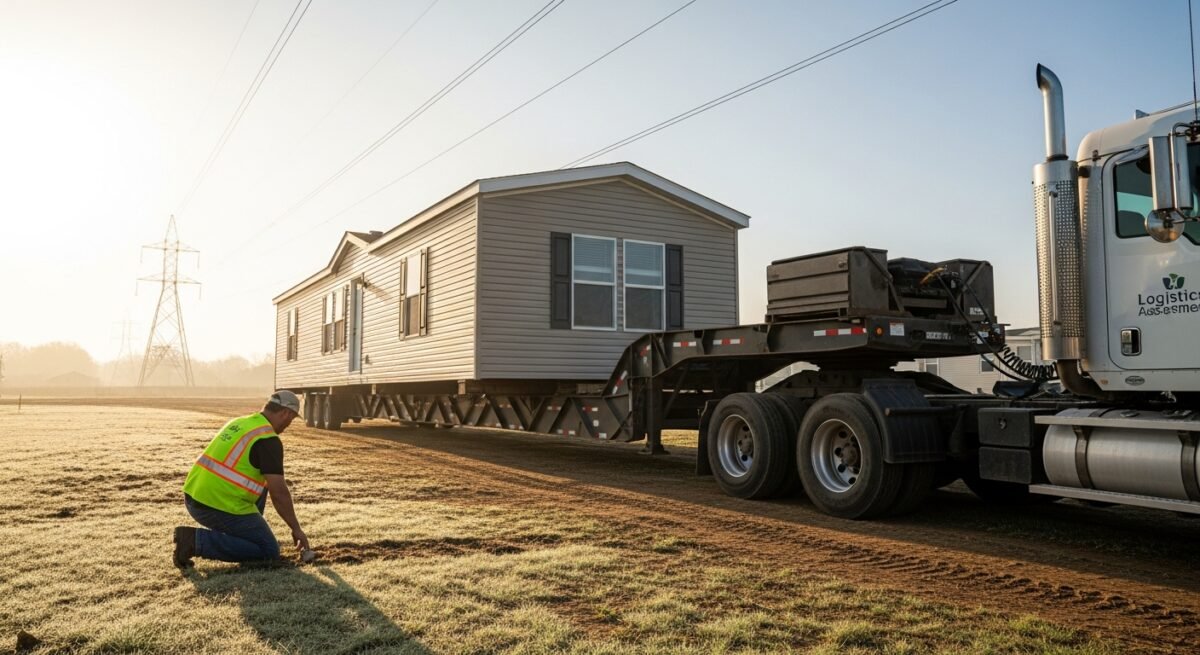
How Mobile Home Moving Companies Relocate Manufactured Homes
Understanding how mobile home moving companies relocate manufactured homes is key to a safe, efficient move. Call (833) 762-3578 for expert guidance and to start planning your relocation.

By Jennifer Davis
Relocating a manufactured home is a significant undertaking that differs dramatically from a traditional house move. It’s a complex logistical operation requiring specialized equipment, permits, and expertise. For homeowners, understanding the process behind how mobile home moving companies relocate manufactured homes is crucial for planning, budgeting, and ensuring a safe transition for one of your most valuable assets. This isn’t a DIY project; it’s a professional service that blends engineering precision with transportation logistics.
The Critical Role of Specialized Mobile Home Movers
Mobile home moving companies provide a service that standard residential movers cannot. These firms possess the specific knowledge, licensing, and heavy-duty equipment necessary to transport large, often non-divisible structures over public roads. The process begins long before the home is lifted from its foundation. Reputable manufactured home movers start with a thorough site inspection at both the current and destination locations. This assessment evaluates access routes, overhead clearance, soil conditions for setting up the new foundation, and any potential obstacles like trees, power lines, or uneven terrain. This initial step is vital for creating an accurate plan and quote, preventing costly surprises on moving day.
Following the inspection, the moving company handles the intricate permitting process. Since a manufactured home is a wide load, transport requires special permits from every state and county the home will pass through. These permits dictate approved travel routes, times (often restricting travel to daylight hours), and whether pilot cars or escorts are required. A professional mobile home moving service manages this bureaucratic maze, ensuring all legal requirements are met to avoid fines or transportation delays. This administrative expertise is a core component of their value.
The Step-by-Step Relocation Process
The physical move is a multi-stage operation executed with methodical care. It’s a coordinated effort that dismantles, transports, and reassembles a dwelling. Homeowner preparation is the first active phase. You must secure all loose items inside, disconnect utilities (water, sewer, electricity, gas) with the help of licensed professionals, and often remove skirting, porches, and awnings. The moving company will then prepare the home itself for the journey.
The core relocation steps performed by the mobile home moving crew typically follow this sequence:
- Separation and Lifting: Using hydraulic jacks and steel beams, the crew carefully separates the home from its permanent foundation or piers. They then lift the structure high enough to position the wheeled trailer underneath.
- Undercarriage Attachment: A specially designed trailer, often a multi-axle “gooseneck” or “I-beam” system, is backed under the home. The home is then lowered and securely fastened to this transport frame.
- Transportation: A heavy-duty truck, usually a semi-tractor, slowly pulls the home along the permitted route. The driver is trained in handling oversized loads, navigating turns, and managing the unique physics of a tall, wide structure on the highway.
- Setting and Reconnection: At the new site, the process reverses. The home is positioned over its new foundation, leveled, and secured. The moving company then lowers it onto its new supports, detaches the trailer, and departs.
It’s important to note that while the movers set the home, tasks like reconnecting permanent utilities, anchoring the home to its new foundation according to local codes, and reinstalling skirting are typically handled by other specialized contractors. A full-service move coordinates these elements, but clarifying the scope of work with your chosen mobile home moving services is essential. For a deeper look at safety protocols and engineering considerations, our guide on how mobile home movers relocate manufactured homes safely provides additional detail.
Key Factors Influencing Cost and Planning
The cost to relocate a manufactured home is highly variable, influenced by several concrete factors. Distance is the most obvious, but the size and dimensions of the home (single-wide, double-wide, or triple-wide) are equally critical. A double-wide requires the two sections to be separated for transport and then rejoined at the destination, adding significant labor and complexity. The condition of the home also matters; older homes may require structural reinforcement before they can be moved safely. Furthermore, site conditions at both locations can drastically affect price. Difficult access, steep driveways, or the need for tree removal will increase costs.
When budgeting, obtain detailed, written estimates from multiple licensed and insured mobile home moving companies. This estimate should be all-inclusive, covering permits, pilot cars, and basic setup. Be wary of quotes that seem unusually low. To accurately compare options and understand the full financial picture, you can get a free moving quote from vetted service providers. Remember to also budget for separate costs like new foundation work, utility hookup fees, and any necessary repairs or modifications to the home after the move.
Choosing the Right Mobile Home Moving Company
Selecting your mover is the most important decision in this process. Due diligence is non-negotiable. Always verify that the company holds current Department of Transportation (DOT) licensing and adequate insurance, including cargo and liability coverage specific to manufactured home transport. Request references and check online reviews, paying special attention to comments about timeliness, communication, and problem-solving. A professional company will willingly provide proof of licensing and insurance.
Experience is paramount. Ask how long they have been in business and how many homes similar to yours they move annually. Inquire about their specific equipment and their process for handling permits. The contract you sign should be exhaustive, detailing every service included, the total cost, payment schedule, projected timeline, and protocol for handling unforeseen issues or damages. Never agree to a large cash deposit upfront; reputable companies have payment schedules tied to milestones like the completion of the move.
Frequently Asked Questions
Can any manufactured home be moved?
Not all homes are suitable for relocation. Age, structural condition, and local regulations play a role. A professional inspection by a moving company can determine if your home can be moved safely and legally.
How long does the entire moving process take?
From securing permits to final setup, the process can take several weeks to a few months. The physical transport itself for a long-distance move may take days, but preparation and site work extend the timeline significantly.
Do I need a new foundation at the destination?
In nearly all cases, yes. The home must be placed on a permanent foundation that meets local building codes and the manufacturer’s specifications. This is typically arranged separately from the moving service.
What are the biggest risks in moving a manufactured home?
The primary risks are structural damage during transport, delays due to permit or weather issues, and unexpected costs from difficult site conditions. Hiring an experienced, insured mover mitigates these risks.
Who handles disconnecting and reconnecting utilities?
Homeowners are usually responsible for arranging for licensed professionals to disconnect utilities at the old site and reconnect them at the new one. The moving company focuses solely on the structure’s transport.
Relocating a manufactured home is a major project, but with the right mobile home moving company, it becomes a manageable and successful transition. By understanding the process, asking thorough questions, and choosing a qualified, experienced partner, you can ensure your home is delivered safely to its new location, ready for the next chapter. The investment in professional manufactured home movers is an investment in the security and longevity of your property.