First Apartment Checklist Essentials for Moving Day
Moving into your first apartment is a milestone that blends excitement with a fair amount of chaos. You have signed the lease, packed your bags, and now face the reality of an empty space that needs everything from a toilet plunger to a working smoke detector. Without a plan, moving day turns into a frantic series of trips to the hardware store. A solid first apartment checklist essentials for moving day saves you time, money, and unnecessary stress. This guide walks you through the critical items and steps you need before the truck arrives.
Why a First Apartment Checklist Matters
Most new renters underestimate how many small items they actually need. You remember the bed and the sofa, but you forget the trash cans, the shower curtain, and the light bulbs. When you arrive at your new place, every missing essential becomes a problem. You cannot unpack without scissors. You cannot cook without a pot. You cannot sleep without sheets. A comprehensive new apartment checklist eliminates these gaps.
Beyond convenience, having the right supplies on hand prevents damage to your belongings and your new space. For example, moving blankets protect your furniture from scuffs, and proper tape prevents boxes from breaking open. Planning ahead also reduces the number of trips you make up and down stairs, which saves energy and lowers the risk of injury. In short, a checklist turns a chaotic day into a structured process.
Essential Tools and Supplies for Moving Day
Before you can arrange furniture or unpack dishes, you need the right tools to handle the physical move itself. These items make the difference between a smooth transition and a frustrating one. Gather them at least a day before moving day so you are not scrambling at the last minute.
Packing and Unpacking Gear
Start with the basics: sturdy boxes in multiple sizes, packing tape, and a tape gun. You also need bubble wrap or packing paper for fragile items. Markers and labels are critical for identifying which room each box belongs to. A roll of plastic wrap helps secure drawers and keep hardware together. Do not forget scissors or a box cutter for opening boxes at your new apartment.
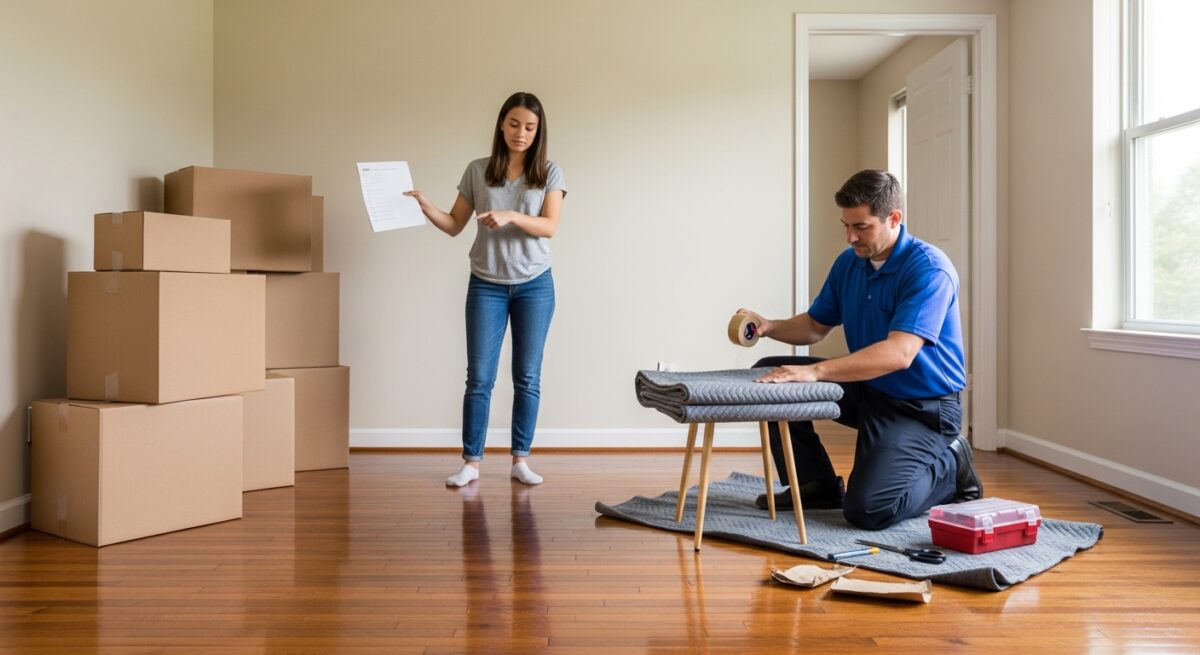
You also need furniture sliders or moving blankets. Sliders let you move heavy items across floors without scratching them. Blankets protect your sofa and tables from dents and dirt. If you are moving large items like a mattress or a desk, consider renting a dolly or hand truck. These tools reduce strain on your back and speed up the entire process.
Cleaning Supplies
Your new apartment likely needs a deep clean before you unpack. Even if the landlord cleaned it, you want to wipe down surfaces, cabinets, and floors. Bring all-purpose cleaner, disinfecting wipes, a sponge, and paper towels. A vacuum or broom and dustpan are essential for floors. Include a mop and bucket for hard floors. Cleaning supplies also help you remove any dust or debris left from the previous tenant.
Having cleaning supplies on hand lets you tackle messes immediately. For example, you can wipe out cabinets before loading dishes or clean the bathroom before hanging towels. This step also helps you identify any maintenance issues like leaks or cracks before your belongings are in the way.
Room-by-Room Essentials
Every room in your first apartment needs specific items to function. Use this breakdown to ensure nothing is overlooked. A thorough things you need for an apartment list covers all the small items that make a space livable.
Kitchen Must-Haves
The kitchen is the heart of your home, and it requires the most gear. You need cookware: a frying pan, a saucepan, and a pot with a lid. Baking sheets, mixing bowls, and a cutting board are also essential. Utensils include a spatula, a ladle, a chef’s knife, and a vegetable peeler. Do not forget measuring cups and spoons.
For storage, bring food containers, a can opener, and a bottle opener. You also need dishware: plates, bowls, glasses, and mugs. Silverware is obvious, but include serving spoons and a butter knife. Basic appliances like a coffee maker, a toaster, and a microwave can make mornings easier. Finally, stock your pantry with salt, pepper, cooking oil, and coffee or tea so you can make a meal or a drink right away.
Do not forget cleaning items for the kitchen: dish soap, a dish rack, a scrub brush, and trash bags. A small trash can is also necessary. These items ensure you can cook, eat, and clean up from day one.
Bathroom Necessities
Your bathroom needs immediate attention. The top priority items include a shower curtain and rings, a bath mat, and towels (bath, hand, and washcloths). You need a toilet plunger and a toilet brush. These are not glamorous, but they are non-negotiable. A plunger can save you from a plumbing emergency on your first night.
Toiletries like soap, shampoo, conditioner, toothpaste, and a toothbrush holder are essential. A medicine cabinet organizer helps keep items tidy. Do not forget a trash can for the bathroom. A hair dryer, a razor, and a first-aid kit round out your bathroom essentials. Having these items set up before you shower or use the toilet prevents awkward moments.
Bedroom and Living Room Basics
Your bedroom needs bedding: sheets, pillows, pillowcases, a comforter or blanket, and a mattress protector. A mattress protector is often overlooked but keeps your mattress clean and extends its life. You also need hangers for your clothes. A small nightstand or a lamp creates a functional space for your phone and a glass of water.
In the living room, consider seating options. If you do not have a sofa, a floor cushion or a folding chair works temporarily. You need a table or a desk for eating and working. A lamp provides ambient lighting. Do not forget a trash can for this room too. A small rug can make the space feel more homey.

Safety and Emergency Items
Safety is a critical part of your first apartment checklist. Ensure your apartment has working smoke detectors and carbon monoxide detectors. If they are missing or not working, contact your landlord immediately. You should also have a fire extinguisher in the kitchen. A basic first-aid kit with bandages, antiseptic, and pain relievers is essential.
Consider a flashlight and extra batteries in case of a power outage. A small tool kit with a screwdriver, a hammer, and a pair of pliers helps you assemble furniture and make minor repairs. A plunger for each bathroom is a wise investment. These items may seem minor, but they become crucial in an emergency.
Documents and Important Paperwork
Moving day is not just about physical items. You need to bring important documents with you. Keep your lease agreement, rental insurance policy, and identification in a safe, accessible folder. You also need contact information for your landlord, utility companies, and emergency services. If you have a pet, bring their vaccination records and tags.
Having these documents on hand helps you handle issues quickly. For example, if a utility is not working, you can call the provider with your account number. If you need to file a maintenance request, you have the landlord’s number ready. A small fireproof safe or a lockbox protects these documents during the move.
Moving Day Logistics and Tips
Your checklist should also include practical steps for the day itself. First, confirm your moving truck or rental vehicle reservation a day before. If you hired movers, confirm the arrival time and any special instructions. Pack a separate bag with essentials you need immediately: a change of clothes, toiletries, phone chargers, and snacks. This bag should ride with you, not in the moving truck.
Label all boxes clearly with the room name and a brief description of contents. Use color-coded tape or stickers for quick identification. Keep a master list of all boxes and their contents. This list helps you verify that everything arrived and makes unpacking easier. If you are moving heavy furniture, measure doorways and hallways to ensure items fit.
Consider the logistics of parking and building access. If you live in an apartment complex, reserve the loading dock or parking spot if possible. Notify the building manager of your move-in date. Have a plan for stairs or elevators. If you are moving into a walk-up, pack lighter items first and save heavy boxes for last. This approach reduces fatigue and prevents accidents.
For a deeper dive into preparing your old home for the transition, check out our guide on Downsizing Home Checklist Before Moving. It covers steps to reduce clutter and make packing more efficient.
Frequently Asked Questions
What is the most important item to bring on moving day?
The most important item is a plunger. Plumbing issues can happen at any time, and having a plunger ready prevents a small problem from becoming a big mess. It is a cheap, small item that provides peace of mind.
How many boxes do I need for a first apartment?
For a typical one-bedroom apartment, plan for 20 to 30 boxes. This number varies based on your belongings. It is better to have extra boxes than to run out mid-move. You can always return unused boxes to a store or give them away.
Should I buy furniture before or after moving day?
Buy furniture after you move in, unless you already have a confirmed delivery date. Moving day is chaotic, and new furniture deliveries add complexity. Focus on getting your existing belongings into the apartment first. Then, measure your space and order furniture that fits.
What should I do if my apartment is not clean on move-in day?
Document the condition with photos and videos. Contact your landlord immediately to request a cleaning. In the meantime, use your own cleaning supplies to make the space livable. Keep records of any cleaning you do so you can request reimbursement if needed.
How do I protect my floors during a move?
Use furniture sliders under heavy items. Lay down moving blankets or cardboard on high-traffic areas. Remove shoes or wear protective booties inside. If you are moving into a building with carpet, consider plastic floor runners to prevent dirt and damage.
Final Thoughts
Moving into your first apartment is a learning experience. The key is to prepare ahead and not assume you can buy everything later. A thoughtful first apartment checklist essentials for moving day covers the tools, supplies, and documents you need to start your new life smoothly. Focus on the basics first: a clean space, a working bathroom, a place to sleep, and a way to eat. Everything else can wait. For professional moving assistance and storage solutions, visit Doctors Home to explore services that take the heavy lifting off your shoulders. With the right plan, your first apartment becomes a home from the moment you step inside.