
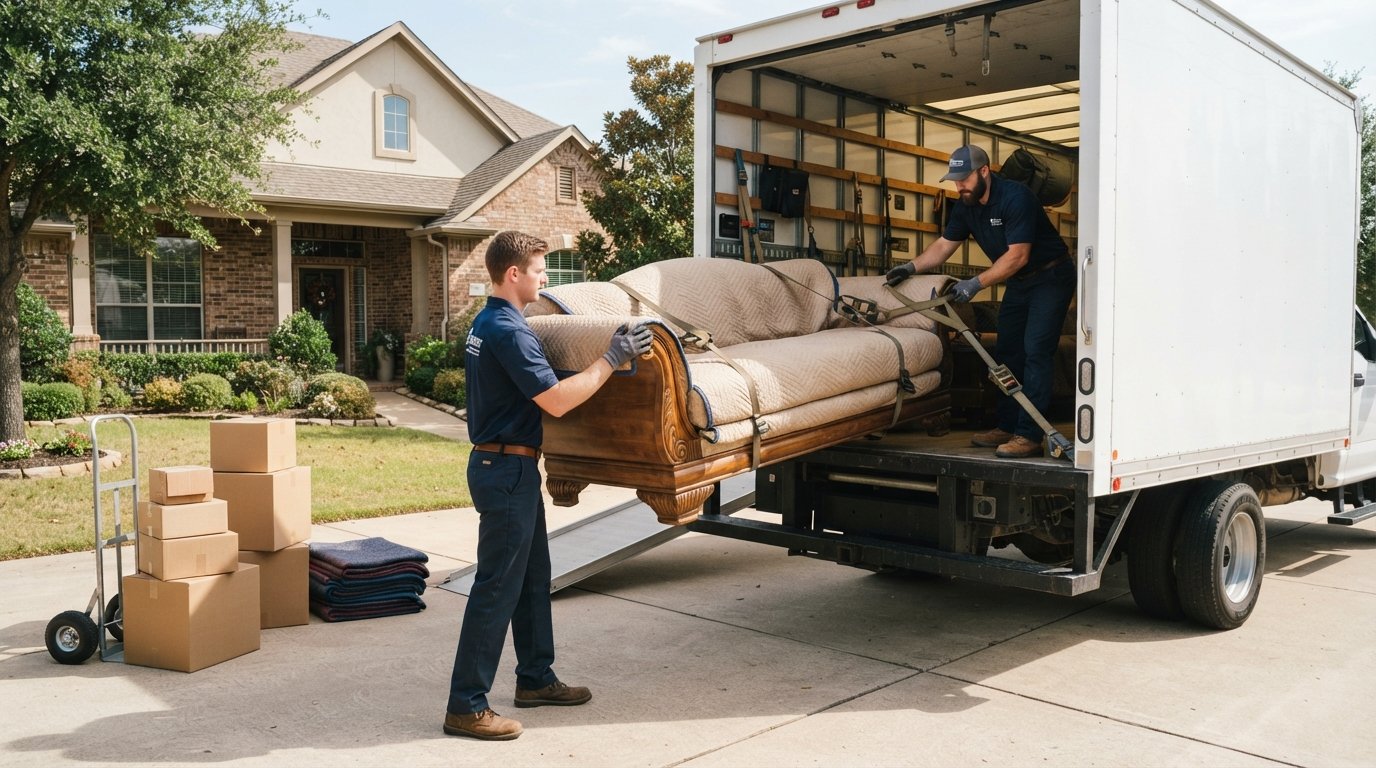
What to Look for in House Moving Transport Options
Understand what to look for in house moving transport options, from truck types to transit times. Call (833)-484-8675 for expert moving help.

By Kevin Morris
Your belongings are packed, the boxes are sealed, and the moving date is circled on your calendar. Now comes the part that quietly decides whether everything arrives intact: choosing how your household goods will actually travel from your old home to your new one. Moving transport is not a single service. It is a set of methods, each with its own pricing model, timeline, and risk profile. Pick the wrong one and you may face delays, surprise fees, or damaged furniture. Pick the right one and the whole process feels almost effortless.
Understanding your transport choices starts with knowing what each option really means, not just what the brochure says. A full-service van line, a dedicated truck, a shared load, and a portable container are genuinely different products. They differ in who handles your items, when they arrive, and how much control you keep. This guide breaks down what to look for in house moving transport options so you can match the right method to your budget, distance, and timeline.
Full-Service Truck and Van Line Transport Explained
Full-service moving is what most people picture when they imagine hiring professionals. Trained crews arrive at your home, wrap and pad your furniture, load everything onto a truck, drive it to your destination, and unload it into your new rooms. The carrier manages the logistics from door to door. This is the most hands-off option, and for good reason: it is also the most expensive per mile, especially for long-distance moves.
Within full-service transport, there are two distinct models. The first is a dedicated truck, where your shipment is the only load on the vehicle. The truck goes directly from your old home to your new one with no intermediate stops. Dedicated trucks offer the fastest transit times and the least handling, since your items are loaded once and unloaded once. This is the premium choice for high-value homes, tight closing dates, or anyone who simply wants maximum control.
The second model is a shared load, often called a consolidated load or partial load. Here, the carrier combines your shipment with those of other households moving in a similar direction. Your items may be loaded onto a larger line-haul truck and later transferred to a smaller shuttle truck for final delivery. Shared loads cost less because you pay only for the space you use, but they add transit time and handling. A move that might take three days on a dedicated truck can stretch to one or two weeks on a shared load, depending on how quickly the carrier fills the truck and how many stops are scheduled along the way.
When evaluating full-service options, ask specific questions about the model being quoted. Is the price based on a dedicated truck or a consolidated load? How many times will my items be handled? What is the guaranteed delivery window, and what happens if the truck is delayed? A reputable carrier will answer these plainly. If you are still comparing providers, our guide on how to choose the best house moving companies walks through the vetting steps that separate professional carriers from brokers who simply resell your move.
When a Relocatable Cube or Trailer Makes Sense
Portable storage containers, often called relocatable cubes, and towable trailers occupy a middle ground between full-service moving and doing everything yourself. With a cube, the company drops a container in your driveway, you load it at your own pace, and the company picks it up and transports it to your new address. With a trailer option, you load a portion of a larger trailer, the company adds other shipments, and the trailer moves to your destination.
These options appeal to several types of movers. If your schedule is flexible, a cube lets you pack over several days or weeks without paying hourly labor. If you have more time than money, loading the container yourself can cut costs significantly compared with full-service. If you are moving to a smaller city or a rural area where van lines charge premium rates, a cube or trailer may be the only affordable long-distance option.
However, these methods come with real tradeoffs. You are responsible for loading, securing, and unloading your items, which means damage risk shifts to you. Transit times are often longer because containers and trailers wait for scheduling and consolidation. And you still need to arrange labor at both ends if you cannot lift heavy furniture yourself. Before choosing a cube or trailer, confirm the rental period, storage fees if the container sits longer than expected, and whether the company provides any damage coverage at all.
How Transit Times Change with Distance and Load Consolidation
Transit time is one of the most misunderstood parts of moving. Many people assume that a 1,000-mile move takes two days because that is how long the drive would take in a car. In reality, professional moving trucks operate under different constraints. Drivers have hours-of-service limits, carriers schedule multiple stops, and consolidated loads wait until the truck is full before departing.
For local moves, transit time is usually measured in hours, not days. The crew loads in the morning and delivers the same afternoon or evening. The main variable is the size of your home and the distance between addresses. For long-distance moves, transit time depends heavily on the transport model. A dedicated truck might deliver within three to seven days for a cross-country move. A shared load can take one to three weeks, and sometimes longer during peak moving season from May through September.
Load consolidation is the key driver. Carriers want trucks to run full, so they wait for enough shipments heading the same direction before dispatching. This is efficient for them and cheaper for you, but it introduces uncertainty. If you have a hard deadline, such as a lease start date or a job start date, you should either book a dedicated truck or build a buffer of at least several days into your plan. Ask the carrier for a delivery spread, not a single date, and get that spread in writing.
Storage-in-transit is another factor. If your new home is not ready when your shipment arrives, the carrier may hold your items in a warehouse, sometimes for days or weeks. This adds cost and handling. Clarify the storage rate before you book, and confirm whether the carrier charges by the day or by the month.
To keep transit time predictable, focus on a few practical steps before booking:
- Ask whether the quote is for a dedicated truck or a consolidated load, and get the estimated delivery window in writing.
- Schedule your move for the middle of the month if possible, since the first and last weekends draw the highest demand and the longest delays.
- Confirm the carrier's policy on storage-in-transit, including daily rates and whether the truck can be rerouted if your closing date shifts.
- Request a written delivery spread rather than a single date, and plan your own arrival around the later end of that spread.
These details matter more than the headline price. A quote that looks cheap but comes with a three-week delivery window and vague storage fees can end up costing more than a slightly higher quote with a guaranteed window and clear terms. The goal is not just to move your things, but to move them on a schedule you can actually plan around.
How to Verify a Carrier Is Licensed and Insured for Your Route
Before you sign anything, verify that the company actually has the authority to transport household goods on your route. In the United States, interstate movers must be registered with the Federal Motor Carrier Safety Administration (FMCSA) and carry a valid USDOT number. You can look up any carrier's USDOT and MC numbers on the FMCSA website to confirm licensing, insurance status, and complaint history. For moves within a single state, check with your state's public utilities commission or consumer protection office, since intrastate rules vary.
Insurance is a separate issue from licensing. Moving companies are required to offer two levels of liability coverage: basic released value protection, which pays a small amount per pound per item, and full value protection, which covers repair, replacement, or cash settlement for lost or damaged goods. Released value protection is often included at no extra charge, but it pays very little. For example, a 50-pound television might be covered for only $30 under released value protection. Full value protection costs more but provides realistic reimbursement. Ask for the coverage details in writing and read the fine print about deductibles and exclusions.
You should also confirm that the carrier is insured for the specific route and service type. A company licensed for local moves may not be authorized for interstate transport. A broker may arrange your move but not carry insurance for your goods. If you are working with a broker, ask who the actual carrier will be and verify that carrier separately. Reputable platforms connect you with vetted, licensed providers rather than anonymous subcontractors. If you need help with related home projects before or after the move, such as repairs or installations, you can find pre-vetted local contractors through Contractor.Homes, a marketplace that connects homeowners with licensed professionals across trades like roofing, HVAC, plumbing, and flooring.
Finally, document everything. Take photos of high-value items before the move, keep an inventory list, and save all correspondence with the carrier. If something goes wrong, your claim will depend on the paperwork you kept. A few minutes of documentation can save hours of frustration later.
Matching the Transport Method to Your Move
There is no single best transport option. The right choice depends on your distance, budget, timeline, and how much control you want over your belongings. A local move with a flexible schedule might be best served by a full-service crew and a dedicated truck. A cross-country move on a tight budget might justify a shared load or a portable container. A move with high-value antiques or a piano might require a dedicated truck and full value protection regardless of cost.
Start by writing down your non-negotiables: the latest date your items can arrive, the maximum you can spend, and the items you cannot risk damaging. Then compare quotes against those criteria, not just against each other. A quote that meets your deadline and coverage needs is worth more than a cheaper quote that leaves you guessing. Ask every carrier the same set of questions so you can compare apples to apples. If a company hesitates to answer basic questions about licensing, insurance, or delivery windows, that is a signal to look elsewhere.
Transport is the backbone of your move. Getting it right means your belongings arrive when you expect them, in the condition you left them. Getting it wrong means delays, damage claims, and stress that lingers long after the boxes are unpacked. Take the time to understand your options, verify the carrier, and choose the method that fits your life. Your future self, standing in a new home with everything in place, will thank you.