
What to Do With a Wine Collection Before a Long Distance Move
Protect every bottle during your relocation. Call (833)-484-8675 to plan your wine collection move and avoid costly heat or breakage damage.

By Kevin Morris
The clink of glass against cardboard is a sound no wine lover wants to hear on moving day. A carefully assembled wine collection represents years of tasting, travel, and thoughtful acquisition. Whether you have a dozen special bottles or several hundred, relocating that collection across state lines introduces risks that ordinary household goods never face: heat, vibration, humidity swings, and the simple physics of heavy glass in transit. Planning early turns a nerve-wracking gamble into a manageable logistics project. This guide walks through every stage, from taking inventory months ahead of the move to unpacking and settling your bottles into their new home.
Start With a Full Inventory and Honest Assessment
Before you pack a single bottle, you need to know exactly what you own. Most collectors underestimate their holdings because bottles accumulate in racks, closets, and off-site storage without a running tally. Build a spreadsheet or use a cellar management app that records the producer, vintage, region, bottle size, purchase price, and current estimated value for each wine. This inventory does more than satisfy your curiosity: it becomes the foundation for insurance claims, customs documentation if you are crossing borders, and decisions about what is worth moving at all.
As you catalog, sort bottles into rough tiers. Everyday drinkers under twenty dollars rarely justify the cost and risk of long-distance transport. Mid-range bottles may be worth moving if the collection is small. High-value, age-worthy wines justify professional handling, climate-controlled transport, and possibly specialized insurance riders. Be honest about bottles that have passed their drinking window or that you simply no longer enjoy. A long-distance move is an excellent excuse to host a farewell tasting, donate to a local charity auction, or sell through a reputable broker.
Pay special attention to provenance and condition. Bottles with seepage, protruding corks, or low fill levels are fragile and may not survive the trip. Photograph every label and any visible damage before the move. If you plan to file an insurance claim later, dated photos taken before packing are the single most persuasive evidence you can provide. For collectors with serious value on the line, a professional appraisal before the move establishes a documented baseline that insurers and moving companies respect.
Understand the Legal and Logistical Rules That Apply
Wine is not like furniture. It is a regulated alcoholic beverage, and moving it across state or national borders can trigger licensing requirements, taxes, and outright prohibitions. Some states restrict the volume of alcohol an individual may import without a permit. Others allow personal exemptions only when you transport the bottles yourself rather than through a carrier. If your move crosses an international border, expect customs duties, documentation requirements, and possible inspections that can expose your bottles to heat and handling.
Before you commit to any transport method, verify three things: the destination state or country rules for personal alcohol imports, your moving company policy on transporting alcohol, and your homeowner or renter insurance coverage during transit. Many standard moving contracts exclude alcohol entirely, which means a broken case of Bordeaux may be a total loss unless you arrange separate coverage. Third-party wine shipping insurers specialize in exactly this gap and typically charge a percentage of declared value. The cost is usually modest compared to the replacement price of a serious collection.
Timing matters as well. Extreme seasons make wine transport harder. A summer move through the Southwest can expose bottles to triple-digit temperatures even in an air-conditioned truck during loading and unloading. A winter move through the Midwest risks freezing that can push corks and crack bottles. If your moving dates are flexible, aim for spring or fall windows when ambient temperatures are mild. If they are not flexible, plan for extra insulation and shorter transit times.
Choose the Right Transport Method for Your Collection
The right method depends on collection size, value, distance, and your tolerance for risk. For a small collection of a case or two, you may be able to transport bottles yourself in a climate-controlled vehicle, provided you are driving to the destination anyway. For larger or more valuable collections, professional options make more sense. Wine-specific shipping companies, climate-controlled freight, and specialized moving services each have tradeoffs in cost, speed, and handling.
Here are the main options most collectors weigh:
- Personal transport in your vehicle: Best for small, high-value collections where you control temperature and handling. Limited by vehicle space and driving distance.
- Professional wine shippers: Specialists who pack in temperature-controlled boxes and ship via climate-controlled carriers. Strongest option for valuable collections under a few hundred bottles.
- Full-service movers with wine experience: Convenient for large households where wine is one part of a bigger move. Requires careful vetting of the mover's handling practices and insurance.
- Climate-controlled freight or storage: Useful for very large collections or when there is a gap between move-out and move-in dates.
If your move involves a gap between leaving one home and settling into another, storage becomes part of the plan. Passive storage in a hot garage or unconditioned unit will ruin wine quickly. Look specifically for climate-controlled options that hold steady temperatures in the 55 to 65 degree Fahrenheit range with moderate humidity. If you are coordinating movers and storage together, our guide on long distance moving companies and storage options explains how to align those services so your bottles never sit in a risky environment.
Pack Like a Professional, Not Like a Tourist
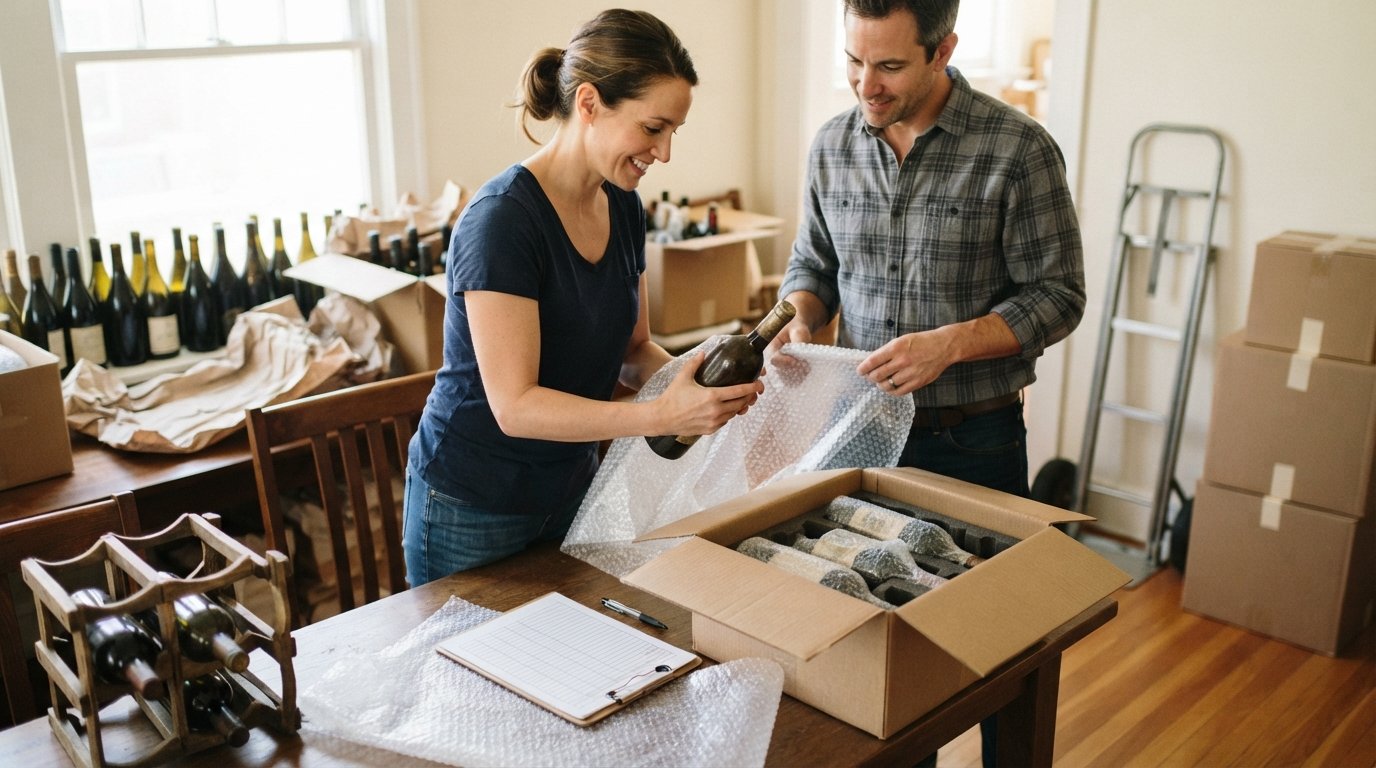
Improper packing destroys more wine collections than rough roads do. Bottles need individual protection, stable orientation, and shock absorption. Standard cardboard boxes and newspaper are inadequate for anything you care about. Invest in proper wine shipper boxes with molded pulp or foam inserts, or use sturdy double-walled cartons with cell dividers and plenty of padding. Each bottle should be unable to move inside its slot, and each slot should be separated from its neighbors by at least a quarter inch of cushioning.
Orientation is a long-running debate. For short moves, storing bottles upright reduces the chance of sediment disturbance and lets you spot leaks quickly. For longer moves, some collectors prefer horizontal storage so corks stay moist, especially in dry climates. Either way, avoid laying bottles in ways that put pressure on the cork or allow them to roll. Label every box clearly with the word FRAGILE, the contents, and an arrow indicating which side is up. Keep a master list of which bottles are in which box so you can verify everything on arrival.
Temperature control during packing matters as much as during transit. Do not pack wine in a hot garage on a summer afternoon. Work in a cool indoor space, and stage boxes in a climate-controlled area until the truck arrives. If the move involves multiple days of driving, plan overnight stops where the vehicle can be parked in shade or, better, in a temperature-stable garage. Small decisions at the packing stage compound into big differences in what survives the trip.
Protect Your Investment With Insurance and Documentation
Standard moving insurance almost never covers wine adequately. Valuation coverage offered by movers typically caps at a few dollars per pound, which is meaningless for a bottle worth hundreds. Before the move, ask your mover in writing how alcohol is handled, what coverage applies, and what documentation is required for a claim. If the answer is vague, treat that as a signal to arrange third-party coverage on your own.
Specialized wine insurance policies cover breakage, heat damage, theft, and total loss during transit. Premiums are usually a small percentage of declared value, and policies often extend to storage as well. Collect the documentation you will need for a claim: purchase receipts, appraisals, photographs, and the inventory spreadsheet you built earlier. Keep digital copies in cloud storage so they survive even if your laptop does not. If your move crosses an international border, add customs declarations and any import permits to the same folder.
For collectors with significant value, a pre-move appraisal from a wine specialist is worth the cost. It establishes defensible values, flags bottles that are deteriorating, and often reveals that certain bottles are worth selling rather than moving. If your broader move includes other high-value items like art or antiques, the same documentation discipline applies across the board. Homeowners planning renovations at the destination may also want to line up trusted tradespeople in advance; platforms like Contractor.Homes connect homeowners with pre-vetted local contractors for projects like climate-controlled wine room build-outs, which is a smart step if your new home will house a serious cellar.
Plan the Destination Before the Bottles Arrive
A wine collection that survives the move can still be ruined in the first week if the destination is not ready. Before the truck pulls away, confirm that your new home has a suitable space: a basement corner, a dedicated closet, or a properly cooled wine room. Ideal conditions are a steady 55 to 65 degrees Fahrenheit, 60 to 70 percent humidity, darkness, and minimal vibration. If the new home cannot provide those conditions, arrange off-site climate-controlled storage until you can build or designate a proper space.
On arrival, unpack with the same care you used to pack. Let bottles rest upright for at least 24 hours before opening or moving them into racks, especially after a long trip. This allows sediment to settle and any temperature-related expansion to normalize. Cross-check every bottle against your inventory and inspect for seepage, cracked glass, or pushed corks. File any insurance claims promptly, since most policies have short windows for reporting damage.
Finally, treat the move as a chance to improve your collection. Many collectors find that the process of inventorying, appraising, and transporting their wine reveals gaps, duplicates, and bottles that no longer fit their tastes. Use the fresh start to refine your cellar, update your inventory system, and set new goals for what you want to drink, age, and share. A well-managed move does more than protect bottles: it clarifies what your collection is really for.
Moving a wine collection long distance is not complicated, but it is unforgiving of shortcuts. Inventory early, understand the rules, choose transport that matches the value at stake, pack like a professional, insure properly, and prepare the destination before the bottles arrive. Do those things, and your collection will arrive ready to be enjoyed rather than mourned.