
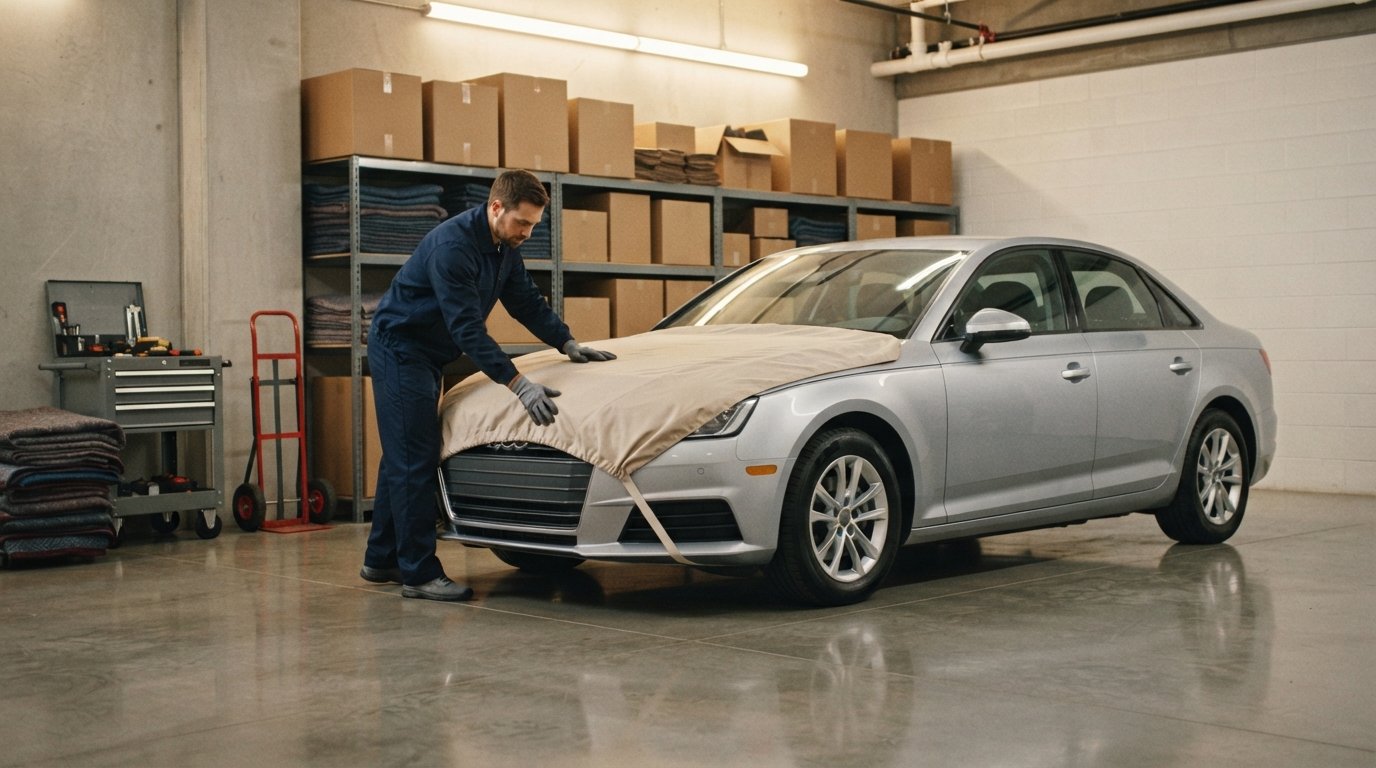
Vehicle Storage Options During a Long Term Move
Explore vehicle storage options during a long term move, from climate-controlled facilities to outdoor lots, and learn how to protect your car and budget.

By Kevin Morris
A long term move already demands careful planning, but deciding what to do with your car, truck, or motorcycle adds another layer of complexity. Whether you are relocating across the country for a new job, heading overseas for an extended assignment, or simply need a safe place to park your vehicle while you settle into temporary housing, choosing the right storage solution protects both your wallet and your peace of mind. The good news is that you have more options than ever, ranging from climate-controlled indoor facilities to outdoor lots and even professional car shipping services that bundle storage with transport. Understanding how each option works, what it costs, and which risks it carries will help you make a confident decision.
Why Vehicle Storage Matters During a Long Term Move
When you are away from your vehicle for weeks or months, the threats multiply. Sun exposure fades paint and cracks dashboards. Rodents nest in engine compartments and chew through wiring. Battery charge drains, tires develop flat spots, and brake rotors rust. In some neighborhoods, an unattended vehicle becomes a target for theft or vandalism. Proper storage addresses all of these risks, but only if you choose a facility or service that matches your specific situation.
Cost is another factor. Keeping a vehicle at your new residence might be impossible if you are renting a small apartment or living in a dense urban area without off-street parking. Paying for storage is often cheaper than paying for an extra parking space, and it keeps your vehicle out of the way while you focus on unpacking and settling in. For military families, corporate relocations, and snowbirds, vehicle storage during a long term move is a routine part of the relocation budget.
Before you choose a storage method, think about how long you will be away, the climate in your area, and whether you need occasional access. These three factors narrow your options quickly. A three-month stay in a mild climate calls for a different approach than a two-year overseas assignment in a region with harsh winters.
Types of Vehicle Storage Options
The storage industry offers several distinct categories, each with its own trade-offs between price, protection, and convenience. Knowing the differences helps you avoid overpaying for features you do not need or underpaying for protection you do.
Indoor Climate-Controlled Storage
Climate-controlled indoor storage keeps temperature and humidity within a narrow range, which prevents rust, upholstery cracking, and electronic degradation. This is the gold standard for classic cars, luxury vehicles, and any car you plan to keep for many years. Facilities typically occupy warehouse-style buildings with monitored entry, fire suppression, and sometimes individual bays. Expect to pay a premium, often two to three times the rate of an outdoor spot, but the protection justifies the cost for high-value vehicles.
Access rules vary. Some facilities allow you to visit during business hours and drive the car out, while others require advance scheduling. If you need to start the engine or move the vehicle periodically, confirm the access policy before signing a contract.
Indoor Non-Climate-Controlled Storage
An indoor but unheated garage or warehouse protects against hail, tree sap, and direct sunlight, but it does not control humidity. In damp regions, this option can still allow surface rust to form on brake rotors and exposed metal. It works well for short-term storage in dry climates or for vehicles that already have some weathering. The cost sits between outdoor and climate-controlled options.
Outdoor Storage Lots
Outdoor lots are the most affordable choice, often costing a fraction of indoor rates. They may be paved, gravel, or dirt, and they may or may not have fencing and security cameras. The main risks are weather, pests, and theft. A high-quality car cover and a fresh coat of wax help, but outdoor storage is best for older vehicles or short durations. If you choose this route, visit the lot in person, check lighting and fencing, and ask about overnight patrols.
Self-Storage Units for Vehicles
Some self-storage facilities offer drive-up units large enough to park a car or motorcycle. These units are typically enclosed but not climate-controlled, and they may not have ventilation. They offer better security than an open lot and allow you to keep other belongings in the same unit. However, maneuvering a vehicle into a narrow unit takes skill, and some facilities prohibit fluid changes or engine running on site. Check the lease terms carefully.
Professional Car Shipping With Storage
If your move involves crossing state lines or oceans, you may want a provider that handles both transport and storage. Many auto transport companies offer short-term storage at their terminals before and after the shipment, which simplifies logistics. This is especially useful when your new home is not ready for the vehicle or when you need to ship a car ahead of your own arrival. For a deeper look at how storage and moving companies bundle these services, see our guide on moving companies with storage options and pricing.
How to Choose the Right Vehicle Storage Option
Start by assessing the vehicle itself. A daily driver that you will use again in three months has different needs than a restored muscle car that will sit for two years. Next, evaluate your budget and your tolerance for risk. Finally, consider access: will you need to retrieve the vehicle before the storage period ends? If so, a facility near your temporary residence makes sense.
Use this checklist to compare facilities:
- Security features: fencing, cameras, on-site staff, gated entry
- Climate control: temperature and humidity regulation
- Access hours: can you visit on weekends or only weekdays?
- Insurance requirements: does the facility require you to carry comprehensive coverage?
- Contract terms: month-to-month or long-term lock-in?
After you narrow the list, visit each facility in person. Look for signs of water damage, pest droppings, or poor maintenance. Ask to see the exact spot where your vehicle will be parked. A facility that hesitates to show you the space is a red flag.
Also confirm what the facility does not cover. Most storage contracts require you to maintain your own insurance, and some explicitly exclude damage from rodents or weather. Read the fine print and ask questions before you sign.
Preparing Your Vehicle for Long Term Storage
Proper preparation prevents most storage damage. Whether you choose indoor or outdoor storage, follow these steps to keep your vehicle in good condition.
- Wash and wax the exterior to remove contaminants that can etch paint.
- Change the oil and filter to avoid acidic buildup in the engine.
- Fill the gas tank to prevent condensation, and add a fuel stabilizer.
- Inflate tires to the recommended pressure or slightly higher to reduce flat spots.
- Disconnect the battery or attach a trickle charger.
- Place moisture absorbers inside the cabin and trunk.
- Cover the vehicle with a breathable car cover if stored outdoors.
If you store the vehicle for more than a few months, arrange for someone to start it and move it a few feet every few weeks. This circulates fluids and prevents seals from drying out. If no one can do this, at least pump the brakes gently and turn the steering wheel occasionally to keep those systems free.
For motorcycles, scooters, and ATVs, the same principles apply, but pay extra attention to the fuel system and battery. Small engines are more sensitive to stale fuel and parasitic drain.
Costs and Insurance Considerations
Vehicle storage prices vary widely by region, facility type, and duration. As a rough guide, outdoor storage might cost $50 to $150 per month, indoor non-climate-controlled $100 to $250, and climate-controlled $200 to $500 or more. Motorcycle storage is usually cheaper. Some facilities offer discounts for prepaying three, six, or twelve months.
Insurance is a critical piece. Your personal auto policy may cover a stored vehicle, but only if you maintain comprehensive coverage. Some policies exclude vehicles not driven regularly, so call your insurer and confirm. If you drop coverage entirely, you risk having no protection against fire, theft, or falling objects. In some states, you must also file a non-operation or storage affidavit with the DMV to avoid penalties and registration fees.
If you are moving internationally, check whether your current policy extends to overseas storage. Many do not, and you may need a separate marine or storage policy. A professional moving company that handles international relocations can often advise on these requirements, or you can request a free quote from vetted providers to compare options.
Alternatives to Traditional Storage
Sometimes the best storage option is not a storage facility at all. If you have a friend or relative with a garage or driveway, you might park the vehicle there for a lower cost or in exchange for occasional use. This works well for short-term moves and for vehicles that do not require climate control. However, you should still prepare the vehicle and confirm that the homeowner's insurance covers a parked vehicle.
Another alternative is to sell the vehicle and buy a replacement at your destination. This avoids storage fees entirely and eliminates the hassle of transport. It makes the most sense for older vehicles with low resale value or for moves where you will not need a car for many months. Run the numbers: if storage and transport together exceed the vehicle's value, selling may be the smarter financial choice.
Finally, consider peer-to-peer parking apps that connect vehicle owners with homeowners who have unused driveway or garage space. These services can be cheaper than commercial facilities, but they offer less security and no climate control. Read reviews and inspect the space before committing.
Special Situations: Military, Corporate, and International Moves
Military families often receive storage benefits through the government, but the details depend on the orders and the destination. If you are stationed overseas, you may be entitled to long-term storage for one vehicle. Work with your transportation office to arrange it, and keep copies of all paperwork.
Corporate relocations sometimes include temporary vehicle storage as part of the relocation package. Ask your HR department or relocation coordinator whether storage is covered and what limits apply. If it is not covered, you can still deduct the expense if it qualifies as a moving cost on your taxes, so keep receipts.
For international moves, storage may occur at both ends of the journey. Your vehicle might sit in a port warehouse for weeks before shipping and again after arrival while customs clears. Choose a shipping company that provides secure, insured storage during these gaps. Ask about climate conditions at the terminal, because some ports are humid and salty, which accelerates corrosion.
If you are also arranging home repairs or improvements before your move, you may need to coordinate contractors and timelines. For home projects, you can use a platform like FreeQuotes.Contractors to get free quotes from pre-vetted local contractors for roofing, HVAC, remodeling, and more, so your property is ready while you are away.
Common Mistakes to Avoid
Even careful movers make avoidable errors when storing vehicles. One of the most common is failing to read the storage contract. Some agreements allow the facility to move your vehicle without notice, or they limit liability to a small fraction of the vehicle's value. Another mistake is skipping insurance. If the facility burns down or a tree falls on your car, you could lose everything.
People also forget to cancel or suspend registration and insurance, then face fines or coverage gaps. Others leave the parking brake engaged for months, which can seize the rear brakes. And many owners neglect the battery, only to find it dead and unable to hold a charge when they return.
Finally, do not assume that all storage facilities are secure. Visit at night to see lighting and activity. Ask how often staff patrol the lot and whether the facility has had break-ins. A few minutes of research can save you thousands of dollars in losses.
Choosing the right vehicle storage option during a long term move comes down to matching your vehicle's needs with your budget and timeline. Whether you park in a climate-controlled warehouse, a fenced outdoor lot, or a friend's garage, proper preparation and insurance are non-negotiable. Take the time to compare facilities, ask the right questions, and plan for the entire duration of your absence. With the right setup, your vehicle will be ready to hit the road the moment you return.