

Telehealth for Rural Areas: Benefits and Access
Discover how telehealth for rural areas is closing the distance gap, providing expert care without the long drives.

By Lauren Scott
For millions of Americans living in rural communities, getting quality healthcare often means driving hours to the nearest clinic or hospital. That drive becomes a barrier, and for many, it is a barrier they simply cannot overcome. Missed appointments, delayed diagnoses, and untreated chronic conditions are all too common when distance stands between a patient and their doctor. But there is a solution that is reshaping healthcare delivery in the heartland: telehealth. Telehealth for rural areas is not just a convenience; it is a lifeline that connects patients with providers, reduces costs, and improves health outcomes. This article explores the benefits and access challenges of rural telemedicine, and how it is transforming care for those who need it most.
Telehealth, at its core, uses digital communication technologies to deliver healthcare services remotely. It includes virtual doctor visits, remote patient monitoring, and even mobile health applications. While the concept has been around for decades, its adoption has accelerated dramatically, particularly in response to the COVID-19 pandemic. For rural populations, this technology is not merely an alternative to in-person care; it is often the only practical option. Let's dive into the specific benefits and how access is expanding.
Why Rural Healthcare Faces Unique Challenges
Rural America is vast and diverse, yet its healthcare landscape shares common struggles. The most pressing issue is the shortage of healthcare professionals. According to the Health Resources and Services Administration, there are thousands of Health Professional Shortage Areas (HPSAs) across the country, many of which are in rural regions. This means fewer primary care physicians, specialists, and mental health providers per capita compared to urban areas. When specialists are available, they are often concentrated in larger regional hospitals, leaving rural residents with limited options for conditions like cardiology, dermatology, or neurology.
Beyond the provider shortage, rural residents face significant logistical barriers. Long travel distances to see a specialist can mean taking an entire day off work, arranging childcare, and paying for fuel. For elderly patients or those with chronic mobility issues, the journey can be physically exhausting. Additionally, rural hospitals are increasingly vulnerable to closures, further reducing access to emergency and inpatient care. These factors create a perfect storm of inaccessibility, and telehealth steps in to break the cycle.
The Core Benefits of Telehealth for Rural Communities
Telehealth offers a range of advantages that directly address the unique hardships of rural healthcare. It is not about replacing the local doctor, but rather augmenting the system to provide more comprehensive, timely, and patient-centered care. Here are the key benefits:
- Expanded Access to Specialists: Rural patients can consult with specialists located in urban medical centers without traveling. This includes follow-up visits, pre-surgical consultations, and ongoing management of complex conditions.
- Reduced Travel Time and Costs: Virtual visits eliminate the need for hours of driving, saving patients money on gas, lodging, and lost wages from time off work.
- Improved Chronic Disease Management: Remote patient monitoring devices can transmit vital signs like blood pressure, blood sugar, and weight to providers, allowing for proactive adjustments to treatment plans.
- Enhanced Mental Health Services: Telepsychiatry and online counseling offer a critical solution to the severe shortage of mental health professionals in rural areas, providing therapy and medication management.
- Timelier Care and Reduced Wait Times: Patients can often get an appointment within days instead of weeks, which is crucial for early intervention and preventing conditions from worsening.
The impact of these benefits extends beyond the individual patient. When chronic conditions are managed effectively, the need for expensive emergency room visits and hospitalizations decreases, which lowers overall healthcare costs for the community and the healthcare system. In essence, telehealth is a preventive tool that keeps people healthier and out of the hospital, which is a win for everyone.
Overcoming the Digital Divide: Access to Technology
While the promise of telehealth is immense, its reality is tempered by the digital divide. High-speed internet is not a given in rural areas. According to the Federal Communications Commission, a significant percentage of rural Americans lack access to broadband speeds sufficient for video conferencing. Without reliable internet, a virtual visit is impossible. This is a fundamental access barrier that must be addressed for telehealth to reach its full potential in these communities.
Several initiatives are working to bridge this gap. Federal programs like the Rural Digital Opportunity Fund are investing billions to expand broadband infrastructure. Additionally, some telehealth providers use phone-only consultations for patients without video capabilities, ensuring that even those with basic cell phones can access care. Mobile health clinics that offer Wi-Fi hotspots are another creative solution. However, the most effective approach often involves collaboration between healthcare systems, local libraries, and community centers to create public telehealth kiosks where patients can go for private, high-quality virtual appointments.
Policy and Reimbursement: Making Telehealth Sustainable
For years, the biggest hurdle to telehealth adoption was reimbursement. Medicare, Medicaid, and private insurers often did not cover virtual visits, or they had strict restrictions that made them impractical. The pandemic changed this dramatically. The Centers for Medicare & Medicaid Services (CMS) expanded telehealth coverage, waiving many geographic restrictions and allowing patients to receive telehealth services from their homes. This policy shift was a game-changer, proving that telehealth can be effectively and safely provided.
The question now is whether these temporary changes will become permanent. Many states have enacted laws to expand telehealth coverage for private insurers, and Medicare has made some flexibilities permanent. However, the landscape remains a patchwork. Advocates argue that permanent policy changes are essential to ensure long-term access. Without guaranteed reimbursement, providers may be hesitant to invest in telehealth infrastructure, and patients may face unexpected out-of-pocket costs. As we look to the future, it is crucial that policymakers and insurers recognize telehealth as a core component of healthcare delivery, not just a temporary emergency measure.
Real-World Applications: How Rural Telemedicine Works
To understand the true impact of telehealth, it helps to see it in action. Consider a farmer in a remote region who has a skin condition that has not healed. Instead of driving four hours to a dermatologist, they can visit their local clinic, where a nurse uses a high-resolution camera to send images to a specialist. The specialist reviews the images and conducts a video consultation, providing a diagnosis and treatment plan within days. This is a classic example of a store-and-forward telemedicine model.
Another common application is in emergency care. Rural emergency rooms often lack specialists like neurologists for stroke assessment. Through telestroke programs, a remote neurologist can evaluate a patient via video, review their CT scans, and recommend whether to administer clot-busting medication. This rapid response can save lives and prevent long-term disability. Similarly, tele-ICU programs allow intensivists to monitor critically ill patients in rural hospitals, providing a higher level of care than what is locally available. These examples show that telehealth is not just about convenience; it is about delivering the right care at the right moment.
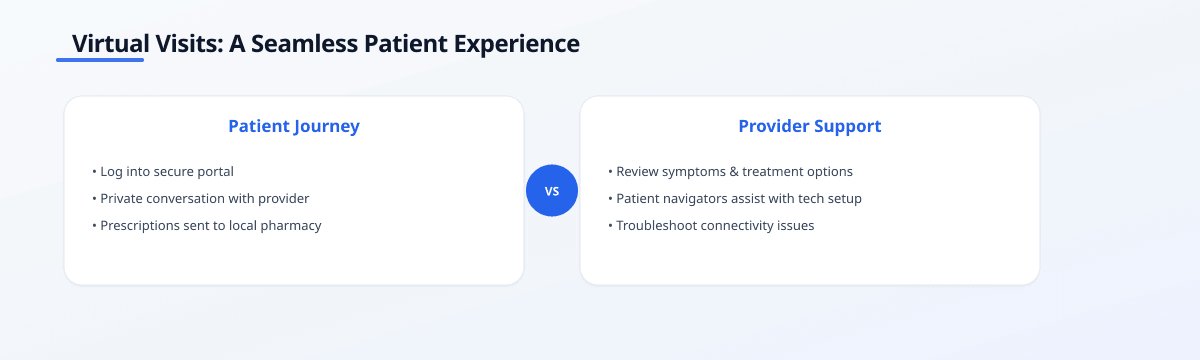
For patients, the experience is straightforward. A typical virtual visit is similar to a face-to-face appointment. Patients log into a secure portal, check in, and have a private conversation with their provider. The provider can review symptoms, discuss treatment options, and send prescriptions to a local pharmacy. For those who need help setting up the technology, many healthcare systems offer patient navigators who can provide instructions and troubleshoot connectivity issues. The goal is to make the process as seamless as possible.
Addressing Privacy and Security Concerns
One of the most common questions about telehealth is, "Is my information safe?" The answer is yes, provided that providers use secure, HIPAA-compliant platforms. These platforms encrypt data both in transit and at rest, ensuring that patient information is protected from unauthorized access. During the pandemic, some providers used non-HIPAA-compliant apps like FaceTime or Skype due to waivers, but this was meant to be temporary. The industry has since shifted to robust telehealth platforms that offer the same level of security as in-person medical records.
Patients also have a role to play in protecting their privacy. They should ensure they are using a secure internet connection and a private location for their appointments. It is also wise to verify that the telehealth platform is legitimate and that the provider is licensed to practice in their state. By taking these precautions, patients can enjoy the benefits of telehealth without compromising their personal health data.
The Role of Telehealth in a Broader Healthcare Strategy
Telehealth should not be viewed in isolation. It is a powerful tool that works best when integrated into a comprehensive healthcare system. For rural areas, this means combining telehealth with in-person care at local clinics, allowing for a hybrid model. A patient might see a local nurse practitioner for routine check-ups and use telehealth for specialist consultations. This approach strengthens the local healthcare infrastructure, rather than replacing it.
Moreover, telehealth can help address social determinants of health, such as transportation and food insecurity. By reducing the need for travel, telehealth frees up time and resources for other pressing needs. It also enables more frequent follow-ups, which can help patients stay on track with treatment plans. As healthcare moves toward value-based care, where providers are rewarded for keeping patients healthy, telehealth becomes an essential strategy for achieving better outcomes at lower costs.
In our guide on pack and load services, we discuss how professional help can reduce the stress of relocation. Similarly, telehealth reduces the stress of accessing healthcare. It is about removing barriers and creating a more patient-centric experience.
Future Trends and Innovations in Rural Telemedicine
The field of telehealth is evolving rapidly. Artificial intelligence (AI) is being integrated into diagnostic tools, helping providers analyze data from remote monitoring devices and flag potential issues before they become critical. Wearable technology, such as smartwatches that can detect irregular heart rhythms, is becoming more common, providing a continuous stream of health data that can be shared with providers. These innovations promise to make telehealth even more proactive and personalized.
Another trend is the expansion of telehealth into specialized areas like home dialysis and physical therapy. For example, patients who require dialysis can now use a remote monitoring system that allows a nurse to oversee their treatment from a central location, enabling them to receive this life-saving therapy at home. Physical therapists can guide patients through exercises via video, ensuring they perform them correctly and safely. These applications demonstrate that telehealth is not limited to simple consultations; it can be used for complex, ongoing care.
However, with these advancements come challenges. The digital divide must be addressed to ensure that all rural residents can benefit. Additionally, there is a learning curve for both patients and providers. Training programs and user-friendly interfaces will be crucial to ensure that telehealth is accessible to everyone, regardless of their technical proficiency.
How Patients and Providers Can Get Started
For a rural resident interested in using telehealth, the first step is to check with their local healthcare provider. Many clinics now offer virtual visit options. Patients should ask if their provider has a telehealth portal and what the process is for scheduling an appointment. It is also helpful to verify that the provider accepts their insurance for telehealth services. If a specialist is needed, patients can ask their primary care provider for a referral to a telehealth program.
For healthcare providers looking to implement telehealth, there are several key considerations. First, they need to choose a secure, HIPAA-compliant platform that meets their needs. Second, they need to train their staff and patients on how to use it. Third, they need to establish clear protocols for triage, follow-up, and emergency situations. It is also important to consider the patient's technical capabilities and offer support options, such as a help desk or a test call before the first appointment. By approaching telehealth thoughtfully, providers can ensure a positive experience for their patients and their practice.
In conclusion, telehealth is not a futuristic concept; it is a present-day reality that is changing lives in rural America. By expanding access, reducing costs, and improving outcomes, it is a critical tool for health equity. While challenges like the digital divide and policy uncertainties remain, the trajectory is clear. Telehealth for rural areas is here to stay, and its benefits are too significant to ignore. As technology continues to advance and policies evolve, the hope is that every rural resident will have the same access to quality care as someone in a major city. The road ahead is promising, and the destination is a healthier, more connected rural America.