
Specialized Equipment Moving: Commercial Relocation Guide
Learn how specialized equipment moving commercial services protect your machinery and minimize downtime during a business relocation.

By Sarah Morris
Moving commercial equipment is a high-stakes operation. A single misstep can damage expensive machinery, disrupt your operations, or even cause injury. Unlike household moves, commercial equipment requires specialized knowledge, rigging tools, and careful planning to ensure everything arrives safely. Whether you are relocating a manufacturing plant, an office with sensitive servers, or a medical facility with imaging devices, the process demands a professional touch. This article explores the nuances of specialized equipment moving for commercial settings and offers a framework for a smooth transition.
Understanding Specialized Equipment Moving
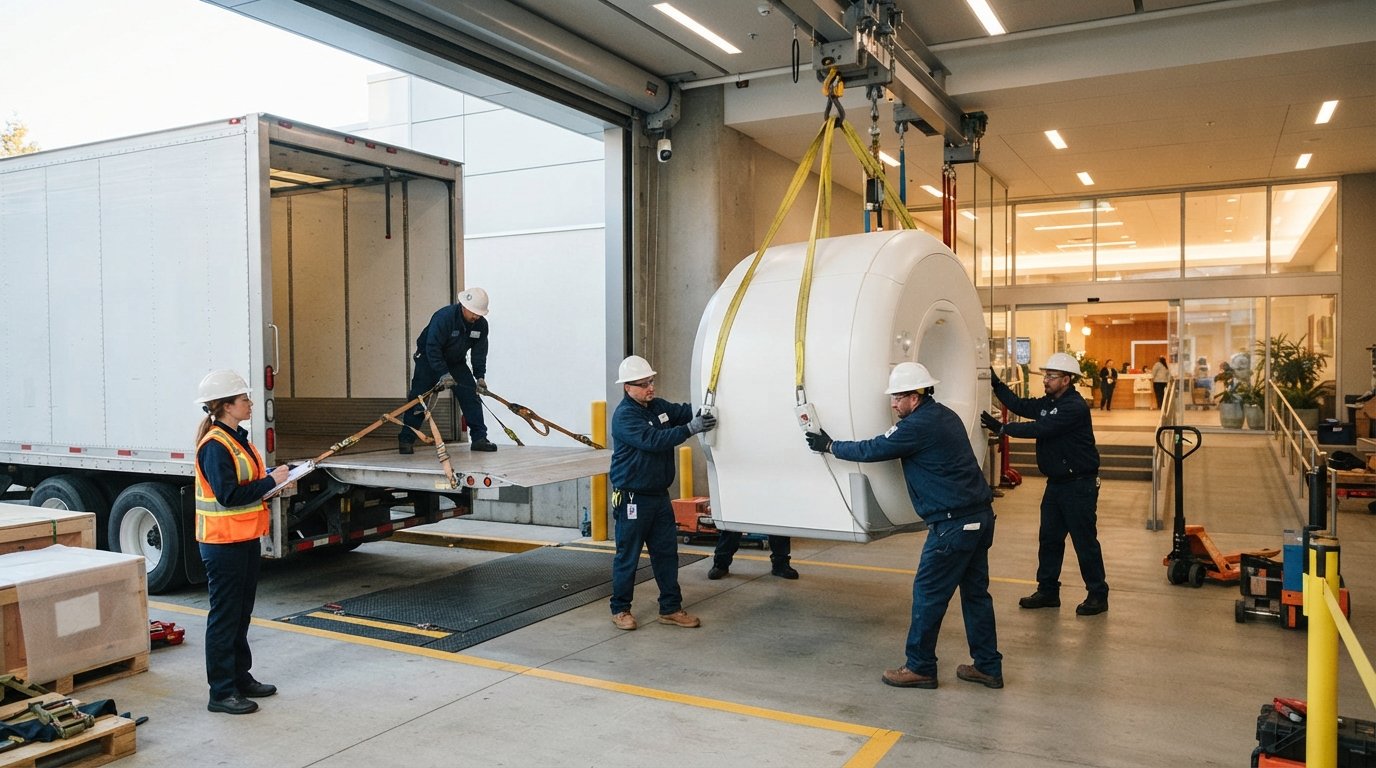
Specialized equipment moving refers to the transportation of heavy, delicate, or high-value items that standard moving crews are not equipped to handle. This includes industrial machinery, CNC machines, medical imaging equipment (like MRI and CT scanners), laboratory instruments, large copiers, and even IT infrastructure like mainframe servers. The term 'specialized' highlights the need for custom crating, advanced rigging techniques, and crews with specific training.
Commercial relocations often involve a mix of standard office furniture and highly sensitive technical equipment. While a general commercial mover can handle desks and chairs, the specialized items require a different level of expertise. Choosing a company that offers both commercial moving and specialized equipment handling can simplify the coordination, but it is essential to verify their capabilities and safety records for complex pieces.
The stakes are high. An incorrectly moved piece of machinery can lead to costly repairs, extended downtime, and potential safety hazards. The right approach protects your investment and ensures your business can resume operations quickly. In our guide on how to choose heavy equipment moving services, we detail the qualifications to look for, which is a useful starting point for any commercial move.
Planning Your Commercial Equipment Move
Successful specialized equipment moves begin months in advance. The first step is a comprehensive audit of what you are moving. Document each piece, including make, model, serial number, dimensions, weight, and any specific handling requirements. This inventory is the foundation of your moving plan and will be essential when requesting quotes.
Next, assess the physical environment. Measure doorways, hallways, elevators, and loading docks at both the origin and destination. Identify potential obstructions like low ceilings, narrow corridors, or weight limits on floors. This pre-move survey, often called a site survey, allows the moving crew to plan the rigging path and identify any challenges before move day. You may need to secure special permits for oversized loads or coordinate with building management for elevator use.
Another critical planning step is to create a detailed timeline. Factor in the time needed for disconnection, disassembly, packing, transport, and reinstallation. For critical equipment, consider whether you need a contingency plan, such as renting temporary equipment or scheduling the move during a planned shutdown to minimize operational disruption.
Site Survey and Logistics
During the site survey, the moving company will evaluate access points and determine the necessary equipment, such as cranes, forklifts, or pallet jacks. They will also check for any environmental conditions, like temperature or humidity controls, that might be required during transit. This is the time to discuss insurance coverage and liability limits, ensuring you have a clear understanding of what is protected.
Logistics also involve selecting the right mode of transportation. For small, high-value items, an enclosed van provides protection from weather and theft. Larger machinery might require flatbed trucks with specialized tie-downs. For international moves, you will need to consider ocean freight, customs clearance, and potential delays. A professional mover will handle these details, but you should be informed about the process.
How Commercial Movers Handle Sensitive Equipment
Professional commercial movers employ a systematic approach to handle sensitive equipment. They start with a detailed inventory and condition report, often including photographs. Then, they use a variety of techniques depending on the item:
- Custom Crating: For fragile or uniquely shaped items, movers build custom wooden crates with internal cushioning to prevent any movement during transit.
- Rigging and Lifting: Heavy machinery is moved using hydraulic jacks, skates, and cranes. Trained riggers understand how to lift and balance loads safely to avoid damage.
- Climate Control: Sensitive electronics and medical equipment often require temperature and humidity-controlled transport to prevent condensation or static damage.
- Disassembly and Reassembly: Many machines must be partially disassembled to fit through doorways or to reduce weight. Movers are skilled at labeling and reassembling complex components.
- Advanced Securing: Inside the truck, equipment is secured with heavy-duty straps and blocks to prevent shifting during acceleration, braking, and turns.
Beyond these physical steps, professional crews also use specialized tools like air-ride suspension trucks that absorb road vibrations. They may also employ remote monitoring devices to track temperature and shock levels in real time. This detailed attention reduces the risk of damage and ensures your equipment arrives in the same condition it left.
Why You Need a Specialized Commercial Mover
Attempting to move commercial equipment with general labor or an inexperienced moving company is a gamble. The potential costs of damage, injury, and downtime far outweigh the savings from a cheaper quote. Specialized movers bring several key advantages:
- Safety Compliance: They are trained in OSHA regulations and proper lifting techniques, reducing the risk of workplace injuries.
- Insurance Coverage: They carry liability coverage and cargo insurance that protects your equipment during the move.
- Experience with Complex Moves: They have the experience to anticipate and solve problems that only arise with high-value, sensitive equipment.
- Time Efficiency: Their trained crews work quickly and efficiently, minimizing the time your equipment is out of service.
In addition, specialized movers often provide a single point of contact for all your commercial moving needs. This simplifies communication and ensures that the team handling your move is accountable for the entire process. When you are moving a commercial facility, the last thing you need is a fragmented effort with multiple vendors.
Choosing the Right Commercial Moving Partner
Selecting a commercial mover for specialized equipment is a decision that requires careful research. Do not rely solely on a phone quote. Request a thorough site survey and ask for references from businesses similar to yours. Inquire about their experience with your specific type of equipment and ask for a detailed written plan that includes the methods and tools they will use.
It is also vital to understand the cost structure. Commercial moving quotes should be detailed, itemizing every service from the site survey to the final placement of your equipment. Be wary of vague estimates that might later include hidden fees for rigging, permits, or stair carries. A transparent quote is a hallmark of a reliable company.
Consider the company's financial stability and reputation. A company that has been in business for years and has a strong track record with commercial clients is more likely to be dependable. Check their affiliations with professional organizations, like the American Moving and Storage Association, and review their complaint history with the Better Business Bureau.
Cost Factors for Specialized Equipment Moving
The cost of moving specialized commercial equipment varies widely based on several factors:
- Weight and dimensions of each piece.
- Distance of the move (local vs. long-distance).
- Complexity of the rigging (e.g., need for cranes or disassembly).
- Accessibility at both ends (e.g., ground floor vs. high-rise).
- Any required permits or escort vehicles for oversize loads.
- Insurance and valuation coverage.
While cost is a significant consideration, it should not be the sole deciding factor. Getting multiple quotes from qualified movers is essential. When you request a quote through a platform like FreeQuotes.Contractors, you can compare offers from multiple pre-vetted professionals, helping you find a balance between cost and quality. This also allows you to see the range of services offered and make an informed decision.
Remember that the cheapest quote is not always the best value. An unusually low bid may indicate insufficient insurance, lack of proper equipment, or inexperience. Look for a mover that provides a comprehensive service package, even if it costs a bit more. The peace of mind is worth the investment.
Best Practices for a Smooth Move
Effective communication is the cornerstone of any successful commercial move. Designate a point person within your company to coordinate with the moving crew. This individual should have authority to make decisions and have a deep understanding of the equipment being moved. They will also be responsible for ensuring that all utilities are shut down and reconnected as needed.
Before the movers arrive, ensure your equipment is ready for transport. Back up all critical data from computers and servers. Unplug and disconnect any peripherals. Clean and prep machinery according to manufacturer guidelines. Label all cables and connections clearly to simplify reassembly. The more preparation you do, the faster the movers can work and the lower the risk of missteps.
Post-Move Inspection and Setup
After your equipment arrives at the new location, do not rush the setup process. Inspect each piece for any signs of damage. Have the moving crew place items in their designated spots before you begin reconnection. Once everything is in place, test each piece of equipment to ensure it is functioning correctly. Keep detailed records of any issues for insurance claims.
For highly technical equipment, you may need to have the manufacturer or a certified technician perform the final calibration and startup. This is especially true for medical devices, CNC machines, and specialized laboratory tools. The moving company will transport and position the machine, but only a qualified technician can ensure it operates to spec.
Streamlining the Process with Professional Resources
Relocating commercial equipment does not have to be an overwhelming ordeal. With a structured plan and the right professional partners, you can minimize downtime and ensure the safety of your assets. Start by leveraging resources that help you compare vetted professionals. At Moving.Homes, we simplify the process by connecting you with movers who specialize in commercial and specialized equipment handling. Our network includes companies that offer guaranteed pricing and are backed by trained professionals, available 24/7 to support your move.
Requesting quotes through our platform gives you access to multiple service providers who understand the complexities of moving commercial machinery. You can evaluate their services, compare costs, and choose the one that best fits your operational needs. By taking this step, you are not just moving equipment; you are ensuring business continuity and protecting your valuable investments.
In conclusion, a commercial move involving specialized equipment is a complex project that requires expertise, planning, and careful execution. By understanding the unique challenges, conducting thorough due diligence, and engaging experienced professionals, you can turn a potentially disruptive event into a manageable transition. The goal is to get your business up and running in your new space with minimal interruption and maximum confidence.