
Secure Storage for Valuable Documents During Move: 10 Pro Tips
Protect your passports, deeds, and records with a proven plan for secure storage for valuable documents during move. Keep them safe and accessible.

By Ryan Cooper
Moving day can be chaotic, with boxes shuffled, furniture lifted, and a constant stream of people coming and going. In that whirlwind, your most sensitive paperwork, from passports and property deeds to birth certificates and financial records, can easily be misplaced, damaged, or even stolen. The stakes are high: losing these documents can lead to identity theft, legal complications, or significant delays in settling into your new home. The solution lies in creating a dedicated, secure storage plan for valuable documents during move, a strategy that goes beyond simply tossing files into a random box. This guide will walk you through the essential steps to ensure your crucial paperwork arrives safely and stays protected throughout the entire relocation process.
Why Dedicated Document Security Matters on Moving Day
During a move, your home is in a state of flux. Doors may be left open for movers, boxes are stacked on the curb, and strangers are handling your belongings. This environment is ripe for accidental damage or opportunistic theft. A stack of unmarked files or a folder tucked into a kitchen drawer is an easy target. Furthermore, documents are susceptible to environmental damage. Cardboard boxes can be crushed, moisture from rain or spills can ruin paper, and extreme heat can warp or discolor important records.
Think about what you would do if your passport vanished right before an international move or if your vehicle title was lost during a cross-country relocation. The administrative headache alone can derail your plans for weeks. By implementing a secure storage system, you are not just protecting paper, you are safeguarding your identity, your financial stability, and your peace of mind. This is a critical part of moving preparation, and it requires a proactive, organized approach.
Step 1: Inventory and Prioritize Your Documents
Before you can secure anything, you need to know what you have. Start by gathering all documents from every corner of your home. This includes filing cabinets, desk drawers, safes, and even those shoeboxes tucked away in a closet. Once you have everything in one place, create a detailed inventory. Your list should categorize each document and note its level of sensitivity.
For clarity, group them into three tiers:
- Critical and Irreplaceable: Passports, driver's licenses, social security cards, birth certificates, marriage certificates, adoption papers, and citizenship documents. These are difficult or impossible to replace.
- Important but Replaceable: Property deeds, vehicle titles, mortgage documents, insurance policies, tax returns, wills, and power of attorney. These are vital but can be reissued with time and effort.
- Financial and Medical: Bank statements, credit card agreements, investment records, medical records, and prescription lists. You may not need the entire history, but you will need recent statements and key contact information.
With this inventory, you can decide what travels with you, what goes into secure storage, and what can be digitized or shredded. This process also helps you avoid carrying unnecessary clutter, making your document storage more efficient and focused.
Step 2: Choose Your Secure Storage Method
The level of protection you need will depend on the type of document and the duration of the move. For most moves, a layered approach works best. You will want a primary, portable secure container for the most critical items, and a secondary system for other important paperwork.
Option 1: The Personal Carry-On Safe
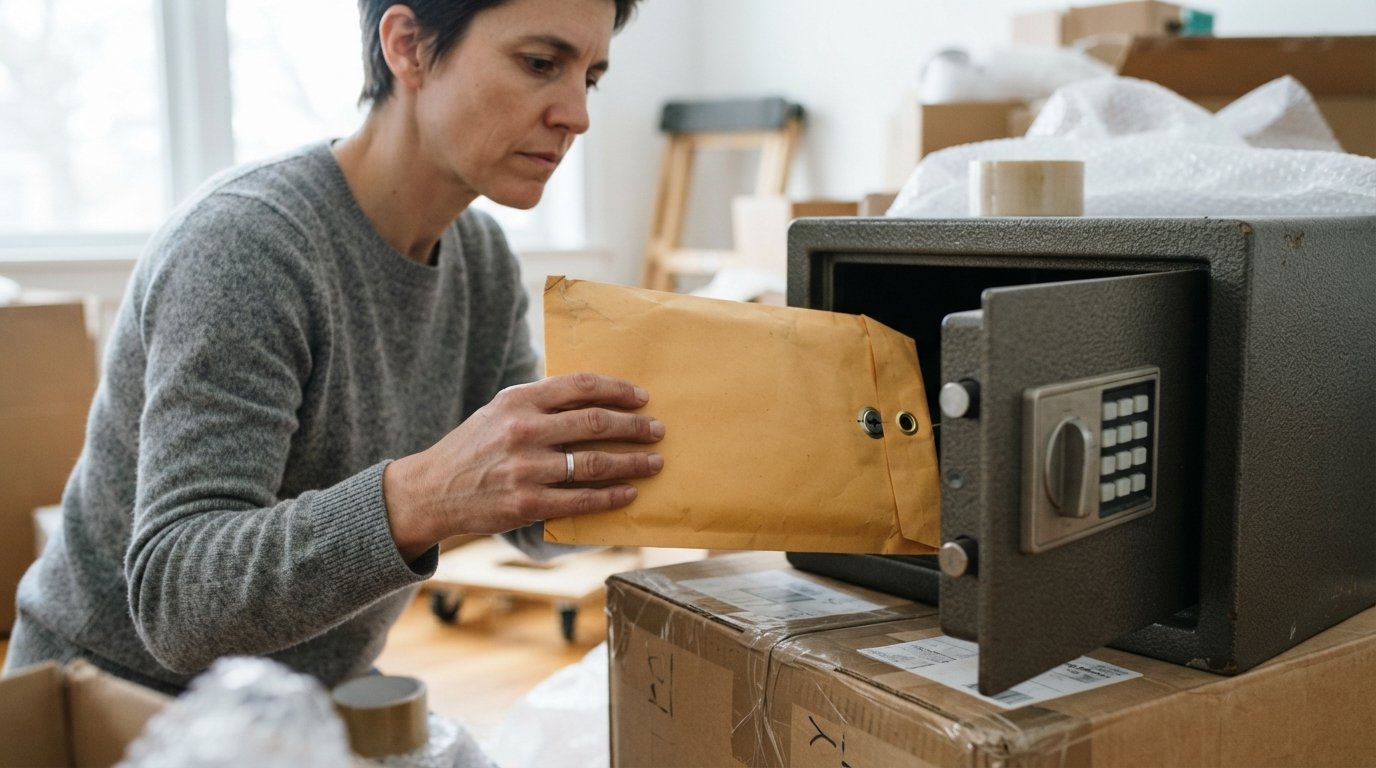
For your most critical documents, a fireproof and waterproof safe or a lockable briefcase is ideal. This should be small enough to fit under the seat in front of you in a car or airplane, as you should never let it out of your sight. This safe will hold your passports, IDs, and essential financial records. It is your personal, mobile vault.
Option 2: A Dedicated Document Box
For larger quantities of important paperwork, invest in a sturdy, lockable file box. Look for one that is reinforced and possibly water-resistant. Clearly label it as “Important Documents , Do Not Place in Truck” and keep it with you in your vehicle. This box should contain your second-tier documents, such as tax returns, insurance policies, and lease agreements.
Option 3: Digital Backup
Before you even start packing, scan every critical document and store it securely in the cloud or on an encrypted external hard drive. This acts as an insurance policy. If the physical copy is lost or destroyed, you have a digital record that can be used to expedite replacements. Make sure to use a reputable cloud service with strong security measures, and keep the hard drive in a separate location from the originals, perhaps with a trusted family member.
Choosing the right method is not about selecting one option over the other; it is about creating a system that combines physical security with digital redundancy. For a comprehensive overview of storage solutions during a move, you might find our guide on smart storage solutions for movers helpful.
Step 3: Packing and Handling Your Documents Safely
Once you have your secure containers, proper packing is your next line of defense. Avoid simply stacking loose papers. Use labeled file folders to keep documents sorted by category. For example, have one folder for “Financial, ” another for “Medical,” and a third for “Legal.” This organization will save you tremendous time when you need to find a specific document in your new home.
When placing files into your safe or document box, lay them flat rather than on their edges to prevent bending and creasing. If you are concerned about moisture, you can add silica gel packets to absorb any humidity. For extra-sensitive items like old photographs or certificates with embossed seals, consider placing them in plastic sleeves or archival-quality protectors first. Also, do not forget to include a small inventory list at the top of the box, so you can quickly verify that everything is present after the move.
Step 4: Maintaining Security During Transit and at Your New Home
Your responsibility does not end when the documents are packed. During the move, keep your personal safe and document box in your direct control. Never place them in the moving truck, as you cannot monitor the truck's contents during loading, transit, and unloading. Instead, they should ride with you in your car. If you are flying, these items should be in your carry-on luggage, never in checked baggage.
At your new home, establish a secure location before you start unpacking. This could be a home safe, a locked filing cabinet in a home office, or a locked drawer in your bedroom. Do not leave boxes of documents in the garage or a common area where they could be easily accessed by visitors or contractors. Once the move is complete, unpack your document box first and place everything in its designated spot. This will give you immediate peace of mind and allow you to check off that critical task from your moving checklist.
What to Do If Documents Are Lost or Damaged
Even with the best planning, accidents can happen. If a critical document is lost or damaged during the move, do not panic. Your first step is to assess the situation. For identity documents like passports and driver's licenses, contact the issuing agency immediately to report the loss and start the replacement process. For financial documents, contact your bank or credit card company to place alerts on your accounts and prevent fraud. For property and legal documents, consult with your attorney or the relevant government office to understand the reissuance procedure.
In cases of theft, file a police report and report the incident to the relevant authorities, such as the Federal Trade Commission if you suspect identity theft. Having your digital backup will be incredibly valuable here, as it provides proof of the document's existence and key details. Remember that you are not alone in this; many resources are available to help you recover. For home repair or restoration services if your documents are damaged by water or fire, you can find pre-vetted contractors at FreeQuotes.Contractors, which can be a practical first step in mitigating damage.
Long-Term Storage Solutions for Documents
After the move, you may find that you have more documents than you need to access on a daily basis. This is where a professional storage solution can be beneficial. Many moving companies offer secure, climate-controlled storage units that are perfect for long-term document retention. These facilities provide an added layer of security with surveillance and access controls, and they protect against temperature and humidity fluctuations that can damage paper.
If you are moving to a smaller home or simply want to declutter, renting a storage unit for your non-critical documents can be a smart move. For example, you can store old tax returns (past the 7-year retention rule), paid-off loan documents, and children's artwork without cluttering your living space. However, always ensure that the storage facility you choose is reputable and offers the security features you require. Your moving company can often provide or recommend such facilities, and they can even transport your document boxes directly to the unit.
Ultimately, the goal is to find a balance between accessibility and security. Keep frequently needed documents at home and use professional storage for the rest, ensuring that your most important records are safe for years to come.
Final Thoughts on Your Moving Day Strategy
Planning for secure storage for valuable documents during move is an act of self-care. It transforms a potential source of anxiety into a controlled, manageable task. By taking the time to inventory, prioritize, and protect your paperwork, you are investing in a smoother transition to your new life. You will have the peace of mind knowing that your identity, finances, and legal standing are safe, no matter how chaotic moving day becomes. So, before you tape up another box, take a deep breath, assemble your critical files, and put this plan into action. It is one of the most important moving tasks you will complete.