
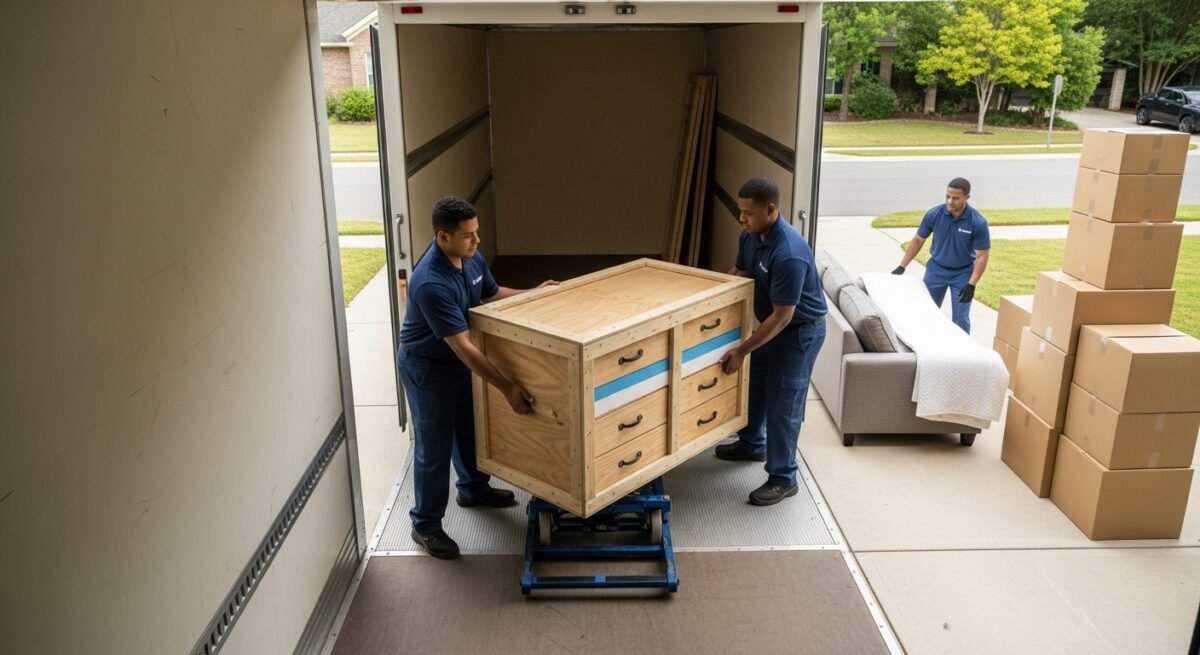
Safe Furniture Transport: Top Crating Companies
Discover how crating companies for safe furniture and equipment transport protect your valuables with custom crates, professional packing, and expert handling.

By Ryan Cooper
Moving heavy furniture, delicate electronics, or irreplaceable antiques can feel like a high-stakes game. Every bump on the road or careless lift at the loading dock carries the risk of scratches, dents, or total destruction. While professional movers handle the heavy lifting, the true safeguard for your most valuable possessions often begins before the truck even arrives: with the crate. Crating companies for safe furniture and equipment transport provide a specialized layer of protection that standard moving blankets and shrink wrap simply cannot match. This guide explores why professional crating is a game-changer for your move, how to select the right service, and what you can expect from the process.
Think of a custom crate as a tailored suit of armor for your belongings. Unlike generic boxes, a well-built crate is engineered to absorb shock, resist compression, and distribute weight evenly. This is especially critical for items with irregular shapes, fragile surfaces, or high monetary or sentimental value. In this article, we will walk through the benefits of using professional crating services, the types of items that demand them, and the exact steps to ensure your possessions arrive in pristine condition.
Why Professional Crating Matters for Your Move
When you hire crating companies for safe furniture and equipment transport, you are investing in more than just a wooden box. You are investing in peace of mind. Standard moving practices often involve wrapping items in pads and plastic, which protects against minor scuffs but offers little defense against significant impacts or crushing forces. A custom crate, on the other hand, provides a rigid, impact-resistant shell that can withstand the rigors of long-distance hauls, warehouse stacking, and even international shipping.
Moreover, crating is not a one-size-fits-all solution. Professional craters assess the unique dimensions, weight, and fragility of each item to design a protective structure that fits like a glove. This precision minimizes internal movement, which is the leading cause of transport damage. For high-value items like grand pianos, marble sculptures, or server racks, the crate is often engineered with specific materials, such as plywood, foam padding, and moisture barriers, to address particular risks like humidity, vibration, or temperature fluctuations.
Beyond physical protection, a professional crate can also simplify insurance claims. If you need to file a damage report, the existence of a professionally engineered crate demonstrates that you took reasonable steps to protect your goods, which can strengthen your case. In our guide on safe moving services for valuables and furniture, we emphasize that proper packing is the first line of defense, and a custom crate is the ultimate expression of that principle.
What Items Absolutely Need Custom Crating?
Not every item in your home requires a custom crate. Everyday furniture like sofas and bookshelves typically travel fine with traditional padding and wrapping. However, certain categories of possessions are prime candidates for custom crating services due to their fragility, value, or shape. Understanding which items fall into this category is the first step in deciding whether to call in the crating experts.
Here are the most common items that benefit from custom crating:
- Fine Art and Antiques: Paintings, sculptures, and heirloom furniture often have delicate surfaces, fragile joints, or irregular shapes that make them vulnerable to damage.
- Musical Instruments: Grand pianos, harps, and vintage guitars are sensitive to humidity, temperature, and shock, requiring a climate-controlled crate with specialized cushioning.
- Electronics and Medical Equipment: Servers, MRI machines, laboratory instruments, and high-end audio-visual equipment are expensive to repair and require protection from static, moisture, and impact.
- Large or Awkward Items: Pool tables, chandeliers, marble countertops, and large mirrors often cannot be safely moved without a custom crate to support their weight and shape.
Each of these items presents unique challenges. For example, a painting might need a crate with a rigid frame and glassine paper to prevent moisture damage, while a piano requires a crate with internal bracing to keep the instrument from shifting. Professional crating companies have the expertise to handle these nuances, ensuring that your most vulnerable possessions are transported with the highest level of care.
How to Choose the Right Crating Company
Selecting a crating partner is not a decision to take lightly. The quality of the crate directly impacts the safety of your items, and a poorly constructed crate can be worse than no crate at all. To find reliable crating companies for safe furniture and equipment transport, you need to evaluate their experience, materials, and process. Here are key factors to consider during your research.
First, look for a company with a proven track record in handling items similar to yours. Ask for references or case studies that demonstrate their ability to pack and ship fragile or high-value goods. A reputable company will be transparent about their methods and happy to share examples of their work. Next, inquire about the materials they use. High-quality crates are typically made from plywood or OSB (oriented strand board) with internal foam or cushioning, and they should be designed for the specific mode of transport (truck, air, or sea).
Another critical factor is the company’s approach to insurance and liability. A professional crating service should carry their own insurance to cover any damage that occurs during the packing or crating process. They should also be able to coordinate with your moving company or freight carrier to ensure the crates are handled correctly. Finally, consider the level of customer service. Do they offer on-site assessments? Can they provide a detailed quote that includes materials, labor, and transportation? A company that is responsive and clear in their communication is more likely to deliver a positive experience.
To help you compare your options, here is a checklist of questions to ask potential crating providers:
- What is your experience with items similar to mine?
- What materials do you use, and can you provide a sample or description?
- Do you offer on-site crating, or do I need to deliver the item to your facility?
- Is the crate engineered for the specific transport method (e.g., air, sea, or ground)?
- What is your process for handling insurance claims if damage occurs?
By asking these questions, you can filter out less experienced providers and select a crating partner who meets your specific needs. Remember, the cheapest option is not always the best. The cost of a custom crate is a fraction of the cost of replacing a damaged heirloom or a piece of equipment, so prioritize value and reliability over price alone.
The Crating Process: From Assessment to Delivery
Understanding the crating process can help you prepare and set realistic expectations. Most professional crating services follow a structured workflow that begins with a thorough assessment of your items and ends with a secure handoff to the carrier. Here is a step-by-step look at what you can expect when you hire a crating company.
Step 1: On-Site Assessment A technician visits your location to inspect the items that need crating. They measure dimensions, note any existing damage, and discuss your transport requirements, including the destination and mode of shipping. This information is used to design a custom crate that meets the specific needs of your items.
Step 2: Crate Design and Construction The crating company then constructs the crate in their workshop or on-site. The design typically includes a sturdy wooden frame, foam or bubble wrap for cushioning, and a moisture barrier if needed. For particularly delicate items, they may use shock-absorbing mounts or internal bracing to keep the item suspended and stable.
Step 3: Packing and Securing The item is carefully wrapped and placed inside the crate. It is then secured with straps, foam blocks, or other materials to prevent any movement during transit. The crate is sealed and labeled with handling instructions, such as “This Side Up” or “Fragile.”
Step 4: Transport Coordination The crated item is then either picked up by the moving company or freight carrier, or you arrange for delivery to the carrier’s hub. The crating company may provide documentation that lists the contents and any special handling requirements.

Step 5: Delivery and Unpacking At the destination, the crate is opened by the recipient or a specialist. The item is removed and inspected for any damage that may have occurred during transit. Professional craters can also arrange for disposal of the crate or return it for reuse, depending on your preferences.
The entire process is designed to be as seamless as possible, but it requires clear communication between you, the crating company, and your moving or shipping provider. By understanding each stage, you can ensure that all parties are aligned and that your items receive the care they deserve.
Cost Considerations and Budgeting for Crating
The cost of custom crating services varies widely depending on the size, complexity, and value of the items being shipped. A small, simple crate for a painting might start at around $150, while a large crate for a grand piano or a piece of industrial equipment can cost several thousand dollars. The price is influenced by the materials used, the labor involved, and any special features like climate control or shock absorption.
When budgeting for your move, it is wise to get detailed quotes from multiple crating companies. Make sure the quote includes all costs, such as the assessment, materials, construction, and any transportation to the carrier. Some companies offer package deals that include both crating and shipping, which can be more convenient and potentially more cost-effective.
It is also important to consider the value of the items you are protecting. If you are shipping a $5,000 antique cabinet, spending $500 on a custom crate is a reasonable investment. However, for lower-value items, you might opt for a less expensive solution like reinforced cardboard boxes or rental crates. Professional craters can advise you on the most cost-effective approach for your specific situation, ensuring you do not overspend on unnecessary protection.
For those looking to finance their move and crating costs, some companies offer flexible payment options. For instance, you might explore financing solutions from providers like startautoloan.com to manage the upfront expenses of a comprehensive moving and crating plan, allowing you to spread the cost over time. While not a moving-specific service, such financing can be useful for covering unexpected expenses, especially if you are coordinating a long-distance or corporate relocation.
Common Mistakes to Avoid When Using Crating Services
Even with professional help, there are pitfalls that can compromise the safety of your items. Being aware of these common mistakes can help you avoid costly errors and ensure a smooth experience with your crating company.
One frequent mistake is failing to disclose the true value of your items. Some customers understate the value to save on insurance premiums, but this can backfire if an item is damaged and the claim is denied. Always provide an accurate valuation, and consider purchasing additional insurance if the standard coverage is insufficient.
Another error is not allowing enough time for the crating process. Custom crates are not made overnight. If you book a crating service at the last minute, you may be forced to accept a rushed job or a generic crate that does not provide adequate protection. Plan ahead and schedule the crating at least a week before your move date, especially if you have multiple items or complex requirements.
Finally, do not assume that a crate is indestructible. Even the best crate can fail if it is handled improperly during transit. Ensure that your moving company or freight carrier is aware of the crates and their handling requirements. You may also want to use tracking services to monitor the shipment’s progress and be available at the destination to inspect the crate upon arrival.
Frequently Asked Questions
Q: How far in advance should I book a crating service?
It is recommended to book at least 1 to 2 weeks in advance, especially during peak moving seasons. Complex items may require more lead time for design and construction.
Q: Can I ship a custom crate internationally?
Yes, custom crates are often used for international shipping. The crate must comply with ISPM 15 regulations for wood packaging material, which requires heat treatment or fumigation. Your crating company should be familiar with these requirements.
Q: What is the difference between crating and packing?
Packing typically involves wrapping items in materials like bubble wrap and placing them in boxes. Crating involves building a rigid, custom-made wooden or plastic enclosure that provides a higher level of protection against impact and environmental factors.
Q: Can I rent reusable crates instead of buying custom ones?
Yes, some companies offer reusable crates for a fee, which can be a cost-effective option for one-time moves. However, these crates may not fit irregularly shaped items as well as custom solutions.
Q: Are custom crates eco-friendly?
Many crating companies use sustainable materials and offer recycling or reuse programs. You can ask about their environmental policies when getting a quote.
Final Thoughts on Crating for Your Move
Investing in crating companies for safe furniture and equipment transport is a smart decision that protects your most valuable and vulnerable possessions. Whether you are moving across town or across the globe, a professionally designed crate can mean the difference between a stress-free relocation and a costly disaster. By selecting a reputable provider, understanding the process, and budgeting accordingly, you can ensure that your belongings arrive at your new home in the same condition they left.
Remember, the goal of any move is not just to get your items from point A to point B, but to do so without damage. Custom crating is the most reliable way to achieve that goal for high-value items. So, take the time to research your options, ask the right questions, and work with a crating partner who understands the importance of your possessions. Your future self, and your furniture, will thank you.