
Portable Storage Container Rental: Monthly Cost Guide
Get clear monthly rates for portable storage containers and avoid surprise fees. Call (833)-484-8675 for expert moving and storage guidance.

By Lauren Scott
When you are planning a move, a renovation, or a major decluttering project, a portable storage container can feel like a lifesaver. It lets you pack at your own pace, keep your belongings secure on your driveway or job site, and avoid the frantic rush of a traditional moving day. But before you book, you need a clear answer to one pressing question: how much does it cost to rent a portable storage container for a month? The short answer is that most homeowners pay between $250 and $600 per month for a standard unit, but that range swings widely based on container size, your location, and the services included. This guide breaks down the real numbers, the fees that catch people off guard, and the questions you should ask before signing a rental agreement.
The Typical Monthly Price Range for Portable Storage Containers
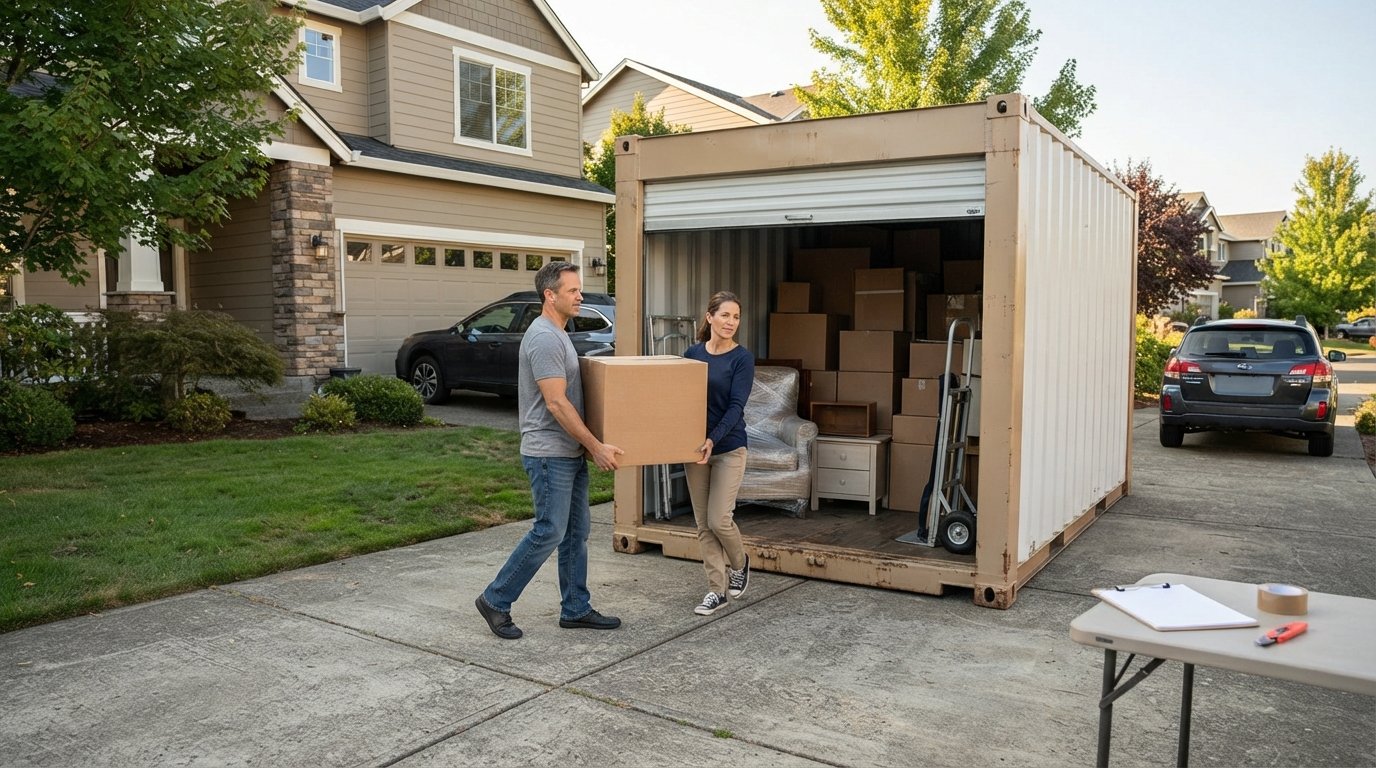
Portable storage containers, often called pods or mobile storage units, are delivered to your property, filled at your convenience, and then either stored on-site or moved to a secure facility. The monthly rental fee covers the use of the container itself, and sometimes includes a set number of days for loading and unloading. Across the United States, the base monthly rate for a standard 8-foot by 8-foot by 16-foot container generally falls between $250 and $450. Larger units, such as 8-foot by 8-foot by 20-foot containers, typically run from $350 to $600 per month. Smaller units, like 8-foot by 8-foot by 12-foot containers, may cost $200 to $350 monthly.
These figures are not one-size-fits-all. Urban areas with high real estate costs and tight logistics networks tend to charge more, while rural regions often have lower monthly rates but higher delivery fees. For example, renting a 16-foot container in a midwestern suburb might cost $280 per month, while the same unit in a dense coastal city could easily exceed $450. It is also common for companies to offer a flat rate that includes delivery, pickup, and a set rental period of 30 days. After that initial period, you pay a daily or monthly extension fee, which usually ranges from $10 to $30 per day or $100 to $200 per month.
To give you a clearer picture, here is a breakdown of typical monthly rental ranges by container size for a standard 30-day period. Keep in mind that these are base rates and do not always include delivery, pickup, or taxes.
- 12-foot container: $200 to $350 per month, suitable for a studio or one-bedroom apartment.
- 16-foot container: $250 to $450 per month, ideal for a two-bedroom home or a small office.
- 20-foot container: $350 to $600 per month, best for a three-bedroom house or larger commercial inventory.
Beyond the base rent, expect to pay a separate delivery fee and a pickup fee. These are often charged each way and can range from $50 to $150 depending on the distance from the depot to your location. Some companies bundle the first delivery and pickup into the initial quote, but many do not. Always confirm whether the quoted monthly rate includes these logistics charges. If you are moving long-distance and need the container transported to another city, the cost can jump significantly, often adding $500 to $2,000 or more for the line-haul portion.
What Drives the Price: Key Factors That Change Your Quote
Understanding why one quote comes in at $275 and another at $525 for the same container size will help you compare offers fairly and avoid surprise charges. The rental duration is the most obvious factor: a one-month rental is the standard minimum, but if you need the container for six months, many companies offer discounted monthly rates. For instance, a 16-foot unit might be $350 for the first month and $300 for each additional month. Conversely, if you return the container early, you usually do not get a prorated refund, so estimate your timeline carefully.
Climate control is another major price lever. Standard containers are weather-resistant but not insulated, meaning temperature and humidity inside can fluctuate. If you are storing electronics, wooden furniture, artwork, or important documents, you may want a climate-controlled unit, which can add $50 to $150 per month. Permits also play a role. Many municipalities require a permit to place a portable container on a public street or sidewalk, and those permits can cost $20 to $100 or more. If you are placing the container on your private driveway, a permit is usually not needed, but you should still check local ordinances. Distance from the depot affects delivery and pickup fees: the farther the truck has to travel, the higher the charge. Finally, the time of year matters. Peak moving season (May through September) often brings higher rates and limited availability, so booking early can save you money.
Another factor is the company itself. National brands with large fleets may charge more but offer consistent service, while regional providers might have lower base rates but fewer container sizes or less flexible scheduling. When you request quotes, ask for a line-item breakdown that separates the monthly rental, delivery fee, pickup fee, taxes, and any administrative charges. This transparency makes it easier to compare the true cost of renting a portable storage container for a month across different providers.
Portable Storage vs. Self Storage vs. Full-Service Storage
It is tempting to compare a portable container to a traditional self-storage unit, but they serve different purposes and have different cost structures. A self-storage unit is a fixed room in a facility that you visit to load and unload. Monthly rents for a 10-foot by 10-foot self-storage unit typically range from $80 to $200, and you handle all the transportation yourself. Portable containers, by contrast, are delivered to you, so you avoid the cost and hassle of renting a truck or making multiple trips. However, you pay for that convenience: a portable container usually costs two to three times more per month than a comparable self-storage unit. If your primary goal is long-term storage and you have a vehicle to transport items, self storage is often cheaper. If you need to load gradually or keep items on-site during a renovation, the portable option is worth the premium.
Full-service storage is a third option, where a company picks up your belongings, stores them in a secure warehouse, and returns them when you need them. This is the most expensive route, often costing $150 to $300 per month for a small apartment's worth of goods, plus pickup and delivery fees. However, it requires zero packing or loading effort on your part. Portable containers sit in the middle: you do the packing and loading, but the company handles transportation and storage if needed. For a deeper dive into how portable units compare with traditional pods and what you can expect to pay in 2026, see our pods storage containers pricing breakdown, which walks through real-world cost scenarios.
When deciding between these options, consider your time, labor, and access needs. If you are moving out of a second-floor apartment with no elevator, a portable container on the street might be more convenient than hauling boxes to a self-storage facility across town. If you are remodeling a kitchen and need a place for cabinets and appliances for eight weeks, a portable container in the driveway saves daily trips. The key is to match the solution to your specific situation, not just the monthly sticker price.
Questions to Ask When Requesting Portable Storage Quotes
Getting a low monthly rate is only half the battle. To avoid surprise charges and ensure a smooth experience, ask these questions before you commit. First, confirm what the quoted monthly rate includes: does it cover delivery and pickup, or are those separate? Is there a fuel surcharge or a administrative fee? Second, ask about the rental period: is the rate for exactly 30 days, and what happens if you need the container a few days longer? What is the daily or monthly extension fee? Third, inquire about placement requirements: do you need a permit, and does the company handle that or do you? Fourth, ask about access and security: can you lock the container yourself, and is there a specific lock type required? Fifth, clarify the condition of the container: will it be clean, weather-tight, and free of odors? Finally, ask about liability: what happens if the container is damaged or if your belongings are damaged while in transit or storage? Understanding insurance coverage and liability limits is crucial.
It also helps to get quotes from at least three providers and compare them line by line. Do not be afraid to negotiate, especially during off-peak months. Some companies offer discounts for seniors, military members, or first-time customers. If you are also planning a move and need professional help with packing or transport, you can get free quotes from vetted movers through Moving.Homes, which connects you with providers who offer guaranteed pricing and 24/7 customer support. And if you are exploring ways to reduce your household energy costs after the move, consider requesting free solar power quotes to see if solar is a good fit for your new home. These small steps can add up to significant savings.
Here is a quick checklist of questions to bring to every quote conversation:
- What is the total cost for one month, including delivery, pickup, taxes, and all fees?
- How many days are included in the base rate, and what is the extension fee?
- Do I need a permit, and who is responsible for obtaining it?
- Is the container climate-controlled, and if not, what protection is offered?
- What is the liability policy for damage to the container or my belongings?
By asking these questions, you shift the conversation from a vague monthly rate to a clear, all-in cost. That clarity helps you budget accurately and avoid the frustration of a final bill that is hundreds of dollars higher than expected.
How to Budget for a Portable Storage Container Rental
Budgeting for a portable container involves more than just the monthly rent. Start by estimating your total rental period. Most people need the container for two to four weeks for a local move, but renovations or long-distance moves may require two to three months. Multiply the monthly rate by the number of months, then add delivery and pickup fees (if not included), permit costs, and any climate-control surcharge. Do not forget taxes, which vary by state and locality. A realistic budget for a two-month rental of a 16-foot container might look like this: $350 per month times two months equals $700, plus $100 delivery, $100 pickup, $50 permit, and $70 in taxes, for a total of $1,020. That is a far cry from the advertised $350 per month, which is why reading the fine print matters.
If your budget is tight, consider ways to reduce costs. Choose a smaller container if you can declutter aggressively before loading. Schedule delivery for a weekday or off-peak season. Ask about multi-month discounts. And if you only need storage for a short time, compare the cost of a portable container against a traditional rental truck and self-storage unit; sometimes the DIY route is cheaper, though it requires more labor. Finally, keep in mind that many portable storage companies require a deposit, often equal to one month's rent, which is refundable upon return of the container in good condition. Factor that deposit into your cash flow planning.
For a seamless moving experience, it also helps to coordinate your container rental with your overall move timeline. If you are hiring professional movers, ask if they can work with the container schedule. Some moving companies offer packing and loading services directly into the container, which can save you time and back strain. You can request quotes for packing and loading services through Moving.Homes to find providers that fit your needs and budget.
In the end, the cost to rent a portable storage container for a month is just one piece of the puzzle. By understanding the typical price ranges, the factors that drive costs up or down, and the questions to ask, you can make an informed decision that protects your wallet and your belongings. Whether you are staging a home for sale, managing a renovation, or simply need extra space during a move, a portable container offers flexibility and security, provided you go in with clear eyes and a detailed quote.