
Moving Cost Estimate: How Much Will Your Move Cost in 2026?
Get a clear moving cost estimate and learn how much your move will cost in 2026, plus tips to save money and avoid hidden fees.

By Nicole Walker
Planning a move often begins with a single, pressing question: how much will this actually cost? Whether you are relocating across town or across the country, the answer can vary widely based on a handful of key factors. Without a reliable moving cost estimate, you risk either overpaying for services you do not need or facing surprise fees that blow your budget. This guide breaks down the true cost of moving, explains how to get an accurate estimate, and shows you how to avoid common pricing pitfalls.
Key Factors That Influence Your Moving Cost Estimate
Every move is unique, and your final price will depend on more than just the distance you travel. Professional movers calculate quotes based on a combination of weight, volume, distance, and the level of service you choose. Understanding these variables helps you ask the right questions and compare quotes fairly.
The most significant cost drivers include the size of your home, the number of rooms, the amount of furniture and boxes, and whether you need extra services like packing or storage. For example, a studio apartment move might cost a few hundred dollars for a local move, while a four-bedroom house moving out of state could easily run several thousand. The table below outlines typical ranges based on home size and distance.
Here is a quick breakdown of the primary factors that affect your moving cost estimate:
- Distance: Local moves are usually charged by the hour, while long-distance moves are based on weight and mileage.
- Home size: The number of rooms directly correlates with the volume of belongings and the time required.
- Services: Full-service packing, unpacking, and furniture disassembly add to the total cost.
- Time of year: Peak season (May to September) and weekends typically cost more than off-peak weekdays.
- Special items: Pianos, safes, artwork, and large appliances require extra labor and equipment.
Once you have a clear picture of these variables, you can start requesting quotes. Many companies offer a free moving cost estimate online, but the accuracy depends on the details you provide. Be thorough when describing your inventory and any unique challenges like narrow staircases or long carry distances.
How to Get an Accurate Moving Estimate
The most reliable way to get a moving cost estimate is to request an in-home or virtual survey. During this assessment, a mover inspects your belongings and identifies any obstacles that could affect the price. This allows them to provide a binding or non-binding estimate rather than a vague ballpark figure.
If you are planning a long-distance move, you will likely receive a quote based on the estimated weight of your shipment and the distance between your old and new homes. In contrast, local movers often charge an hourly rate, so the estimate depends on how long the move takes. Always ask for a written estimate that itemizes all charges, including fuel surcharges, tolls, and any additional fees for stairs or long carries.
When comparing moving companies, look beyond the bottom line. A very low estimate might indicate hidden fees or a less reputable provider. Instead, focus on companies that offer guaranteed pricing, like those featured on Moving.Homes, which advertise 99% quote accuracy and no hidden fees. This transparency protects you from unexpected costs on moving day.
Average Costs for Local, Long-Distance, and International Moves
Understanding typical price ranges for different move types gives you a baseline for evaluating quotes. For a local move of under 100 miles, you might pay between $80 and $150 per hour for a crew of two movers. A two-bedroom apartment could cost $300 to $600, while a four-bedroom home might run $800 to $1,500 or more.
For a moving estimate cross country, the cost is usually calculated by weight. The average cost to move a two-bedroom home across the country ranges from $2,000 to $5,000, while a larger home can cost $5,000 to $10,000 or more. These figures include transportation, loading, unloading, and basic insurance, but do not include packing services or storage.
International moves are the most complex and expensive, often requiring ocean or air freight. Costs depend on the volume of your shipment, the destination country, and customs regulations. A small international move might start around $1,500, while a full household shipment could exceed $10,000. For detailed guidance on cross-country pricing, see our comprehensive moving cost guide.
Hidden Fees and How to Avoid Them
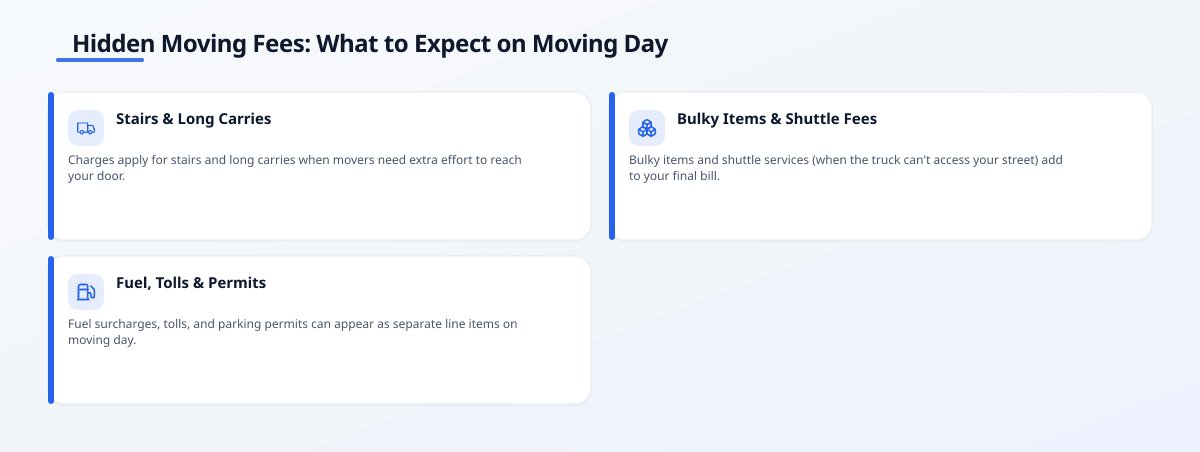
One of the biggest frustrations for consumers is discovering unexpected charges on moving day. Common hidden fees include charges for stairs, long carries, bulky items, and shuttle services if the moving truck cannot access your street. Some companies also add fees for fuel, tolls, or parking permits.
To avoid surprise bills, always ask about potential additional charges before signing a contract. Request a binding estimate, which guarantees the final price, rather than a non-binding estimate that can increase based on actual weight or hours. Also, clarify the payment terms: most movers require a deposit, but be wary of companies that demand a large upfront payment in cash.
Another smart move is to check whether your moving company offers price protection or guaranteed pricing. Moving.Homes, for example, emphasizes guaranteed pricing with no hidden fees, giving you peace of mind that the estimate you receive is the price you pay. This is especially important for long-distance moves where costs can quickly escalate.
Ways to Lower Your Moving Cost Without Sacrificing Quality
You do not have to accept the first quote you receive. There are several strategies to reduce your moving expenses while still hiring professional movers. Start by decluttering your home before the estimate: every box you eliminate reduces the weight and volume, which directly lowers your cost.
Another effective approach is to schedule your move during the off-season or mid-week, when demand is lower. Many companies offer discounts for moves booked on weekdays or during winter months. You can also save money by packing your own boxes, but be sure to use sturdy materials and label everything clearly to avoid damage.
If you are flexible, consider a consolidated or shared-load move for long distances, where your belongings share a truck with another shipment. This can cut costs significantly, though it may extend delivery time. Finally, compare quotes from at least three different movers to ensure you are getting a fair price, but do not automatically choose the cheapest option. Look for a balance of cost, reputation, and included services.
Why Professional Movers Are Worth the Investment
While DIY moving might seem cheaper, it often comes with hidden costs like truck rentals, fuel, equipment, and the risk of injury or damage to your belongings. Professional movers bring experience, proper tools, and insurance, which can save you money in the long run. They also reduce the physical and mental stress of moving, allowing you to focus on settling into your new home.
For example, a full-service move includes packing, loading, transporting, and unpacking. This is ideal for busy families or anyone with heavy furniture or fragile items. Movers who specialize in handling art, antiques, and electronics use custom crating and protective materials, ensuring your valuables arrive safely.
Moreover, reputable moving companies offer liability coverage, so you are reimbursed if an item is damaged or lost. While basic coverage is often included, you can purchase additional full-value protection for high-value items. This peace of mind is invaluable, especially for long-distance moves where your belongings are in transit for days.
Get Your Free Moving Quote Today
Now that you understand the components of a moving cost estimate, you are ready to take the next step. The best way to get an accurate price for your specific move is to request a free quote from a trusted provider. Moving.Homes simplifies this process by connecting you with professional movers who offer guaranteed pricing and 24/7 support.
Whether you are moving locally, across the country, or internationally, getting a detailed estimate in writing is essential. It protects you from unexpected fees and ensures you stay within your budget. With the right preparation and a reliable moving partner, you can turn a stressful event into a smooth transition.
In summary, the cost of moving out of state depends on many factors, but with careful planning and the right resources, you can avoid overpaying. Use the tips in this guide to compare quotes, identify hidden fees, and choose a mover that fits your needs. Then, request your free quote and enjoy a worry-free move to your new home.