
Moving Company Damaged Furniture? How to File a Claim
Furniture damaged in a move? Learn the exact steps to file a claim and recover costs. Call (833)-484-8675 for expert moving help.

By Olivia Johnson
The box was marked fragile. The sofa was wrapped in blankets and shrink wrap. And yet, when the truck door rolled up, you found a cracked leg, a deep scratch across the coffee table, or a torn cushion. Furniture damage during a move is frustrating, but it is also common, and the way you respond in the first few hours can determine whether you recover hundreds or even thousands of dollars. This guide walks you through exactly what to do when a moving company damages furniture and how to file a claim that gets results. You will learn what to document before the movers leave, how released value protection differs from full value protection, which deadlines apply, and when to escalate. Whether you hired a local crew or a long-distance carrier, the steps below will help you protect your rights and maximize your recovery.
Document the Damage Before the Movers Leave
The single most important window for protecting your claim is the time between unloading and the moment the moving crew drives away. Once they leave, evidence becomes harder to collect and the company may dispute when the damage occurred. Treat the final walkthrough as a formal inspection, not a casual glance. Bring your phone, your original inventory list, and a pen. Walk through every room and compare each item against the condition notes you recorded at pickup.
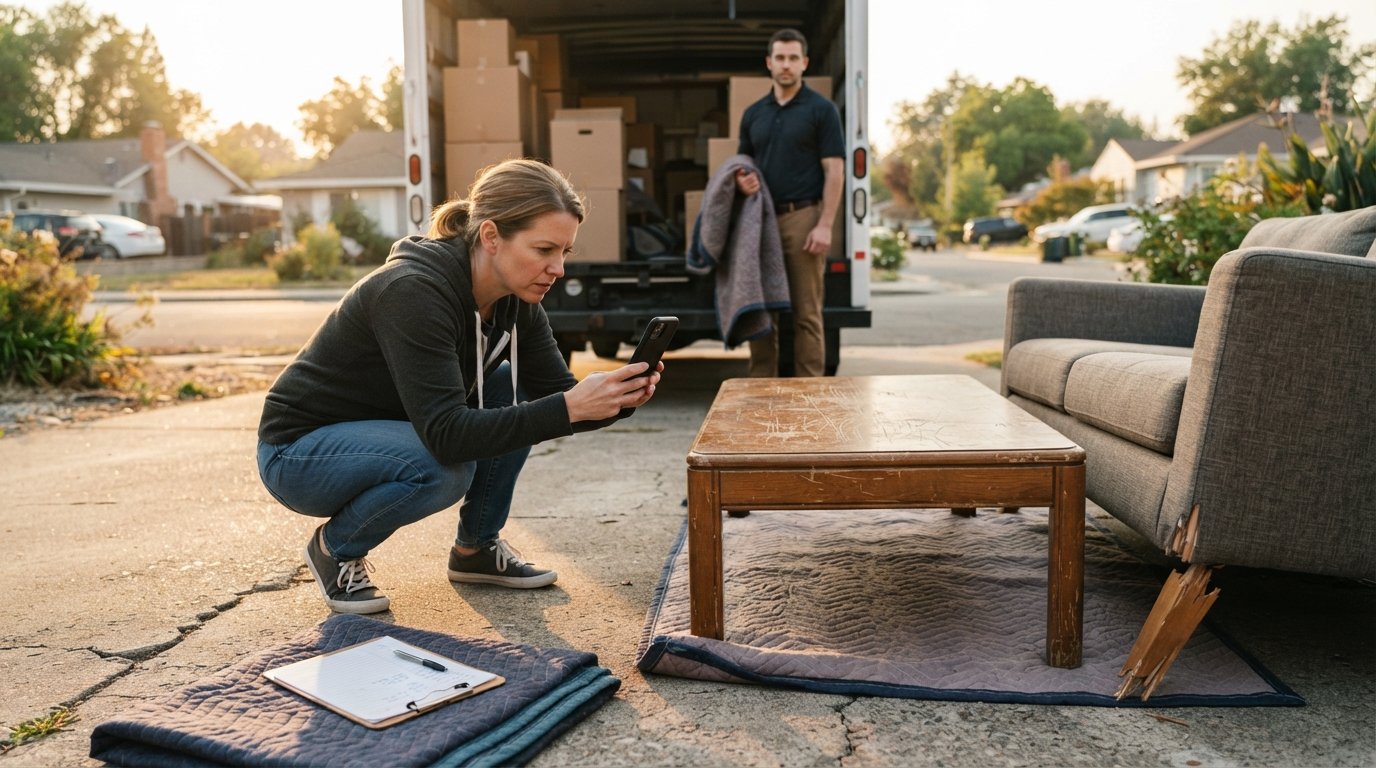
Take dated photographs and short videos of every damaged piece of furniture from multiple angles. Capture the whole item first, then zoom in on the specific damage. If a leg is cracked, photograph the leg, the surrounding area, and the furniture in its new room so the context is clear. If possible, include a newspaper or phone screen showing the date in at least one shot. Also photograph the moving company's paperwork, the truck number, and the crew's uniforms or badges if visible. These details matter if the company later claims a different crew handled your items.
Next, locate the inventory list the movers created at pickup. Each item should have a numbered sticker and a condition description. Compare the pre-move condition notes to what you see now. If the inventory says "scratched" and the item now has a cracked frame, that is new damage and should be noted. Ask the crew to add your observations to the delivery receipt before you sign. Do not sign a clean delivery receipt if damage exists. If the crew refuses to note the damage, write "damage noted, see photos" next to your signature and keep a copy. A signed receipt with damage notes is powerful evidence.
If the crew is rushing you, slow down. You are entitled to a reasonable inspection period. If they refuse to wait, document what you can, note their refusal in writing, and take photos of the truck and license plate before it leaves. Then send an email to the company immediately summarizing the damage and the crew's refusal to document it. This creates a timestamped record.
Understand Released Value vs. Full Value Protection
Before you file a claim, you need to know which liability option applies to your move. Most moving companies offer two basic levels of liability, and the difference in payout is enormous. Released value protection is the default and typically costs nothing extra, but it pays only 60 cents per pound per article. A 50-pound coffee table with a cracked top would yield about $30, which rarely covers repair or replacement. Full value protection costs more upfront but pays for repair, replacement, or a cash settlement based on the item's current value, often with a deductible.
Check your bill of lading or contract to see which option you selected. If you chose full value protection, the company may repair the item, replace it, or pay you a cash amount. Some policies exclude items packed by the owner, so if you packed the furniture yourself, read the fine print. If you chose released value, your recovery will be limited, but you can still file a claim and may negotiate for a higher amount if the damage was caused by negligence. Knowing your liability level before you call the company helps you set realistic expectations and avoid being talked into a low settlement.
- Released value protection: Usually free, pays 60 cents per pound per article, best for low-value items.
- Full value protection: Higher upfront cost, pays repair or replacement value, often with a deductible.
- Owner-packed items: Often excluded from full value coverage, so check your contract carefully.
If you are unsure which option you purchased, call the moving company and ask for a copy of your signed bill of lading. Do this before you file the claim so you can reference the correct liability level in your paperwork. If the company misrepresented your coverage, note that as well, because it may strengthen your position during negotiation.
File the Claim Correctly and On Time
Federal rules for interstate moves require you to file a written claim with the moving company within nine months of delivery. For local moves, state rules vary, but many follow a similar timeline. Do not wait. File as soon as possible, ideally within a few days of delivery, while photos and receipts are fresh. Most companies have a claims form on their website or will email one on request. Submit the claim in writing, even if you also call. Keep a copy of everything you send.
Your claim packet should include the following items. Organize them clearly so the adjuster can process your claim without delays.
- A cover letter summarizing the move date, origin and destination, and the damage discovered.
- Copies of the bill of lading, inventory list, and delivery receipt with damage notes.
- Dated photographs and videos of the damaged furniture.
- Purchase receipts, credit card statements, or appraisals proving the item's value.
- Repair estimates from a qualified furniture repair professional.
If you do not have receipts, gather what you can: photos of the item in your home before the move, warranty cards, or bank statements showing the purchase. For high-value pieces, a professional appraisal helps. The company may send an adjuster to inspect the damage, so keep the furniture in the same condition until the inspection is complete. Do not repair or discard the item before the adjuster sees it, or the company may deny the claim for lack of evidence.
After you submit, the company has 30 days to acknowledge your claim in writing and 120 days to pay, deny, or make a settlement offer. If you receive a low offer, you can negotiate. Counter with your repair estimates and comparable replacement costs. If the company denies the claim, ask for the denial in writing with the specific reason. This documentation is essential if you need to escalate.
Escalate When the Offer Falls Short
Not every claim resolves fairly on the first try. If the moving company denies your claim, delays payment, or offers an amount far below your documented loss, you have options. For interstate moves, you can file a complaint with the Federal Motor Carrier Safety Administration (FMCSA). The FMCSA does not resolve individual claims, but it tracks complaints and can investigate patterns of misconduct. For local moves, contact your state's consumer protection agency or the state division that regulates moving companies.
You can also pursue mediation or arbitration, which many moving companies require in their contracts. Read your contract for the dispute resolution clause. If arbitration is mandatory, follow the process and present your evidence clearly. For smaller claims, small claims court may be an option, though the filing fees and time involved should be weighed against the amount at stake. If the moving company was hired through a matching platform, contact that platform as well. Platforms that connect consumers with movers often have dispute resolution teams that can pressure the mover to respond.
Before you escalate, review the moving company's reputation. If you are checking reviews to see whether others have had similar claim experiences, our guide on how to read and trust moving company reviews explains how to spot patterns of complaint and verify a company's legitimacy. A company with a history of denied claims may be more responsive when you mention regulatory complaints.
Prevent Future Damage with Better Planning
The best claim is the one you never have to file. When planning your next move, choose a mover with a clear claims process and a strong reputation for handling furniture. Ask about their training, their packing methods, and their liability options before you book. If you are also planning home repairs or renovations at your new place, resources like ContractorHomeQuotes can help you find vetted professionals and transparent pricing, so you can focus on settling in rather than fixing unexpected problems.
For high-value furniture, consider professional packing services and full value protection. Document your belongings with photos and receipts before the move, and keep a digital copy of your inventory. If you are moving long distance, confirm that the carrier is licensed and insured. A few hours of preparation can save you months of claim paperwork.
Furniture damage during a move is stressful, but you are not powerless. Document everything before the movers leave, know your liability coverage, file a complete claim on time, and escalate if the offer is unfair. With the right evidence and a clear process, you can recover what you are owed and move forward with confidence.