
Moving Antiques and Art Collection Safely: Expert Guide
Protect your valuable pieces with proven strategies for moving antiques and art collection safely, from custom crating to insurance and professional handling.

By Jennifer Davis
Your grandmother's Victorian armoire. A signed lithograph you bought at auction. A collection of delicate porcelain figurines gathered over decades of travel. These items are not just furniture and decoration: they are history, memory, and often significant financial value. When it comes time to relocate, the thought of entrusting them to a moving truck can feel terrifying. Knowing how to approach moving antiques and art collection safely transforms that fear into a manageable, methodical process.
The stakes are genuinely high. Unlike a standard sofa or dining table, antiques and fine art are irreplaceable. A crack in a mid-century vase or a tear in a canvas cannot be fixed with a trip to the furniture store. Proper preparation, the right materials, and professional handling make the difference between a successful relocation and a heartbreaking loss. This guide walks you through every stage, from pre-move assessment to final placement in your new home, with practical steps you can implement immediately.
Assess and Document Your Collection Before Moving Day
Before you wrap a single item or call a mover, you need a complete picture of what you own. This assessment serves two critical purposes: it helps you plan the logistics of packing and transport, and it creates a record for insurance purposes should anything go wrong. Start by walking through your home room by room and cataloging every antique, artwork, and collectible. Use a spreadsheet or a notebook to record each item's description, approximate dimensions, estimated value, and current condition.
Take high-resolution photographs of each piece from multiple angles. Capture any existing scratches, chips, patina, or restoration work. These images become your baseline proof of condition. If a piece has a provenance document, appraisal certificate, or receipt, scan it and store a digital copy in cloud storage. Keep physical copies in a folder that travels with you, not in the moving truck.
For high-value items, consider a professional appraisal before the move. An appraiser can confirm current market value, which is essential if you need to purchase additional insurance coverage or file a claim later. Many homeowners discover their standard renter's or homeowner's policy caps art and antique coverage at a surprisingly low threshold. That gap can leave you exposed.
Once your inventory is complete, sort items into categories based on fragility, size, and value. This sorting informs your packing strategy. Items in the highest value and fragility tier, such as oil paintings, marble sculptures, or delicate glass, may warrant custom crating or dedicated transport. Mid-tier items like sturdy wooden furniture or framed prints can often be packed with high-quality materials and careful handling.
Gather the Right Packing Materials and Techniques
Standard moving boxes and newspaper will not protect antiques. Newspaper ink can transfer to porous surfaces like unfinished wood or unglazed ceramics, and its thin fibers offer minimal cushioning. Instead, invest in archival-quality materials designed specifically for fragile and valuable items. The cost is modest compared to the potential loss.
Here are the essential supplies you will need for packing antiques and art safely:
- Acid-free tissue paper and glassine paper for wrapping delicate surfaces
- Unprinted newsprint or white packing paper for general cushioning
- Bubble wrap in multiple sizes, including small-bubble for delicate items
- Foam pipe insulation for wrapping frames and thin sculptures
- Corrugated cardboard sheets and double-wall boxes for structural support
- Painter's tape for securing wrapping without leaving residue
- Custom crates or heavy-duty wooden boxes for high-value pieces
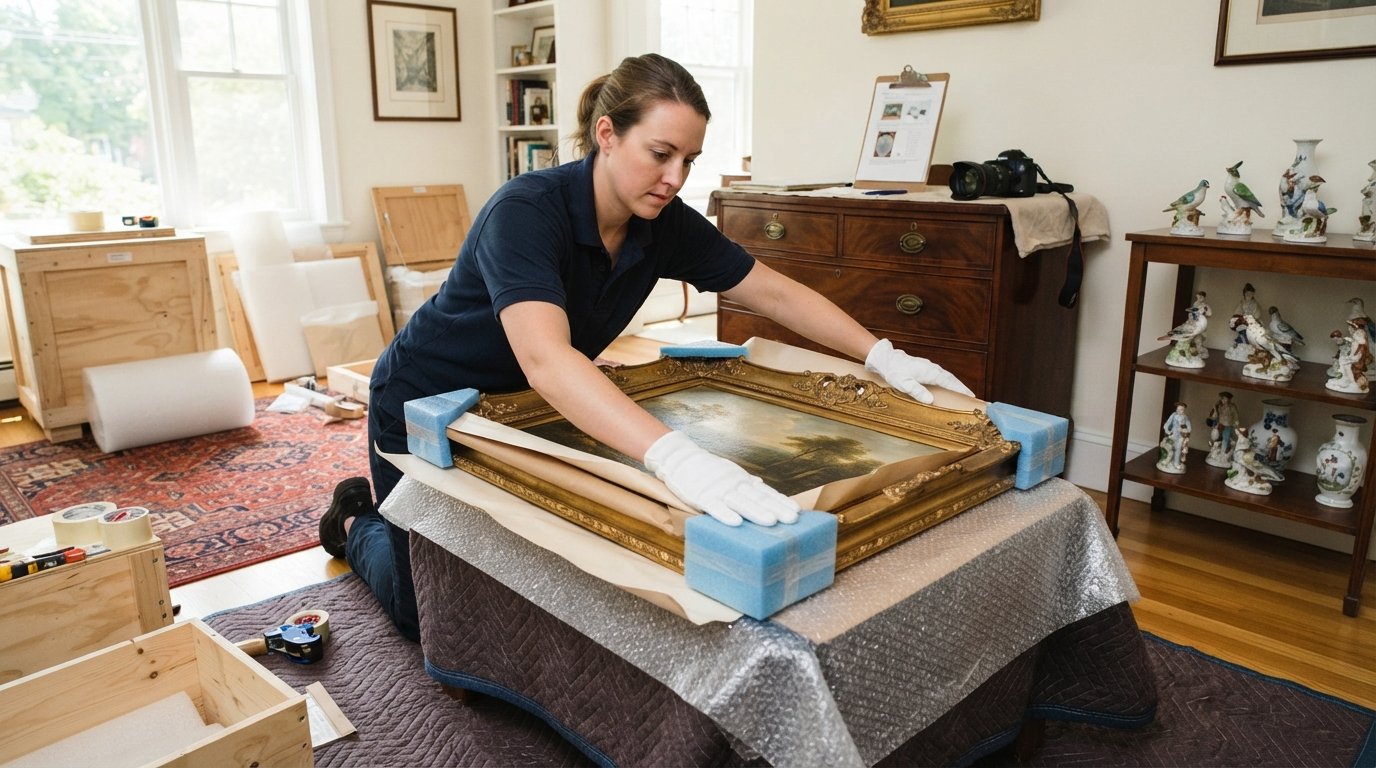
The technique matters as much as the material. When wrapping a painting, place a piece of glassine or acid-free paper directly against the surface, then add a layer of bubble wrap with the bubbles facing outward. This prevents the plastic from imprinting on the canvas. For frames, use foam pipe insulation along the edges and corners, then wrap the entire frame in bubble wrap. Never wrap a painting tightly in plastic: trapped moisture can cause mold or warping over time.
For ceramics and glass, wrap each piece individually in acid-free tissue, then cushion it with bubble wrap. Place items in a box with at least two inches of padding on all sides. Fill any voids with crumpled packing paper so nothing shifts during transit. Label the box clearly as fragile and indicate which side should face up. When packing a set, such as a porcelain dinner service, wrap each piece separately and stack them with padding between layers.
Furniture requires its own approach. Remove drawers, knobs, and any detachable hardware, and pack them separately in labeled bags. Wrap legs and arms with foam or bubble wrap, and secure them with tape that will not damage the finish. For large pieces, consider building a custom crate or hiring a professional who specializes in this work. If you want to understand the full scope of professional crating, a detailed guide on custom crating for art and antiques explains how experts construct protective enclosures that withstand the rigors of transport.
Hire Professional Movers With Specialized Experience
While you can pack some items yourself, the actual transport of high-value antiques and art is best left to professionals. Standard moving crews, even those with good reviews, may not have the training or equipment to handle delicate pieces. A mover who excels at hauling sofas and boxes may not know how to secure a gilt-framed mirror or transport a marble bust without risking a crack.
When searching for movers, ask specific questions about their experience with antiques and fine art. Do they use climate-controlled trucks? Do they have air-ride suspension to minimize vibration? Can they provide custom crating on site? Do they carry specialized insurance for high-value items? A mover who answers these questions confidently and provides documentation is a mover worth considering.
For items of exceptional value, such as museum-quality art or rare antiques, you may need to hire a fine art shipping company rather than a general household mover. These specialists handle everything from packing to customs clearance for international moves. They use custom-built crates, climate-controlled vehicles, and trained art handlers. The cost is higher, but so is the level of protection.
If you are planning a move and need to connect with vetted professionals who understand the nuances of handling delicate and valuable items, you can request free quotes from pre-vetted contractors who specialize in this type of work. Getting multiple quotes helps you compare services, insurance options, and pricing before making a decision.
Manage Insurance and Liability Coverage
Insurance is one of the most misunderstood aspects of moving antiques and art. Many people assume their homeowner's or renter's policy will cover their belongings during a move. In reality, most policies provide limited or no coverage once items leave the home. The moving company's basic liability coverage, often called released value protection, typically pays only a fraction of the item's actual worth, sometimes as little as 60 cents per pound.
For a 10-pound antique vase worth 5,000 dollars, that translates to a payout of 6 dollars. Clearly, this is not adequate. You need either full value protection from the mover or a separate floater policy for high-value items. Full value protection means the mover is liable for the replacement value of lost or damaged items, but it comes at a higher cost and may have deductibles or exclusions.
Before the move, review your homeowner's or renter's policy with your agent. Ask specifically about coverage during transit and whether you need a rider or floater for art and antiques. Some insurers offer scheduled personal property policies that cover specific items for a stated value, with no deductible. This is often the most reliable option for valuable collections.
Document everything. Keep your inventory list, photographs, and appraisals in a safe place. If damage occurs, you will need this documentation to file a claim. Report any damage immediately upon delivery, and note it on the bill of lading before the movers leave. Once you sign the delivery receipt without noting damage, your ability to claim compensation may be severely limited.
Prepare Your New Home for Safe Unpacking
The move does not end when the truck arrives at your new home. Unpacking antiques and art requires the same care as packing them. Before the movers arrive, designate a safe area where items can be placed temporarily. Clear a path from the entry to this area, and remove any obstacles that could cause a trip or fall.
Unpack high-value items yourself or supervise the process closely. Open boxes on a padded surface, such as a blanket or foam mat, to prevent accidental damage if an item slips. Inspect each piece as you remove it, checking for cracks, scratches, or other signs of damage. If you find damage, photograph it immediately and contact the mover and your insurance company.
Allow items to acclimate to the new environment before placing them in their final positions. Wood and canvas can react to changes in temperature and humidity. Giving them 24 to 48 hours to adjust reduces the risk of warping or cracking. Avoid placing antiques near heating vents, direct sunlight, or damp areas like basements or bathrooms.
For large furniture, reassemble carefully. Attach legs and hardware loosely at first, then tighten once the piece is in position. Use felt pads under heavy items to protect floors and make minor adjustments easier. If a piece requires professional reassembly, such as a grandfather clock or a complex display case, consider hiring a specialist.
Special Considerations for Different Types of Antiques
Not all antiques and art require the same approach. Understanding the specific needs of different materials helps you tailor your packing and transport strategy.
Paintings and framed art are vulnerable to punctures, moisture, and temperature extremes. Always transport them vertically, never flat, and never stack them directly against each other. Use corner protectors and separate each piece with foam or cardboard. For very large or valuable paintings, a custom crate with a rigid frame and foam lining is the safest option.
Ceramics, porcelain, and glass are brittle and prone to shattering. Wrap each piece individually and pack them snugly so they cannot move. Avoid packing heavy items on top of delicate ones. If an item has a lid or removable part, wrap it separately and label it clearly. Consider hand-carrying small, extremely fragile items in your personal vehicle.
Wooden furniture can be scratched, dented, or cracked. Use blankets and foam padding on all surfaces, and secure drawers and doors with tape or rope. Remove hardware that could snag or break. For pieces with intricate carvings or inlays, use extra padding and avoid stacking anything on top.
Textiles, rugs, and tapestries require protection from dirt, moisture, and pests. Clean them before packing, then roll them (never fold) with acid-free paper between layers. Wrap the rolled textile in a breathable material like cotton sheeting, not plastic, which can trap moisture. Transport them in a rigid tube or box to prevent crushing.
Metal objects, including bronze sculptures and silver, can tarnish or corrode. Wear cotton gloves when handling them to avoid transferring oils from your skin. Wrap them in acid-free tissue or cloth, then cushion with bubble wrap. Keep them dry and avoid extreme humidity changes.
Each category has its own best practices, and taking the time to learn them pays off. If you are unsure about a particular item, consult a conservator or a moving specialist with experience in that material. A small investment in expert advice can prevent irreversible damage.
Creating a Timeline for a Stress-Free Move
Moving antiques and art safely requires planning well in advance. A rushed move is a risky move. Start your preparations at least eight weeks before your target moving date, and adjust the timeline based on the size and value of your collection.
Weeks eight to six: Complete your inventory and appraisal. Research and interview moving companies. Request quotes and verify insurance coverage. Begin gathering packing supplies.
Weeks five to four: Finalize your mover and confirm the date. Purchase additional insurance if needed. Start packing items you will not need immediately, beginning with less fragile pieces. Label every box clearly.
Weeks three to two: Pack the majority of your collection, reserving high-value items for last. Confirm arrangements for any specialized transport, such as climate-controlled trucks or custom crates. Prepare a move-day kit with essentials like tape, scissors, gloves, and a flashlight.
Week one: Finalize packing. Confirm arrival times with your mover. Prepare your new home by clearing space and designating a safe unpacking area. Keep your inventory and documentation accessible.
Move day: Supervise the loading process. Ensure fragile items are loaded last and secured properly. Keep high-value items with you if possible. Inspect the truck before it departs to confirm everything is loaded and secured.
Following a structured timeline reduces stress and minimizes the risk of mistakes. It also gives you time to address unexpected issues, such as a mover canceling or a piece needing extra protection.
When to Consider Professional Packing Services
Packing an entire collection yourself is possible, but it is time-consuming and requires a steady hand. If your collection is large, highly valuable, or includes items you are unsure how to handle, professional packing services are worth the investment. Professional packers bring expertise, high-quality materials, and efficiency. They know how to wrap, cushion, and box items to withstand the journey.
Many moving companies offer partial or full packing services. You can choose to have them pack only your antiques and art while you handle the rest, or you can opt for full-service packing. Be clear about your expectations and confirm that the packers have experience with fragile and high-value items.
If you decide to hire professional packers, ask about their training and whether they use archival materials. Some companies specialize in fine art and antiques and employ trained technicians who understand conservation principles. These specialists are often affiliated with museums or galleries and bring a level of care that general movers cannot match.
Ultimately, the decision comes down to balancing cost, time, and risk. For a few sturdy pieces, DIY packing with good materials may suffice. For a collection that represents decades of acquisition and significant value, professional help is a wise investment.
Moving antiques and art safely is a project that rewards preparation, patience, and the right partnerships. By documenting your collection, using proper materials, hiring experienced professionals, and planning ahead, you protect not just objects but the stories and memories they carry. Your collection has traveled through time to reach you. With care, it will continue its journey to your new home intact.