

Long Distance Moving Cost: 2026 Quote Guide
Learn how to compare long distance moving company quotes, avoid hidden fees, and secure a guaranteed price for your interstate relocation.

By Mark Johnson
Planning a move across state lines brings a mix of excitement and anxiety, with the biggest question often being, "What will this actually cost?" Unlike local moves that charge by the hour, long distance moving services cost is determined by weight, distance, and additional services, creating a complex pricing structure that can confuse even the most organized planner. Without a clear understanding of how moving companies long distance cost is calculated, you risk surprise fees or, worse, choosing an unreliable mover based on a lowball estimate. This guide breaks down every factor that influences your final bill, explains the different types of quotes, and gives you the exact questions to ask so you can secure an accurate, guaranteed price for your relocation.
The key to a stress-free move is knowledge, and knowing how to compare long distance moving company quotes is the most powerful tool you have. Whether you are moving a one-bedroom apartment or a five-bedroom family home, the principles of cost estimation remain the same. We will walk you through the valuation process, the differences between binding and non-binding estimates, and the hidden fees that often catch people off guard. By the end of this article, you will be equipped to request quotes with confidence and choose a mover that offers both value and peace of mind.
How Moving Companies Calculate Long Distance Costs
Before you request a single quote, it is essential to understand the baseline formula that movers use. For long distance moves, which are typically defined as moves over 100 miles, the price is rarely based on an hourly rate. Instead, the cost is calculated using a combination of the shipment's weight, the exact distance traveled, and the level of service you select. The federal government mandates that interstate movers charge based on weight and distance, not time, which means a slow-moving crew does not directly impact your bill.
The weight of your shipment is determined by driving your loaded truck across a certified scale, a process that happens both at your origin and destination. The distance is calculated using standardized mileage tables that are published by the moving industry. While these two factors form the base price, they are just the starting point. The type of service, such as full-service packing or storage in transit, adds layers to the final cost. This is why two families moving the same distance can receive vastly different long distance moving company quotes if one opts for comprehensive packing and the other handles it themselves.
The Difference Between Binding and Non-Binding Estimates
When you begin collecting moving companies long distance cost estimates, you will encounter two primary types of quotes: binding and non-binding. A binding estimate is a guaranteed price. The mover is legally obligated to charge you that exact amount, provided you do not add items or change the scope of services. This is the safest option for your budget because it eliminates the risk of surprise charges on delivery day. The mover takes on the risk if the shipment weighs more than anticipated.
A non-binding estimate is just that, an estimate. It means the final cost can be up to 10% higher than the quote, and in some cases, even more if additional services are requested during the move. While a non-binding estimate often comes in lower initially, it is a gamble. You are essentially accepting the risk that your belongings might weigh more than the estimator guessed. For a truly stress-free experience, always push for a binding estimate, and ensure it is in writing before you sign any contract. This clarity is the cornerstone of avoiding bill disputes later on.
Key Factors That Affect Your Final Moving Bill
Several variables influence the total cost of your move, and understanding them helps you control expenses. The first is the time of year and day of the week. Moving during the peak season, which runs from May through September, and on weekends will cost significantly more than moving in the off-season or mid-week. Demand drives prices, and flexibility with your moving date can lead to substantial savings. If you have the option, schedule your move for a Tuesday or Wednesday in October or November to get the best rate.
The second major factor is the accessibility of your homes. If your current home is a third-floor walk-up or your new home has a long driveway that is difficult for a large truck to navigate, you will likely face additional charges. Movers may add fees for long carries, stair carries, or the need for a shuttle service if the truck cannot park close to the entrance. Disassembling furniture, disconnecting appliances, and dealing with specialty items like a piano or a pool table also increase the cost. These are logistical hurdles that require extra labor and equipment, which is reflected in your quote.
Packing Services: A Cost-Benefit Analysis
One of the most significant add-ons to any moving quote is professional packing. While it is a considerable expense, often adding 30% to 40% to your total bill, the value it provides in time savings and reduced stress is immense. Professional movers bring high-quality materials and the expertise to pack fragile items securely, significantly reducing the risk of damage. They also carry insurance for the items they pack, which provides an extra layer of protection. For many, this is a worthwhile investment, especially for a long distance move where items are in transit for days.
However, if you are on a tight budget, you can compromise by packing non-fragile items like clothing, books, and linens yourself while letting the professionals handle the kitchen and the china cabinet. This hybrid approach allows you to save money while still protecting your most vulnerable possessions. When requesting quotes, always ask for a separate line item for packing services so you can see exactly what you are paying for and adjust your plan accordingly. This transparency is crucial for comparing different long distance moving services cost structures effectively.
Hidden Fees and Extra Charges to Watch For
Even with a binding estimate, there are potential fees that can catch you off guard if you are not prepared. One common charge is a fuel surcharge, which is a percentage added to the base price to account for fluctuating diesel costs. While this is standard, you should always ask if it is included in your written quote or if it will be added on top. Another is a valuation charge, which is the insurance coverage for your goods. Federal law requires movers to offer basic coverage at a minimal rate, but this is often insufficient for high-value items. Upgrading to full-value protection is highly recommended, and while it adds to the cost, it provides peace of mind.
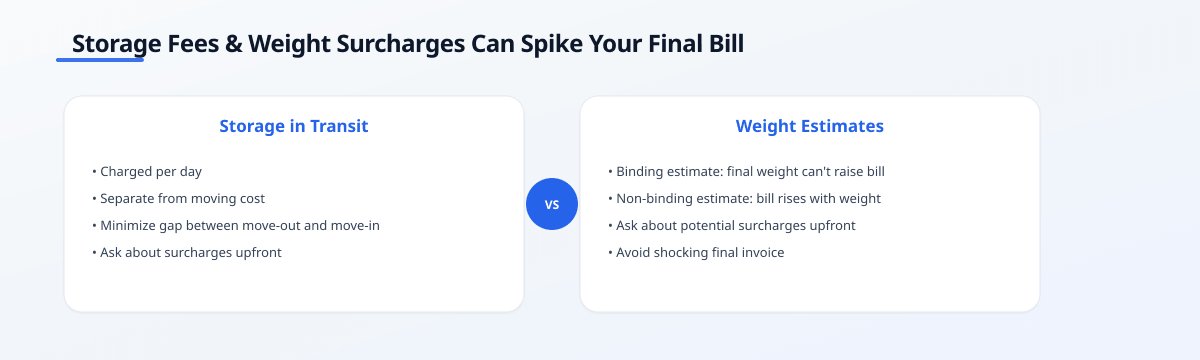
Storage fees are another area where costs can escalate. If there is a gap between your move-out and move-in dates, your belongings may need to be placed in a storage facility. This is known as storage in transit, and it is a separate charge from the actual moving cost. It is billed per day, so you should have a clear plan to minimize this time. Additionally, if the final weight of your shipment is higher than the estimated weight on a binding estimate, the mover cannot charge you more, but for a non-binding estimate, the bill will rise. Always ask about these potential surcharges upfront to avoid a shocking final invoice.
How to Get Accurate Long Distance Moving Company Quotes
Getting an accurate quote starts with an honest and detailed inventory. Most reputable companies now offer virtual surveys where you can walk through your home via video call with an estimator. This allows them to see exactly what you have, including items in the attic, garage, and basement. It is critical to be thorough during this process. If you forgot to mention the treadmill in the basement, you cannot expect the mover to include it in the price. A common mistake is to underestimate the volume of belongings, which leads to a low quote that does not reflect the reality of the job.
To get the best value, you should obtain at least three different quotes from established movers. This gives you a baseline to compare and helps you identify outliers that are either suspiciously low or excessively high. Be wary of any company that provides a quote over the phone without seeing your belongings or that requires a large cash deposit upfront. A legitimate mover will want to survey your items first. For a deeper dive into the specifics of estimating, you can use our long distance moving cost calculator and quote guide to understand the variables in your specific situation.
Red Flags in Moving Quotes
Knowing what to look for in a quote is just as important as knowing what to include. Here are some warning signs that should make you reconsider a mover:
- Demand for large upfront deposits: Reputable movers usually require payment upon delivery, not before. A demand for a 50% deposit is a red flag.
- No physical or virtual survey: A quote given solely over the phone is often an estimate of an estimate and is rarely accurate.
- Refusal to provide a written contract: If a company is hesitant to put the terms in writing, walk away immediately.
- Unsolicited lowball offers: If a quote is significantly lower than all others, the company may be planning to hold your goods hostage for more money later.
These red flags are indicative of rogue movers who operate in the industry. They often change their company name frequently to avoid bad reviews. Sticking with established, licensed, and insured movers who are transparent about their pricing is the safest course of action. Your due diligence in this phase is the best protection you have against moving fraud.
Packing and Specialty Item Costs
Beyond standard household goods, specialty items can significantly impact your long distance moving services cost. Moving a grand piano, a large safe, a hot tub, or a piece of heavy sculpture requires specialized equipment and training. Movers will typically charge extra for these items based on the level of difficulty and the risk involved. For example, moving a piano is not just about weight; it is about navigating it through doorways and up stairs without damaging its delicate internal mechanism. These moves require a dedicated crew and specialized skates and straps.
Art and antiques fall into a similar category. They require custom crating, which is a bespoke wooden box built around the item to ensure its safety. This is a costly but necessary service for high-value pieces. When you are inventorying your home for a quote, this is a critical part of the conversation. You should also consider the cost of utility disconnection and reconnection, as well as any parking permits required for the moving truck at either location. These are out-of-pocket expenses that are not always included in the moving quote but are essential for a smooth operation.
Making Your Final Decision: Value Over Price
When you have all your quotes in hand, it is tempting to simply choose the cheapest option. However, for a long distance move, the lowest price is rarely the best value. The cost difference between a budget mover and a premium one often comes down to the quality of the crew, the reliability of the delivery window, and the level of customer service. A slightly higher upfront cost can save you thousands of dollars in potential damage claims and the immense stress of a late delivery. Look for a company that offers guaranteed pricing, which shows they are confident in their estimates and committed to transparency.
Consider the total package: insurance coverage, tracking capabilities, and customer support availability. A company that offers 24/7 support and a digital tracking system provides peace of mind that your belongings are being watched over during their journey. The goal is to find a mover that offers the best combination of price, service, and reliability. This is an investment in the safe arrival of everything you own, and choosing a partner you can trust is more valuable than saving a few hundred dollars on the initial quote.
Moving long distance is a complex logistical operation, but it does not have to be a financial mystery. By understanding how pricing works, what factors influence your bill, and how to spot a fair quote, you put yourself in control of the process. The effort you put into researching and comparing your options will pay off in a smooth, predictable move that allows you to focus on the excitement of your new beginning.
As you finalize your plans, remember to keep your inventory list accurate and communicate openly with your chosen mover. The relationship you build with them during the quoting process sets the tone for the entire move. With the right preparation and a reliable partner, you can navigate the costs with confidence and settle into your new home without the burden of unexpected expenses. Your home is more than just a destination, it is the start of your next chapter.