
How to Protect Furniture During a Move from Scratches and Moisture
Protect wood, leather, and fabric from scratches and moisture with the right wrap and loading sequence. Call (833)-484-8675 for professional packing help.

By Megan Hall
Your grandmother's walnut dining table. A leather sectional you financed for three years. The upholstered headboard that finally matches the bedroom set. These pieces carry real financial and emotional weight, and the back of a moving truck is one of the harshest environments they will ever face. Vibration, shifting boxes, metal ramp edges, sudden rain, and hours of highway humidity all conspire against finishes and fabrics. The good news is that damage is almost entirely preventable with the right materials and a disciplined wrapping sequence. This guide walks through exactly how to protect furniture during a move from scratches and moisture, from the first roll of stretch wrap to the final inspection at your new front door.
Start with the Right Materials Before You Touch a Single Chair
Most furniture damage during a move traces back to improvisation. People grab old newspaper, thin trash bags, or a single moving blanket and hope for the best. Professional packers work from a small, specific kit because each material solves a different problem. Scratch protection comes from physical barriers with some thickness. Moisture protection comes from non-porous films. Corner protection comes from rigid plastic or dense cardboard. You need all three working together, not one substituted for another.
Build your supply list around these core items. Moving blankets (also called furniture pads) are the workhorse: quilted, reusable, and thick enough to absorb impact from straps and neighboring boxes. Stretch wrap clings to itself and creates a sealed shell that repels water and keeps blankets from slipping. Corner guards slide over the sharpest points and absorb the direct hits that happen on ramps and in doorways. Mattress bags and furniture covers handle upholstery and large flat surfaces. Painter's tape holds everything in place without leaving adhesive residue on finished wood.
- Moving blankets: one to two per large item, plus extras for layering
- Stretch wrap: at least two rolls for a one-bedroom move, more for a house
- Corner guards: rigid plastic or heavy cardboard for tables, dressers, and case goods
- Mattress bags and sofa covers: plastic sleeves sized to the item
- Painter's tape and bubble wrap: for glass inserts, hardware bags, and delicate trim
One material deserves a warning: avoid using newspaper directly against wood or leather. Newsprint ink can transfer onto light finishes, and the paper offers almost no cushioning against impact. Similarly, skip thin cling film from the kitchen drawer; it tears under strap tension and provides no real moisture barrier. Buy actual stretch wrap rated for moving, which is thicker and clings aggressively. If you are weighing whether to handle all of this yourself or bring in help, our comparison of hiring furniture movers versus DIY moving explains where professional wrapping labor saves the most time and risk.
The Wrapping Sequence That Prevents Most Scratch Damage
Order of operations matters as much as the materials themselves. The goal is to create a cushioning layer that stays put, a moisture barrier that seals it, and rigid protection at the points most likely to collide with something hard. Skipping a step or reversing the order leaves gaps where damage sneaks in.
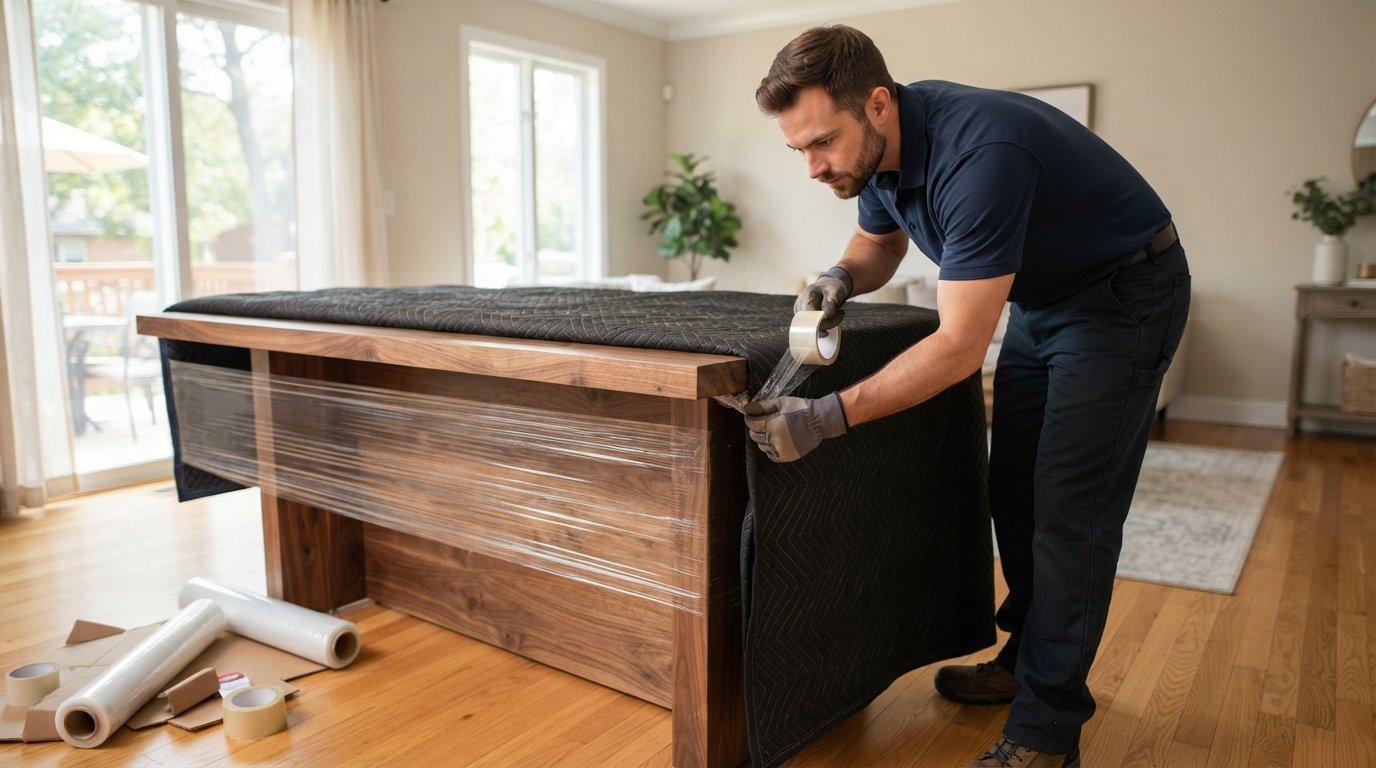
Follow this sequence for dressers, tables, bookcases, and other hard furniture. First, remove anything that can be taken off: drawers, shelves, glass inserts, knobs, and legs when they are detachable. Bag the hardware and tape it to the piece itself or keep it in a labeled parts bag so nothing goes missing. Second, wrap the item in a moving blanket, folding the edges neatly and overlapping the blanket where possible. Third, secure the blanket with stretch wrap, working in overlapping bands from top to bottom so the wrap binds to itself rather than to the furniture. Fourth, press corner guards onto the exposed corners and secure them with a final pass of stretch wrap or painter's tape.
- Remove drawers, glass, and detachable hardware; bag and label all parts.
- Wrap the piece in a moving blanket, overlapping edges for full coverage.
- Seal the blanket with overlapping bands of stretch wrap.
- Add corner guards to every exposed corner and secure them.
- Label the wrapped item with its room destination and any fragile notes.
For upholstered pieces, the sequence shifts slightly. Vacuum the fabric first so grit does not grind into the weave under pressure. Then wrap the item in a plastic furniture cover or mattress bag to block moisture, and follow with a moving blanket for impact protection. Some movers prefer blanket first and plastic second, but plastic on the outside keeps road spray and humidity from soaking the fabric layer, which is the bigger risk on long trips. Either way, seal seams with tape and avoid wrapping so tightly that you compress cushions or stress the frame. If a piece is genuinely valuable or antique, consider crating it or letting a professional packing crew handle it; the cost of a custom crate is usually far less than refinishing a damaged heirloom.
Wood, Leather, and Fabric Each Need a Different Approach
Treating every piece of furniture the same is one of the most common moving mistakes. A solid oak table, a leather recliner, and a linen sofa react differently to wrap, pressure, and humidity. Understanding those differences is the heart of how to protect furniture during a move from scratches and moisture without causing secondary damage in the process.
Wood furniture is vulnerable to scratches, dents, and moisture rings. The finish can also react badly to plastic wrap left in direct sun, which traps heat and can soften lacquer or cause condensation. Wrap wood in a breathable blanket first, then use stretch wrap only as an outer seal, and keep wrapped pieces out of direct sunlight and away from heat sources. Never drag a wooden piece across a floor; lift it or use furniture sliders. Detach legs and tape hardware to the underside so screws do not scratch the finish in transit. For pieces with glass doors or inserts, remove the glass, wrap it separately in bubble wrap, and label it clearly.
Leather furniture needs to breathe and needs protection from pressure marks. Leather that is sealed in non-porous plastic for days can develop condensation, and prolonged pressure from tight wrapping can leave creases that are slow to relax. Use a breathable furniture cover or a clean cotton sheet as the first layer, then a loose outer wrap, and avoid stacking heavy items on leather seats. Condition the leather lightly before the move if it has been dry, and keep it out of the sun during loading. Sharp buckles, zippers, and box corners are the enemy here, so pad any contact points.
Fabric upholstery is the most moisture-sensitive category. Once water soaks into foam and batting, mildew can set in within a day or two, and the smell is difficult to remove. Plastic covers are essential, but they must be sealed properly and removed promptly after delivery so trapped humidity can escape. Vacuum before wrapping, spot-clean any stains so they do not set, and consider removing slipcovers and washing them before the move. For light-colored fabrics, avoid newspaper and printed cardboard directly against the surface to prevent ink transfer.
Managing Humidity and Rain in Open Versus Enclosed Trucks
Moisture damage is often invisible until weeks after the move, when a musty smell appears or a wood joint starts to swell. The truck type you choose determines your exposure. Enclosed moving trucks protect furniture from direct rain, but they can still trap humidity, especially during summer moves or when loading in wet weather. Open trailers and pickup trucks expose furniture to rain, road spray, and airborne dirt, which makes wrapping quality even more critical.
In an enclosed truck, the main risks are condensation and wet loading conditions. Never load furniture with wet blankets or damp covers. If it rained during loading, dry the items and the blankets before the truck departs, or at least before the doors close for the night. Place moisture-absorbing desiccant packs in the truck if you are moving in a humid climate or storing items for any length of time. Keep furniture off the bare truck floor by placing it on a pallet or a layer of cardboard, since floors can sweat. Leave a small amount of ventilation if the truck allows it, and avoid packing furniture tight against the walls where condensation collects.
With open transport, the plastic layer is not optional. Stretch wrap should fully encase the blanket layer, with special attention to the top and bottom edges where rain runs. Corner guards protect against strap abrasion, and a tarp over the whole load adds a second line of defense. Secure everything so wind cannot work the wrap loose at highway speed; a loose flap turns into a whip that damages finishes and distracts drivers. If rain is forecast, plan the load so the most moisture-sensitive pieces go in first and under cover, and be prepared to tarp the load at every stop. In both truck types, the single biggest mistake is loading furniture with wet covers or damp upholstery, because the moisture gets sealed in and has nowhere to go.
Loading, Strapping, and the Small Habits That Save Finishes
Most scratches happen during the twenty minutes of loading and unloading, not during the drive itself. Doorframes, ramp edges, stair railings, and the truck threshold are the usual suspects. A few habits dramatically reduce the risk. Measure the widest piece against the narrowest doorway before moving day, and remove doors or railings in advance if needed. Use furniture straps or a proper dolly rather than dragging, and place a moving blanket over thresholds and railings as a temporary bumper. When carrying a piece with a partner, agree on who calls the corners and keep the wrapped side facing the obstacle.
Inside the truck, load heavy furniture first and against the front wall, then build outward with lighter items. Strap tall pieces to the truck walls so they cannot tip, and use blankets or cardboard between furniture and straps to prevent abrasion. Avoid stacking boxes directly on upholstered surfaces; if you must, place a rigid board or a thick blanket between them. Leave a small gap between furniture and the truck doors so nothing shifts against the latch. Label every wrapped piece with its destination room and a fragile note where relevant, which speeds unloading and reduces handling damage at the other end.
If something does break or tear during the move, knowing who to call matters. For post-move repairs and maintenance, platforms that connect homeowners with vetted local professionals, such as Repairmen, can help you find qualified help for everything from furniture repair to larger home projects once you are settled.
Inspect at Delivery and Document Everything Immediately
The delivery inspection is your only real window to claim damage, so treat it like a formal process. Before the movers leave, walk the inventory with the bill of lading in hand and check each item against its pre-move condition. Unwrap furniture in the truck or just inside the door, in good light, and look specifically for scratches, dents, water stains, musty odors, and crushed corners. Open drawers and doors, check that hardware is present, and test that legs and joints are intact. Photograph every piece from multiple angles, including close-ups of any damage, and take a photo of the truck interior before unloading begins.
Documentation should be specific and timely. Note the damage on the delivery receipt before signing, or if the driver will not wait, photograph the receipt and send written notice to the moving company the same day. Keep all wrapping materials until the inspection is complete, since they can show whether moisture came from outside or was trapped inside. If you hired professional movers, review your valuation or insurance coverage before moving day so you know what is covered and what the claims deadline is. For high-value pieces, consider third-party insurance or a professional appraisal before the move. The same discipline applies whether you moved across town or across the country, and it is the difference between a smooth claim and a denied one.
Protecting furniture from scratches and moisture is not complicated, but it is detail-driven. Buy the right materials, wrap in the right order, treat wood, leather, and fabric differently, respect the weather, and inspect carefully at the other end. Do those things and your furniture arrives the way it left: intact, dry, and ready for the next chapter.