
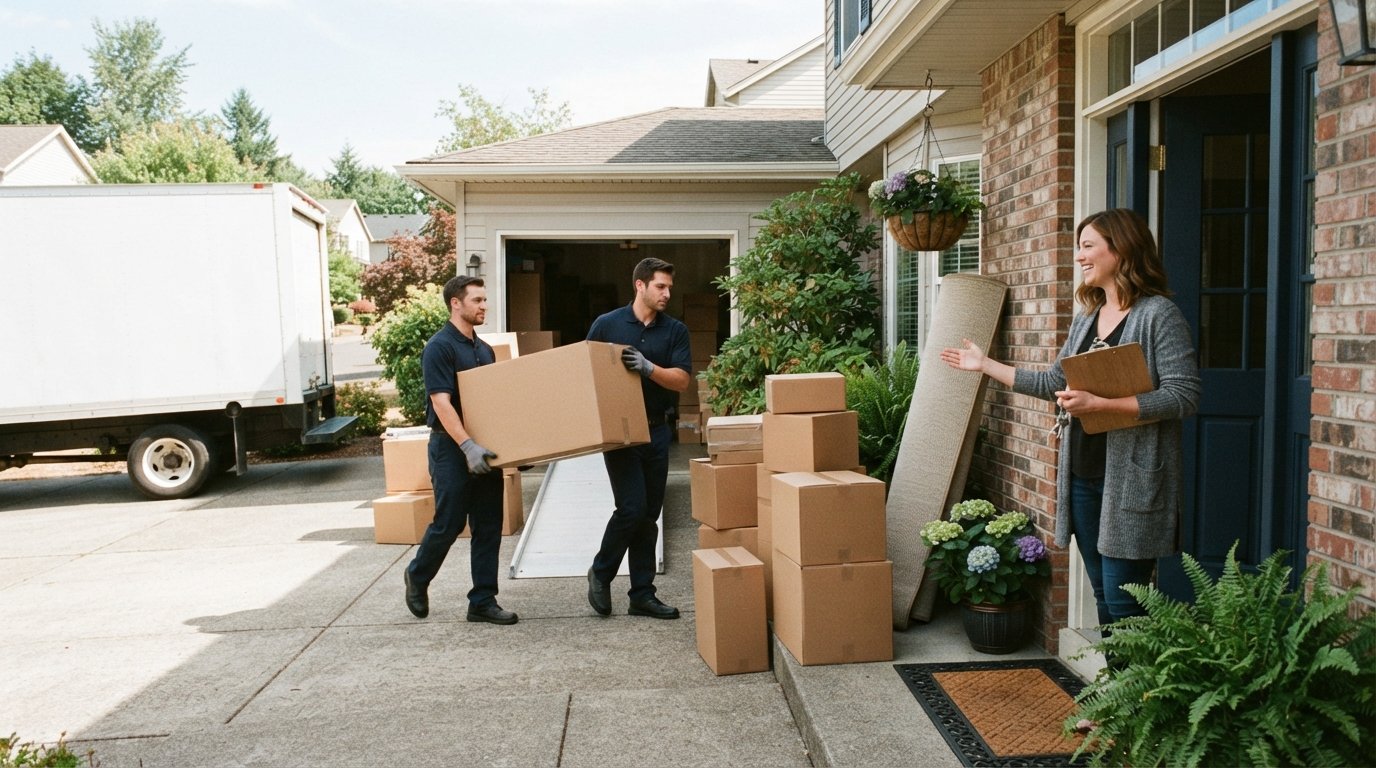
How to Prepare a Home for Movers Arrival: Stress-Free Guide
Preparing a home for movers arrival means clear paths, labeled zones, and secured valuables. A ready home loads faster and avoids surprise fees.

By Rachel Clark
The doorbell rings, the truck backs into your driveway, and the crew supervisor walks up with a clipboard. What happens in the next 30 seconds depends largely on what you did during the previous 48 hours. A well-prepared home lets movers start loading immediately, protects your belongings, and prevents the awkward situation where a crew stands around waiting while you dig through a junk drawer for the garage key. Preparing a home for movers arrival is not about scrubbing every baseboard. It is about clearing paths, labeling zones, securing valuables, and answering the questions a professional crew will ask before they lift a single box.
This guide walks through a proven sequence that works whether you hired a full-service company or booked a crew through a quote-matching platform. The goal is simple: when the movers pull up, your home is ready to be emptied efficiently, and you are ready to hand over control without anxiety.
Confirm the Logistics Before Moving Day
Preparation actually begins a week or two before the truck arrives. Confirm the arrival window in writing, ideally by email, so you have a record of the agreed time. Ask how many movers are assigned to your job and roughly how long the loading is expected to take. Crew size matters because a three-bedroom home typically needs three to four movers, and knowing the number helps you plan parking, elevator reservations, and refreshments.
Parking is one of the most overlooked details. In apartment buildings and dense neighborhoods, a moving truck needs a clear, legal spot close to the entrance. Reserve a space with cones or signs if your city allows it, or ask your building manager to hold a loading zone. If the truck cannot park within about 50 feet of the door, the crew will need to carry items farther, which adds time and sometimes cost. If you are moving out of a rental, coordinate with your landlord about elevator access and any move-in or move-out fees before the crew arrives.
You should also verify what the crew will and will not handle. Most professional movers will not transport hazardous materials such as propane tanks, paint, motor oil, or ammunition. They also typically will not move firearms, jewelry, cash, or important documents. Knowing these exclusions in advance lets you set those items aside for your own vehicle instead of discovering the problem mid-load. If you have specialty items like a piano, pool table, or large safe, confirm that the crew has the right equipment, because those pieces often require extra labor or a dedicated team.
Finally, decide your own role on moving day. Many people assume they need to help, but professional crews usually work faster without homeowner assistance. Your job is to answer questions, point out fragile or high-value items, and stay out of the way. If you plan to tip the crew, have cash ready in small bills so you can hand it over at the end without a trip to the ATM.
Declutter and Sort Before the Movers Arrive
Every item you leave in the house is an item the movers must wrap, carry, and load. Decluttering before moving day is not just about saving space on the truck; it directly reduces your bill. Most full-service moves are priced by weight or volume, so every bag of donated clothes and every broken appliance you discard translates into real savings. Start this process at least two weeks out so you are not making rushed decisions while the truck idles outside.
Work room by room and sort items into four categories: keep, donate, sell, and trash. Be honest about the things you have not used in a year. Kitchen gadgets, duplicate linens, old textbooks, and mismatched furniture are common culprits. For items you plan to sell, list them early on local marketplaces so they are gone before moving day. For donations, schedule a pickup or drop them off at least a few days before the move so nothing lingers in the garage.
Once you have decluttered, start packing non-essentials. Books, off-season clothing, holiday decorations, and rarely used kitchenware can be boxed weeks in advance. Label every box with the destination room and a brief contents note. This step overlaps with packing, but the decluttering mindset comes first: pack what you have decided to keep, not what you are still debating.
If packing feels overwhelming, you can hand the entire task to professionals. Get connected with movers who can help with packing services, including partial packing where the crew handles fragile items and you handle everyday clothing. Many companies also supply boxes, tape, and wrapping paper, which saves you a separate shopping trip.
Create a Clear Path and Designated Zones
On moving day, the crew needs to move quickly and safely between the house and the truck. Anything that slows that flow costs you time and money. Walk through your home the night before and imagine carrying a heavy box from each room to the front door. If you encounter tight corners, loose rugs, or cluttered hallways, fix them now.
Clear all walkways, stairs, and entryways of shoes, toys, pet bowls, and floor lamps. Remove area rugs in high-traffic paths, because they are a tripping hazard for someone carrying a couch. If you have pets, arrange for them to stay with a friend or in a closed room with a sign on the door. Movers cannot work efficiently if a nervous dog is weaving between their legs.
Designate a safe zone for items that should not go on the truck. This is usually a bathroom, a closet, or a corner of one room marked with a brightly colored sign. Your safe zone should hold:
- Keys, wallets, phones, and chargers
- Medications and a basic first aid kit
- Passports, birth certificates, and financial documents
- Jewelry, cash, and small irreplaceable items
- Snacks, water bottles, and pet supplies for the trip
Tell the crew supervisor about the safe zone as soon as they arrive. A quick tour prevents confusion later, especially if a mover mistakes your overnight bag for a box headed to the truck.
You should also protect your home itself. Lay down floor runners or old sheets along the main path, and use door stoppers to keep doors from swinging into walls. Corner guards on tight stairwells are inexpensive and can prevent scuffed paint or damaged drywall that might affect your security deposit. These small measures show the crew you care about the space, which often encourages extra care with your belongings.
Prepare Your Home for Movers Arrival: The Final 24 Hours
The day before the movers arrive is your last chance to handle details that cannot wait. This is when you confirm the essentials and set up the home so the crew can start immediately. A focused checklist keeps you from forgetting something obvious in the rush.
Use this sequence as your final countdown:
- Defrost and clean the refrigerator at least 24 hours before loading, and empty the freezer.
- Disconnect and prepare appliances: washing machine hoses, dryer vent, and gas lines if required.
- Pack a clearly labeled essentials box and keep it in your car, not on the truck.
- Remove all trash and take it to the curb so it does not end up on the truck.
- Set aside payment, tip money, and the signed bill of lading in one folder.
Appliances deserve special attention because they are heavy and awkward. A refrigerator must be empty, defrosted, and dry before loading. If you are moving a washer, secure the drum or follow the manufacturer instructions to prevent internal damage. Some movers will disconnect and reconnect appliances for an extra fee, so confirm this in advance if you need it.
The essentials box is your lifeline for the first night in the new home. Include toilet paper, hand soap, paper towels, a few changes of clothes, phone chargers, basic tools, and snacks. If you have children, add a favorite toy or blanket. This box travels with you so that even if the truck arrives late, your family can function.
Finally, do a quick walk-through and take photos of each room. Photos document the condition of your home before the crew starts and can be useful if you need to file a claim later. They also help you remember how furniture was arranged if you want to recreate a similar layout in the new place.
What to Do When the Movers Arrive
When the truck pulls up, greet the supervisor and walk them through the home. Point out the safe zone, the items that are not going, and any furniture that needs special handling. Mention narrow doorways, fragile antiques, or boxes marked fragile. This five-minute tour prevents mistakes that could take hours to fix.
Ask for a copy of the bill of lading and review it before loading begins. The bill of lading is the contract that lists your goods, the agreed services, and the payment terms. Check that the inventory matches what you expect, and confirm the delivery window. If anything looks wrong, raise it now rather than after the truck is loaded.
Once loading starts, stay available but out of the way. Answer questions when asked, but resist the urge to hover or micromanage. Professional crews have a rhythm, and interruptions slow them down. If you have children, keep them occupied in a separate area, and keep pets secured. If you plan to order food for the crew, lunch or cold drinks are a thoughtful gesture, but always ask first because some companies have policies about accepting food.
As the truck is loaded, watch for items being placed in the wrong zone or boxes that look crushed. A quick glance at the end of loading can catch problems before the doors close. Once the crew finishes, do a final walk-through of every room, closet, and garage to confirm nothing was left behind. Then sign the paperwork, hand over payment and tips, and get ready to start the next chapter.
After you arrive at your new home, the work continues with unpacking and settling in. A structured approach makes that phase easier too, as we explain in our guide on post-move unpacking and settling in, which walks through room-by-room priorities for the first week.
Common Mistakes to Avoid on Moving Day
Even well-prepared homeowners make a few predictable mistakes. The most common is failing to communicate. Movers cannot read your mind, so if a box is fragile or a piece of furniture is an heirloom, say so clearly. Another frequent error is leaving valuables in drawers. Movers may wrap and load a dresser with contents inside, so remove jewelry, cash, and documents before the crew arrives.
Underestimating the time is another trap. Loading a three-bedroom home can take four to eight hours depending on stairs, distance, and volume. Do not schedule a haircut, a work call, or a farewell lunch for the same afternoon. Clear your calendar and plan to be present from arrival to departure.
Finally, do not wait until the last minute to handle utilities, mail forwarding, or address changes. These tasks do not involve the movers, but they affect how smoothly your first week goes. Schedule utility shut-off and turn-on dates, submit a change of address with the postal service, and update your bank and insurance records. When the logistics outside the move are handled, you can focus entirely on the crew and your belongings.
If you still need to lock in a moving company, start by requesting free quotes from vetted professionals. Platforms like FreeQuotes.Contractors connect homeowners with local contractors for a range of home services, and the same quote-first approach applies to moving: gather several estimates, compare guaranteed pricing, and choose a crew with clear communication and 24/7 support. The earlier you book, the more options you have, especially during peak moving season between May and September.
Preparing a home for movers arrival comes down to clarity and access. Clear the paths, label the zones, secure the valuables, and confirm the details in writing. When the crew arrives to a home that is organized and ready, the move starts on time, the loading goes faster, and you spend less energy worrying about your belongings. A few focused hours of preparation can turn a chaotic day into a controlled, efficient handoff, and that is the best send-off any home can give.