
How to Pack Fragile Glass and Mirrors for a Move
Protect your breakables with proven techniques. Call (833)-484-8675 for expert packing help and a stress-free move.

By Sarah Morris
That antique mirror above the mantel and the set of crystal wine glasses from your wedding are not just objects; they are memories, investments, and irreplaceable parts of your home. When the time comes to move, the thought of entrusting them to a cardboard box and a bumpy truck can be paralyzing. The fear is justified: glass and mirrors are among the most challenging items to transport, but with the right techniques, they can arrive at your new doorstep without a scratch. This guide will walk you through the professional methods for packing fragile glass and mirrors for a move, ensuring your treasured items survive the journey intact.
Gather the Right Materials Before You Start
Packing fragile items is not a race; it is a precision operation. Before you wrap a single glass, assemble a dedicated packing kit. Using the wrong materials is the fastest way to break something. Flimsy cardboard boxes or newspaper alone will not provide the shock absorption needed for a cross-town or cross-country move. Invest in purpose-built supplies, or better yet, source them from a professional packing service if you are short on time.
Your essential kit should include:
- Sturdy, double-wall cardboard boxes in various sizes, including specialty mirror boxes and dish-pack boxes with dividers.
- Glassine paper or acid-free tissue paper to prevent scratches on delicate surfaces.
- Bubble wrap (small and large bubbles) for cushioning and void fill.
- Foam sheets or foam wrap for extra protection on large mirrors and frames.
- Packing tape (heavy-duty) and a tape dispenser.
- Permanent markers for labeling.
- Fragile labels (or red tape) to clearly mark boxes.
Once your materials are ready, designate a clean, flat workspace, ideally a table or a padded floor area, to serve as your packing station. This prevents accidental drops and keeps your supplies organized. Remember, the goal is to create a cocoon of protection around each item, and that starts with having everything within arm's reach.
The Core Technique: Wrapping and the Box-Within-a-Box Method
For individual glassware, such as wine glasses, vases, and stemware, the wrapping technique is paramount. Start by stuffing the inside of the glass with crumpled glassine paper or a small piece of bubble wrap. This supports the internal structure and prevents the walls from collapsing if pressure is applied. Next, lay a sheet of bubble wrap on your work surface and place the glass in the center. Roll the glass tightly, ensuring the bubble side faces inward for maximum cushioning. Secure the wrap with tape, but do not tape directly onto the glass surface.
For the box itself, the box-within-a-box method is the gold standard for fragile collections. This involves placing a smaller, packed box inside a larger box, with a layer of cushioning material (like foam peanuts or crumpled paper) between the two. This double-wall approach absorbs shocks and vibrations that occur during transit. When packing the inner box, place heavier items at the bottom and lighter ones on top. Fill any gaps with crumpled paper to prevent shifting. For a deeper dive into wrapping techniques for everyday kitchen items, our guide on packing fragile items like dishes and glassware offers additional step-by-step advice.
Labeling is not just about identifying contents; it is about communicating handling instructions. Write "FRAGILE" in large, bold letters on at least two sides of the box. More importantly, use arrows to indicate the top of the box. This simple step ensures that movers keep the box upright, preventing stress on the wrapped items inside. Also, note the room destination (e.g., "Dining Room") to streamline unpacking later.
Special Handling for Large Mirrors and Framed Glass
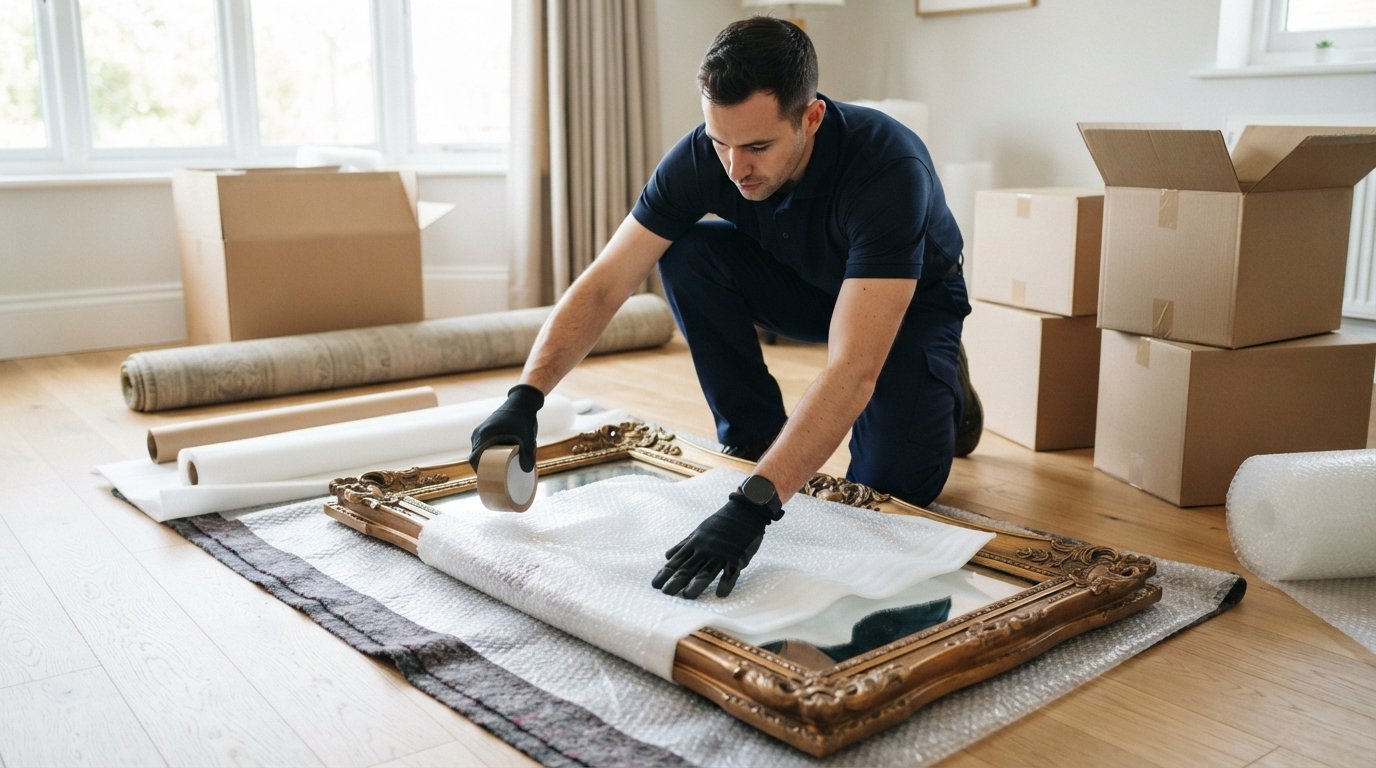
Large mirrors and framed artwork require a different approach because of their size and the risk of the glass cracking under its own weight. Never attempt to pack a large mirror alone; always have a helper. Begin by thoroughly cleaning the glass and frame, then apply a layer of glassine paper directly to the glass surface to prevent scratches. Next, create an X shape across the glass using strips of masking tape or painter's tape. This tape does not prevent breakage, but it holds the glass shards together if a crack occurs, making cleanup safer and reducing the risk of injury.
For the outer protection, use thick foam sheets or multiple layers of large-bubble wrap. Wrap the entire mirror, including the frame, ensuring the corners and edges are heavily padded. Cardboard corner protectors are ideal for this. Once wrapped, place the mirror into a sturdy mirror box (a tall, narrow box designed for this purpose). If a mirror box is not available, you can construct a custom box by layering cardboard on both sides of the mirror and taping the edges securely. The key is to prevent any flexing or bending of the mirror during transport.
When loading the moving truck, mirrors and framed glass should be transported vertically, never flat. Standing them on edge distributes the weight and prevents cracking. Secure them against the wall of the truck using straps or by wedging them between heavy furniture items, but avoid placing heavy objects directly against the glass. Label the mirror with "FRAGILE: GLASS" and "DO NOT LAY FLAT" to alert movers. For extremely valuable or oversized pieces, consider building a custom wooden crate; this is often a service provided by professional art handlers.
When to Call in the Professionals for Fragile Collections
While DIY packing can work for a few items, there is a tipping point where the risk outweighs the savings. If you own a large collection of fine crystal, antique mirrors, or original artwork, the cost of professional packing is often a fraction of the cost of replacing or restoring a damaged piece. Professional packers have access to specialized materials, such as custom-built crates and acid-free wrapping, and they are trained in techniques that the average homeowner may not be aware of.
Moreover, many moving companies offer full-value protection plans that cover items packed by their team. If you pack yourself, the liability for breakage often falls on you. For high-value items, the peace of mind that comes with professional packing is invaluable. If you are planning a long-distance move or have a substantial collection, it is wise to get a quote for professional packing services. You can also use a platform like Contractor.Homes to find pre-vetted local professionals for custom crating or specialized handling, ensuring your most precious items are in expert hands.
To decide whether to hire professionals, consider the value of the item, your available time, and your tolerance for risk. For a single mirror, a careful DIY approach may suffice. For a collection of family heirlooms, the investment in professional packing is a small price to pay for guaranteed safety. Remember, the goal is not just to move your belongings, but to preserve them for the next chapter of your life.
Final Loading and Unloading Tips
Even the best-packed box is vulnerable during loading. When placing fragile boxes in the moving truck, stack them on top of heavier, sturdier items. Never place heavy boxes on top of fragile ones. Use furniture pads or blankets to fill gaps and prevent boxes from sliding. If you are using a rental truck, secure fragile items near the cab or against a wall to minimize movement.
Upon arrival, unpack fragile items first. This allows you to inspect them for damage immediately and file any claims if necessary. Place boxes on a stable surface before opening, and carefully remove wrapping, checking for any cracks or chips. By following these steps, you can protect your fragile glass and mirrors throughout the moving process, turning a stressful task into a manageable one.