
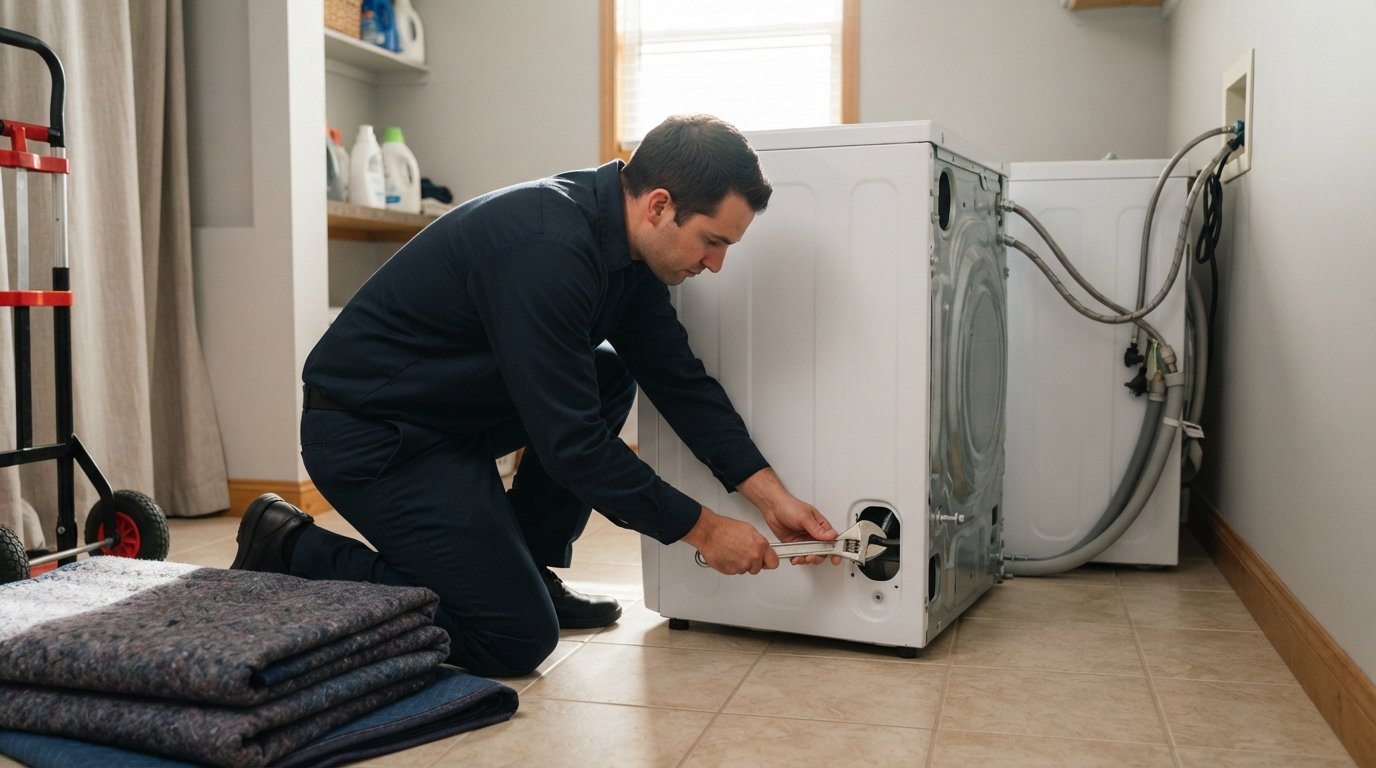
How to Move a Washer and Dryer Safely Without Damage
Moving a washer and dryer safely without damage starts with proper disconnection and securing the drum. Call (833)-484-8675 for professional moving help.

By Amanda Lewis
Your washer and dryer are two of the heaviest and most delicate appliances in your home. A single misstep during a move can crack a drum, snap a hose connection, or cause costly water damage in your new place. The good news is that with the right preparation and a little patience, you can transport both machines without a scratch. This guide walks you through every phase, from disconnecting utilities to reinstalling at your destination, so you can protect your appliances and your peace of mind.
Preparing Your Appliances Before Moving Day
Preparation begins well before the moving truck arrives. Rushing this stage is the most common reason appliances get damaged in transit. Start by clearing the area around your washer and dryer. Remove any items stored on top of the machines, and make sure you have enough room to maneuver a dolly. If your units are stacked, plan to separate them with a helper, because a stacked unit is far too heavy and awkward for one person to handle safely.
Gather the right supplies ahead of time. You will need an adjustable wrench or pliers, a screwdriver, towels, a bucket or shallow pan, and moving blankets or cardboard. For front-load washers, locate the shipping bolts that came with the machine. These bolts lock the drum in place during transport and are absolutely essential; without them, the drum can bounce against the cabinet and destroy the suspension. If you cannot find the originals, most manufacturers sell replacement bolt kits for a modest price. For dryers, have a vacuum handy to clean out lint from the vent and interior, which reduces fire risk and keeps the machine fresh.
Finally, measure every doorway, hallway, and stairwell along your exit path. Washers and dryers are wider than they look, and a tight turn can trap you halfway out the door. Knowing the dimensions in advance lets you remove doors or railings if needed and saves you from a stressful mid-move surprise. If your move involves a full household of large items, our guide on choosing local residential movers explains how professionals plan routes and protect floors, which is especially helpful when appliances are part of the load.
Disconnecting Water, Gas, and Power Safely
Safety comes first when disconnecting utilities. For an electric dryer, simply unplug the unit from the wall. For a gas dryer, do not attempt to disconnect the gas line yourself unless you are experienced with gas fittings; call a licensed technician or your gas utility to cap the line. A gas leak is a serious hazard, and the small savings from do-it-yourself work are never worth the risk. For the washer, turn off both the hot and cold water supply valves behind the machine. If the valves are stiff or corroded, turn them gently and have a bucket ready, because older valves can drip or fail.
Once the water is off, disconnect the hoses from the wall and from the back of the washer. Expect some residual water to spill, so keep towels and a shallow pan nearby. Drain the hoses completely and coil them for transport. Next, disconnect the drain hose from the standpipe or laundry sink, and empty any water trapped inside. Remove the lint trap and clean the dryer vent hose; a clogged vent is a fire risk and also adds unnecessary weight. Label each hose and cord with masking tape so reinstallation is straightforward.
After disconnection, secure every loose part. Tape the power cord to the back of the machine, tape the hoses together, and place screws and small parts in a labeled zip-top bag taped to the appliance. This small step prevents lost hardware and makes the reconnection process at your new home much faster. If you are moving a gas dryer and are unsure about local codes, ask your moving company or a qualified technician for guidance before the truck arrives.
Installing Shipping Bolts and Securing the Washer Drum
The washing machine drum is the most fragile component during a move. Front-load washers suspend the drum on springs and shock absorbers, and without shipping bolts, the drum can shift violently, cracking the outer tub or damaging the suspension. Locate the bolt holes on the back of the machine (usually four), insert the shipping bolts, and tighten them according to the manufacturer's instructions. If you no longer have the original bolts, order a replacement kit specific to your model. Never substitute generic bolts, because the thread and length must match precisely.
For top-load washers, the drum is less susceptible to movement, but you should still secure it. Some models have a shipping rod or foam insert that locks the tub; check your manual. If no locking mechanism exists, pad the inside of the drum with blankets or foam to reduce movement, then tape the lid shut. Regardless of the washer type, tape the door or lid closed and wrap the entire unit in a moving blanket or cardboard. This protects the finish and keeps doors from swinging open during transport.
Dryers do not have a suspended drum in the same way, but you should still tape the door closed and secure the vent hose. Remove the vent hose if it is detachable, and place it in a bag with the other parts. If the dryer has a pedestal or storage drawer, remove it and transport it separately to reduce weight and prevent cracking. Taking these steps protects the internal components and makes the move far less risky.
Moving Dollies, Straps, and Doorways: Getting Appliances Out Safely
Moving a washer or dryer requires the right equipment and technique. A heavy-duty appliance dolly with ratchet straps is the safest tool for the job. Never attempt to carry a washer or dryer by yourself; even two strong people can struggle with the weight and awkward shape. Clear a path from the laundry area to the exit, and protect floors with cardboard or moving runners. If you must go down stairs, always keep the appliance above you and use straps to control the descent.
Follow this sequence to move each appliance safely:
- Tip the appliance slightly and slide the dolly under the front edge, then strap it securely at the top and bottom.
- Lean the appliance back onto the dolly and balance the weight over the wheels.
- Move slowly through doorways, checking clearance at the top and sides; remove doors if necessary.
- Use a second person to guide the appliance around corners and to stabilize it on stairs.
- Load the appliance upright in the truck and strap it to the wall rails so it cannot tip.
If your laundry room is on an upper floor with a narrow staircase, consider hiring professional movers who have specialized equipment for tight spaces. Many moving companies offer appliance handling as part of their service, and the cost is often far less than replacing a damaged machine. When loading the truck, place the washer and dryer against the front wall or side wall and use moving blankets between them and other furniture. Never lay a washer on its side or back for an extended period, because oil from the motor can leak into the drum and cause problems later.
Reinstallation Checks at the New Home
Once you arrive, inspect the appliances for any signs of damage before bringing them inside. Look for dents, cracked hoses, or loose parts. If something looks wrong, document it with photos and contact your mover or insurer before proceeding. Move the units to their new location and allow them to sit upright for at least a few hours (preferably 24 hours) if they were transported in cold weather, so any internal lubricants can settle.
Reinstallation is essentially the reverse of removal, but with a few critical checks. For the washer, remove the shipping bolts before running a cycle; forgetting this step can cause severe vibration and damage. Reconnect the hot and cold hoses to the correct valves (hot to hot, cold to cold), tighten them by hand plus a quarter turn with pliers, and check for leaks. Reattach the drain hose securely to the standpipe, then run a short test cycle to confirm water flows and drains properly. For the dryer, reconnect the vent hose with metal tape (not duct tape, which can sag), plug in the unit, and test that it heats and tumbles. If you have a gas dryer, have a professional reconnect the gas line and check for leaks.
If you discover that your new home needs updated laundry hookups or venting, you may need to hire a qualified contractor. For homeowners seeking pre-vetted professionals for plumbing, electrical, or HVAC work, Homes.Contractors is a comprehensive directory that connects you with licensed experts across the United States. Addressing these issues before the appliances are fully installed prevents water damage and electrical hazards. Finally, level the machines by adjusting the feet, and test the washer on a spin cycle to ensure it runs smoothly without walking across the floor.
When to Call in Professional Help
While many homeowners can handle a washer and dryer move with careful planning, some situations call for professional assistance. If your appliances are front-loading models with complex suspension systems, if your laundry area is difficult to access, or if you simply lack the time and equipment, hiring trained movers is the safer and often more economical choice. Professional movers carry appliance dollies, straps, and blankets, and they know how to navigate tight stairwells without damaging walls or floors. They can also provide insurance coverage for high-value appliances, giving you financial protection if something goes wrong.
Moving.Homes connects you with vetted moving companies that offer guaranteed pricing and 24/7 customer support. You can request a free, no-obligation quote in minutes, and the platform will match you with professionals who handle appliances every day. Whether you are moving across town or across the country, having experienced hands on your side reduces stress and protects your investment. For specialized items like washers and dryers, it is worth asking potential movers about their appliance handling experience and whether they provide specific coverage for mechanical damage.
Moving a washer and dryer safely without damage is entirely achievable when you plan ahead, disconnect utilities carefully, secure the drum, and use proper moving equipment. Take your time, label every part, and do not hesitate to call a professional if the job feels beyond your comfort level. With these steps, your appliances will arrive ready to handle laundry day in your new home.