
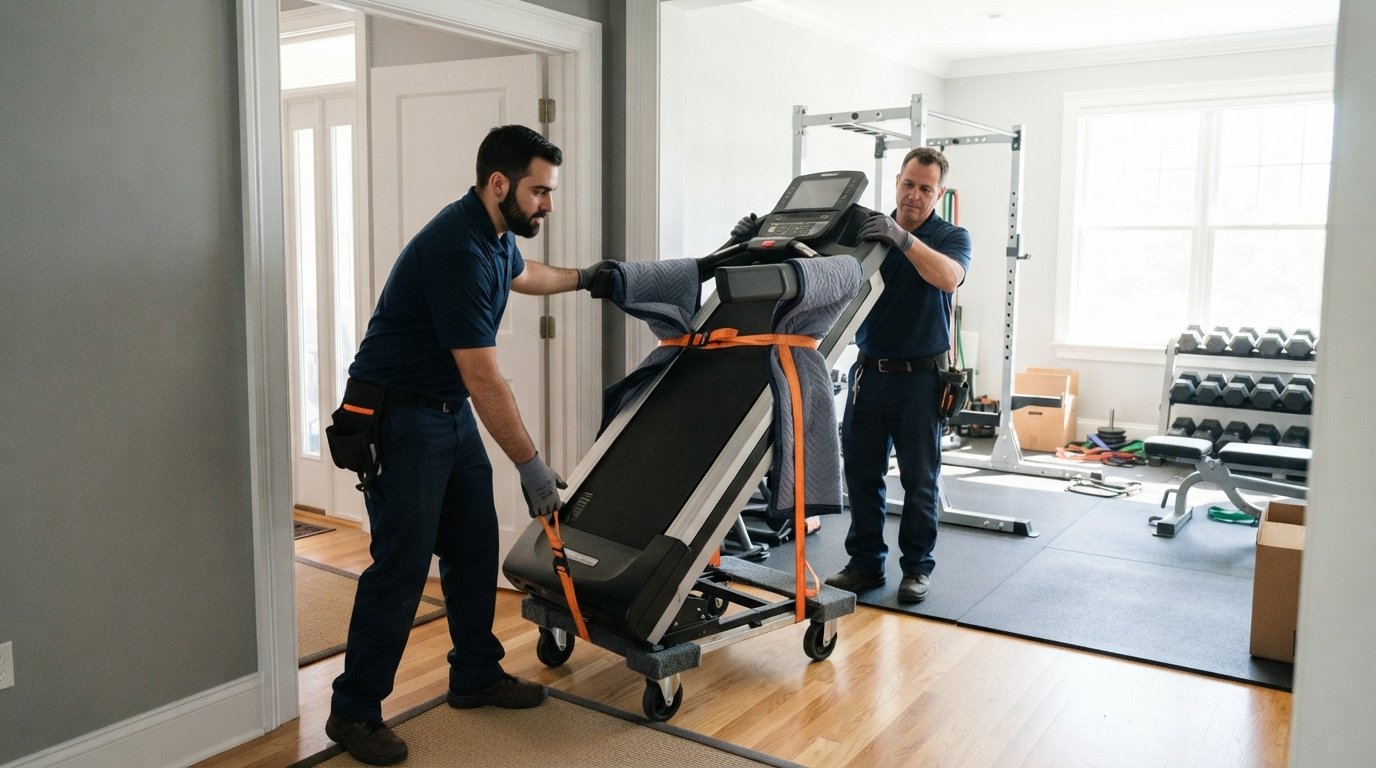
How to Move a Home Gym and Heavy Fitness Equipment Safely
Moving heavy fitness gear safely requires planning and the right tools. For expert help with your relocation, call (833)-484-8675.

By Olivia Johnson
Your home gym is an investment in your health, but when it is time to move, that investment can become a logistical nightmare. Treadmills, weight racks, and ellipticals are not only heavy but also awkward and prone to damage if handled incorrectly. Moving them safely requires planning, the right tools, and a healthy respect for your back. Whether you are relocating across town or across the country, this guide will walk you through the process of moving your fitness equipment without injury or costly repairs.
Assess Your Equipment and Plan Ahead
Before you lift a single dumbbell, take stock of what you own. Different machines have different moving requirements. A folding treadmill is far easier to transport than a massive commercial-grade elliptical. Create an inventory of every piece of equipment, noting its weight, dimensions, and whether it can be disassembled. This inventory will help you determine what supplies you need and whether you should hire professional movers.
Check the manufacturer's manual for disassembly instructions and weight limits. Most manuals are available online if you have lost the physical copy. Pay attention to any warnings about moving the equipment without disassembling it first, as some machines can be damaged if tilted or rolled improperly. For heavy items like weight stacks and cast-iron plates, consider whether you can safely lift them or if you need assistance.
Plan your moving timeline. If you are using a moving company, schedule the move well in advance and inform them about the fitness equipment. Some movers specialize in heavy or awkward items and may charge extra. If you are moving yourself, recruit friends or family to help with the heavy lifting and rent appropriate equipment like a furniture dolly or a utility cart.
Gather the Right Tools and Supplies
Moving heavy fitness equipment without the proper tools is a recipe for injury and damaged property. Before you begin, assemble a toolkit that includes:
- Heavy-duty furniture dolly or hand truck with a high weight capacity
- Moving straps or harnesses to distribute weight and free up your hands
- Allen wrenches, screwdrivers, and adjustable wrenches for disassembly
- Zip-top bags and masking tape for labeling hardware
- Moving blankets, plastic wrap, and heavy-duty tape for protection
- Floor protection such as plywood or moving mats
Invest in quality moving straps; they are invaluable for carrying heavy, awkward items like weight plates and machine parts. A sturdy dolly with pneumatic tires can handle uneven surfaces and stairs more easily than a basic model. Also, stock up on stretch wrap to keep parts together and protect finishes.
Disassemble and Label Hardware
Most home gym equipment is designed to be disassembled for moving or storage. Disassembly not only makes items lighter and easier to handle but also reduces the risk of damage during transit. Start by taking photos of the assembled equipment from multiple angles. These photos will be your reference during reassembly.
As you disassemble, keep all screws, bolts, and small parts in labeled zip-top bags. Tape the bags directly to the corresponding part or keep them in a single container labeled with the equipment name. Use masking tape and a marker to label cables, wires, and connectors. For example, label each end of a treadmill's console cable to ensure you reconnect them correctly.
Some equipment, like weight benches and squat racks, may not need full disassembly. In these cases, remove any removable parts (e.g., weight horns, safety catches) and secure moving parts with tape or zip ties. For treadmills, fold the deck if possible and lock it in place. For ellipticals, remove the pedals and console if they are detachable.
Protect Your Floors and Equipment
Heavy equipment can scratch hardwood floors, tear carpet, or crack tiles. Protect your floors by laying down plywood sheets or heavy moving mats along the path you will take. Even a thick cardboard layer can help, but plywood is more durable for heavy loads. If you are moving items through a carpeted area, use a sheet of plastic or a moving runner to prevent dirt from being ground into the carpet.
Wrap each piece of equipment in moving blankets or stretch wrap to prevent scratches and dings. Pay special attention to corners and edges. For weight plates, stack them and wrap them together with stretch wrap to keep them from sliding. Use cardboard corners or foam padding on delicate parts like consoles and screens.
Safe Lifting and Loading Techniques
Lifting heavy fitness equipment requires proper body mechanics to avoid injury. Always lift with your legs, not your back. Keep the load close to your body and avoid twisting while lifting. If an item is too heavy or awkward to lift alone, ask for help or use a dolly. When moving items up or down stairs, use a two-person team and communicate clearly.
Load the heaviest items first, placing them against the front wall of the truck or trailer. Distribute weight evenly to prevent swaying. Secure everything with ratchet straps or rope to keep items from shifting during transit. Use moving blankets between items to prevent rubbing. For treadmills, keep them upright if possible; if you must lay them down, follow the manufacturer's guidelines to avoid damage to the motor and electronics.
If you are hiring professional movers, they will handle the loading, but you should still ensure they are aware of the equipment's weight and any special handling instructions. For specialized items like a heavy safe or a commercial-grade machine, consider hiring a specialty mover. In our guide on IT equipment movers for business relocation, we explain how professional movers handle delicate and heavy equipment, a principle that applies to fitness gear as well.
When to Hire Professionals for Specialty Fitness Equipment
Some fitness equipment is simply too heavy, bulky, or delicate for a DIY move. Treadmills with incline motors, high-end ellipticals, and multi-station home gyms often weigh several hundred pounds and have intricate electronic components. Attempting to move them yourself can void warranties, cause costly damage, or lead to serious injury.
Consider hiring professional movers if:
- The equipment weighs more than 300 pounds or is unusually bulky.
- You need to navigate stairs, tight hallways, or sharp turns.
- The equipment has delicate electronics or calibration requirements.
- You lack the physical strength or help to lift safely.
- You are moving long-distance and want peace of mind.
Professional movers have the training, equipment, and insurance to handle heavy fitness gear. They can disassemble, transport, and reassemble your equipment, often saving you time and stress. When requesting quotes, be specific about the equipment you have and ask about their experience with fitness machines. For homeowners planning other projects, resources like contractor home quotes can help you find reliable professionals for home improvements, but for moving, always verify that your mover is licensed and insured.
Reassembly and Calibration Checks
Once you arrive at your new home, reassemble your equipment using the labeled hardware and photos as a guide. Follow the manufacturer's instructions carefully, and do not overtighten bolts, as this can damage parts. For treadmills, check the belt tension and lubrication after reassembly. For ellipticals, ensure all moving parts are properly aligned and lubricated.
After reassembly, perform a safety check. Plug in electronic equipment and test all functions. Check for any loose parts or unusual noises. If your equipment has calibration settings (e.g., for speed or incline), recalibrate according to the manual. If you hired professional movers, they may offer reassembly services; confirm this before the move. If not, you may need to hire a technician for complex machines.
Allow your equipment to acclimate to the new environment for 24 hours before use, especially if it was exposed to extreme temperatures during transit. This is particularly important for electronics and belts.
Final Tips for a Smooth Move
Moving a home gym safely boils down to preparation, the right tools, and knowing your limits. Start by inventorying your equipment, gathering supplies, and disassembling what you can. Protect your floors and equipment, and always use safe lifting techniques. When in doubt, hire professionals, especially for heavy or delicate machines.
If you are planning a move and need assistance with heavy fitness equipment, consider reaching out to professional movers who can handle the job safely and efficiently. With careful planning and the right approach, you can transport your home gym to your new home without damage or injury, ensuring your fitness routine continues without interruption.