

How to Choose the Best Moving and Storage Companies
Learn how to choose the best moving and storage companies with this step-by-step guide, including tips on verifying credentials, avoiding scams, and getting accurate quotes.

By Jason Adams
Selecting the right moving and storage company can feel like a high-stakes gamble. You are trusting strangers with your furniture, your family heirlooms, and your entire household. A poor choice can lead to damaged goods, surprise fees, or even a delayed move. On the other hand, the right partner makes relocation feel almost effortless. This guide will walk you through the essential steps to evaluate moving and storage companies, so you can book with confidence and avoid common pitfalls.
Start with a Clear Inventory and Budget
Before you contact any mover, you need to know exactly what you are moving. Walk through every room and write down each item, from large appliances to small boxes. Note anything that requires special care, such as a piano, a pool table, or fragile art. This inventory will not only help you get accurate quotes, but it will also force you to decide what you will keep, sell, or store. Many people underestimate the volume of their belongings, which leads to an undersized truck and a second trip.
Your budget should include more than just the moving quote. Factor in packing supplies, equipment rental, travel costs, and potential storage fees. If you are moving long distance, ask about fuel surcharges and tolls. A reputable company will provide a detailed estimate that breaks down all these costs. Compare at least three quotes, but do not automatically choose the cheapest option. Instead, look for the best value, which means a fair price combined with solid reviews, proper licensing, and clear communication.
Verify Credentials and Insurance
Every legitimate moving and storage company must have a USDOT number issued by the Federal Motor Carrier Safety Administration (FMCSA) if they cross state lines. You can look up this number on the FMCSA website to check the company's safety record and complaint history. For local moves, check with your state's moving authority, as requirements vary. Do not hire a mover that cannot provide proof of licensing and insurance.
Insurance is another critical factor. You need to understand the difference between basic liability coverage, which is often minimal, and full value protection, which requires the mover to repair or replace damaged items. Ask for a copy of their insurance certificate and verify that it is current. If you have high-value items like jewelry or collectibles, consider purchasing additional coverage. A trustworthy company will explain your options clearly and never pressure you into a decision.
Read Reviews and Ask for References
Online reviews are a powerful tool, but you need to read them critically. Look for patterns rather than isolated complaints. If multiple reviewers mention the same issue, such as late deliveries or damaged furniture, treat that as a red flag. On the other hand, a single negative review among dozens of positive ones is probably not a reason to panic. Use review sites like Google, Yelp, and the Better Business Bureau, but also check the company's social media pages for customer feedback.
In addition to reviews, ask the company for references from recent customers. A confident mover will gladly provide you with a list. Contact a few of these people and ask about their experience. Were the movers punctual and professional? Did the company communicate well before and during the move? Were there any surprises on the final bill? These conversations can reveal details that online reviews miss.
Understand the Different Types of Services
Moving and storage companies offer a range of services, and you need to know what each includes. Full-service movers handle everything from packing to unloading, which is ideal if you have a busy schedule or physical limitations. Self-service moves provide a truck and driver, but you do the packing and loading. Some companies offer a hybrid option where you pack, and they load and unload. Consider your time, budget, and physical ability when choosing a service level.
Storage is another key consideration. If your move has a gap between closing dates, or if you simply need to declutter, you might require a storage unit. Ask whether the company offers short-term and long-term storage, and whether the facility is climate-controlled. Climate control is essential for wooden furniture, electronics, and documents that can warp or degrade in extreme temperatures. Also ask about security measures, such as 24/7 monitoring and gated access.
Get Multiple In-Home Estimates
An in-home estimate is the most accurate way to get a moving quote. A representative will walk through your home, see your belongings, and ask about any special requirements. This visit allows them to provide a binding estimate, which means the final price cannot exceed the quoted amount. Some companies offer virtual surveys, but these are less accurate. If you are moving long distance, the estimate should include the weight of your shipment and the distance traveled.
During the estimate, take notes and ask questions. How long will the move take? Are there any additional fees for stairs, long carries, or a shuttle? What is the cancellation policy? A detailed estimate should include all these terms, so you are not blindsided later. If a company refuses to provide an in-home estimate or insists on a non-binding quote, consider that a warning sign.
Ask About the Crew and Their Training
The quality of your move depends on the crew. Ask the company about their hiring process and training programs. Do they perform background checks? How many hours of training do new movers receive? A company that invests in its employees is more likely to treat your belongings with care. You should also ask about the size of the crew and the type of equipment they use. A three-person crew is standard for a two-bedroom home, but larger homes may need four or more movers.
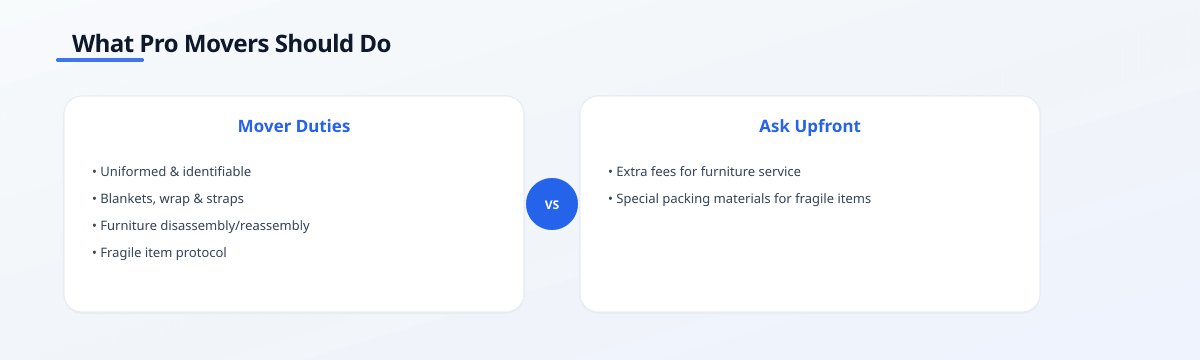
Professional movers should be uniformed and identifiable. They should handle your items with care, using moving blankets, stretch wrap, and straps to secure everything. Ask about their policy for disassembling and reassembling furniture. Some companies charge extra for this service, so clarify the cost upfront. Finally, ask about their protocol for fragile items. Do they use special packing materials, or do they just throw everything in a box? Your antiques and glassware deserve better than that.
Look for Red Flags and Scams
The moving industry has its share of bad actors, so you need to stay vigilant. Be wary of companies that demand a large deposit upfront, especially in cash. Legitimate movers typically require payment upon delivery, and a deposit, if any, should be modest. Also, avoid movers that arrive at your door in a rental truck with no logo. This is a classic sign of a broker or an unlicensed operator.
Another red flag is a quote that seems too good to be true. If one company's estimate is significantly lower than the others, ask why. They may be cutting corners on insurance, using untrained workers, or planning to add hidden fees later. Trust your instincts. If a company is vague about their licensing, refuses to provide written estimates, or pressures you to sign a contract on the spot, walk away.
Compare Contracts and Fine Print
Before you sign anything, read the contract carefully. The document should list all services, the total cost, and the payment terms. It should also specify the delivery window and what happens if the move is delayed. Look for any clauses that limit the mover's liability or waive their responsibility for damages. If you do not understand a term, ask for clarification. A reputable company will be happy to explain.
Pay attention to the valuation coverage you selected. This determines how much the mover will pay if your items are damaged or lost. Basic coverage is often pennies per pound, which is not enough to replace a $2,000 sofa. Full value protection is more expensive, but it provides peace of mind. You can also purchase additional insurance from a third-party provider if you need extra coverage. Make sure you choose the option that fits your needs and budget.
Plan for the Day of the Move
On moving day, be present and available to answer questions. Walk through your home with the crew leader and point out any items that need special attention. Keep valuable documents, jewelry, and medications with you in a personal bag. If you have pets, arrange for them to stay with a neighbor or a boarding facility. Your focus should be on the move, not on chasing a runaway cat.
After the movers load the truck, do a final walkthrough to ensure nothing is left behind. Check closets, drawers, and the garage. If you are using a storage service, confirm the storage unit's location and access hours. Once you arrive at your new home, inspect your belongings before the movers leave. Note any damage on the bill of lading and take photos. If you discover damage later, contact the company within 24 hours to file a claim.
Use a Comparison Resource to Save Time
Researching moving and storage companies can take hours, but you can streamline the process with a trusted comparison tool. Our guide on the best moving and storage companies compared for 2026 breaks down the top providers based on reliability, pricing, and customer satisfaction. This resource can help you narrow down your choices and focus on the companies that are most likely to meet your needs.
Using a comparison resource also helps you spot industry trends. For example, you might learn that some companies now offer virtual estimates as a standard option, which can save you time. Or you might discover that climate-controlled storage is more common than you thought. With this knowledge, you can ask smarter questions and make a more informed decision.
Final Thoughts on Choosing a Moving Partner
Choosing the right moving and storage company is a decision that deserves careful thought. Start by getting a clear picture of your belongings and budget. Verify credentials, read reviews, and get multiple in-home estimates. Understand the services you need, whether that is full-service packing or just a truck and driver. Ask about the crew's training and the equipment they use. Watch for red flags, and always read the fine print before signing.
House removal companies, both large and small, can deliver a stress-free move if you do your homework. Remember that the cheapest quote is not always the best deal. Look for a company that communicates clearly, offers fair pricing, and demonstrates a genuine commitment to protecting your belongings. With the right partner, your move can be a fresh start rather than a source of anxiety.
Take your time, ask questions, and trust your instincts. The effort you put into selecting the best moving and storage company will pay off on moving day when you can relax and focus on settling into your new home.