
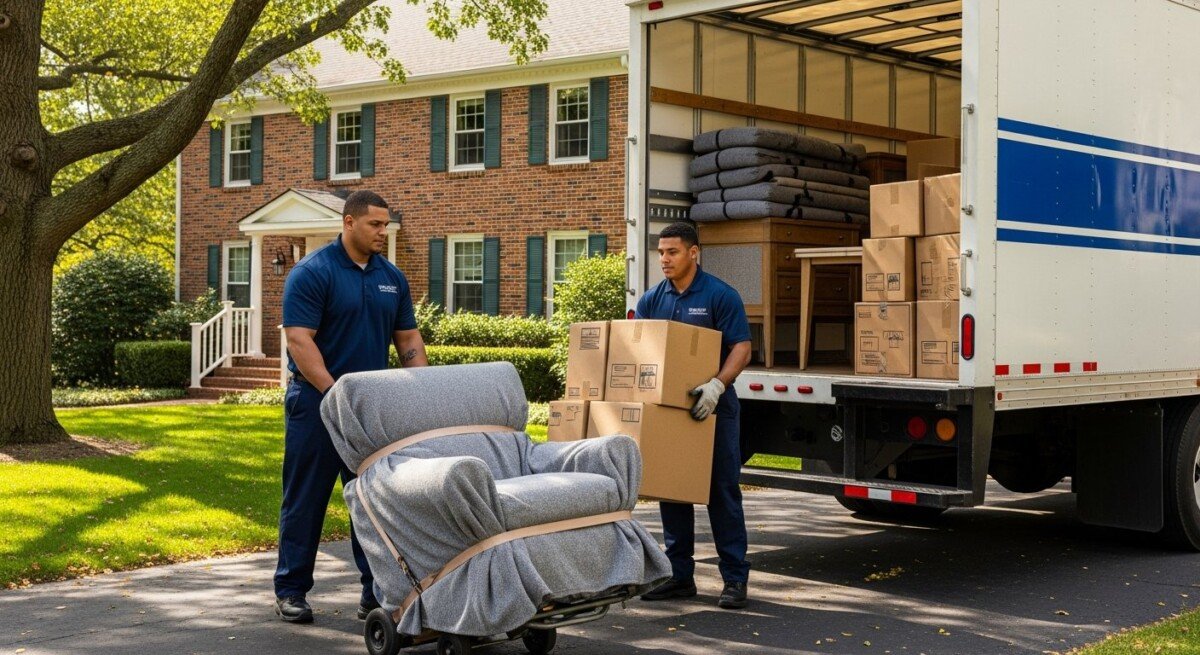
Finding Reliable Budget Moving Services in Virginia
Learn how to secure reliable, affordable relocation in the Commonwealth. For personalized assistance, call our experts at (833) 762-3578.

By Lisa Anderson
Relocating in Virginia, whether across the bustling streets of Arlington or to the quieter landscapes of the Shenandoah Valley, often comes with a significant financial concern. The prospect of hiring professional movers can feel daunting when faced with estimates that strain your budget. However, affordable relocation is not a myth. By understanding the moving industry in the Commonwealth and employing strategic planning, you can secure quality, budget moving services in Virginia that protect your belongings and your wallet. The key lies in knowing where to look, what questions to ask, and how to structure your move to minimize costs without sacrificing essential reliability.
Understanding What “Budget” Really Means for Virginia Moves
When searching for budget moving services, the first step is to define your parameters. A budget service should not equate to low-quality or risky service. Instead, it represents a company that offers transparent pricing, efficient operations, and scalable service options that allow you to control costs. In Virginia, moving costs are influenced by several local factors. The density of Northern Virginia cities like Alexandria and Fairfax can lead to higher hourly rates due to traffic and parking challenges, while moves in more rural areas may incur greater travel time charges. The season also plays a major role, with summer months and weekends commanding premium prices. A true budget mover provides a clear, binding estimate, explains all potential fees (like those for stairs, long carries, or shuttle services for large trucks), and offers ways to reduce the final bill, such as off-peak scheduling.
Strategies to Reduce Your Moving Costs in Virginia
Reducing your moving expense is a proactive endeavor. One of the most effective strategies is decluttering. The less you move, the less you pay. Host a garage sale, donate to local Virginia charities, or sell items online. This reduces volume, packing materials, and labor time. Another crucial tactic is flexibility. If possible, schedule your move for a weekday in the middle of the month during the fall or winter. Demand is lower, and rates are more competitive. Furthermore, consider a hybrid approach. You can handle the packing yourself, renting plastic bins or sourcing free boxes, and then hire movers strictly for loading, transportation, and unloading. This significantly cuts labor hours. For those with very tight budgets or minimal belongings, renting a portable moving container is a viable Virginia-friendly option. You pack and load it at your pace, the company transports it, and you unload it. This guide on affordable moving services and practical savings delves deeper into these cost-cutting frameworks.
Packing: Your Biggest Lever for Savings
Packing services, while convenient, add a substantial cost to your move. By taking on this task yourself, you can save hundreds, if not thousands, of dollars. Start early, gathering supplies like sturdy boxes, packing paper, bubble wrap, and high-quality tape. Label every box meticulously with its contents and the room it belongs to in your new home. This not only helps you but also allows movers to place boxes directly in the correct room, saving unloading time. For fragile items, use proper padding and box-in-a-box techniques. Disassemble furniture like bed frames and tables before moving day to expedite the loading process. Remember, an efficiently packed home translates directly into fewer billable hours for your moving crew.
How to Vet and Hire a Reputable Budget Mover
Finding a low quote is easy, finding a trustworthy one requires diligence. Your vetting process is non-negotiable. Always verify a company’s credentials. In Virginia, interstate movers must have a USDOT number issued by the Federal Motor Carrier Safety Administration (FMCSA), and intrastate movers should be licensed with the Virginia Department of Motor Vehicles (DMV). Check these numbers on the respective official websites to view insurance details and complaint history. Read customer reviews across multiple platforms like Google, BBB, and Yelp, paying attention to comments about hidden fees, damage, and professionalism. Obtain written, in-person or video survey estimates from at least three companies. Be wary of any quote that is significantly lower than others, it is often a red flag for a low-ball scheme that leads to price gouging on moving day. A reputable budget mover will ask detailed questions about your inventory to provide an accurate estimate.
When comparing estimates, ensure you understand the type of quote. A binding estimate guarantees the price based on the listed services, while a non-binding estimate can change based on the actual weight of your shipment. For local moves, hourly rates are common, but confirm what the hourly rate includes (number of movers, truck, etc.) and if there is a minimum number of hours. Always ask about their valuation coverage (released value vs. full value protection) and the claims process for damaged items. Once you select a mover, get everything in writing. The order for service and bill of lading are your key contracts. To easily start this comparison process with vetted providers, you can get a free moving quote to gather baseline estimates.
Key Questions to Ask Potential Moving Companies
Arming yourself with the right questions separates the professionals from the opportunists. Use this list during your consultations to ensure clarity and protect your interests.
- Are you licensed for moves within Virginia (intrastate) and/or across state lines (interstate)? What are your USDOT and state license numbers?
- Can you provide a binding, not-to-exceed estimate based on a visual survey of my belongings?
- What is included in your hourly rate or binding price? Are there travel fees, fuel surcharges, or fees for stairs, elevators, or long carry distances?
- What type of insurance and valuation options do you offer? What is the claims process if an item is damaged?
- What is your policy on delays? What happens if my new home isn’t ready for delivery on the scheduled date?
- Will the same crew that loads my belongings also be the ones to deliver and unload them?
- Do you have any references from recent moves in my area (e.g., from Richmond to Norfolk)?
Asking these questions demonstrates you are an informed consumer and helps you avoid companies that rely on opaque practices. The answers will give you a strong sense of their professionalism and reliability.
Common Pitfalls to Avoid With Low-Cost Moves
The pursuit of savings can sometimes lead to costly mistakes. A major pitfall is hiring a broker without realizing it. Some companies that quote you are not movers but brokers who then sell your job to a third-party carrier, often at a higher price and with less control over quality. Always ask, “Will you be the company performing the move with your own employees and trucks?” Another trap is paying a large deposit. Legitimate movers typically require payment upon delivery, not a large cash deposit upfront. Be extremely cautious of any request for a substantial deposit via wire transfer or cash. Finally, avoid packing prohibited items like aerosols, chemicals, or perishables. This can cause delays and safety issues. Understanding these regional and logistical nuances is similar to the approach needed when seeking affordable moving in Florida, where consumer awareness is equally critical.
Frequently Asked Questions About Virginia Moving Services
What is the average cost of a local move in Virginia?
Costs vary widely. A local, intrastate move (e.g., within Northern VA) for a 2-3 bedroom home typically ranges from $500 to $1,500+ based on hours, crew size, and distance. Always get specific estimates.
How far in advance should I book budget movers?
For the best rates and availability, especially with budget-conscious companies, aim to book at least 4-8 weeks in advance. For summer moves, even more lead time is advisable.
Are there specific items Virginia movers won’t transport?
Yes. All movers prohibit hazardous materials like paint, propane tanks, cleaning fluids, and ammunition. They also typically will not move perishable food, plants, or pets. Plan to transport these items yourself.
What should I do if I suspect a moving scam?
If a company demands a large cash deposit, shows up with a rental truck, or the price escalates dramatically on moving day, do not proceed. Contact the Virginia Attorney General’s Office or the FMCSA to report the activity.
Is tipping expected, and how much?
Tipping is a customary way to show appreciation for hard work. A general guideline is $5-$10 per mover per hour, or a lump sum of 5-10% of the total bill, divided among the crew, for exceptional service.
Securing reliable, budget moving services in Virginia is entirely achievable with research and preparation. By defining your needs, decluttering, comparing vetted estimates, and understanding your contracts, you transform a potentially stressful expense into a manageable, well-executed transition. Your move marks the beginning of a new chapter in the Old Dominion, and starting it on solid financial ground is the best foundation of all.