
Eco Friendly Packing Supplies Alternatives for Your Move
Eco friendly packing supplies alternatives like reusable crates and paper tape cut waste and lower moving costs. Here is how to pack green.

By Amanda Lewis
Cardboard boxes, plastic bubble wrap, and styrofoam peanuts have long been the default packing materials for a move. But as more people look for ways to reduce waste, those familiar supplies are being replaced by reusable, compostable, and borrowed options that work just as well. If you are planning a relocation and want to keep your environmental footprint small, this guide walks through the best eco friendly packing supplies alternatives, how to use them, and where to find them.
Why Traditional Packing Materials Are a Problem
Most moving boxes are used once and then discarded. Even when they are recycled, the process requires energy and water, and many communities do not accept heavily taped or damp cardboard. Bubble wrap and styrofoam are worse: they are made from petroleum, take centuries to break down, and often end up in landfills because curbside programs rarely accept them.
The environmental cost is not the only downside. Traditional supplies also cost money. A typical household move can require dozens of boxes, multiple rolls of tape, and several bags of filler. That adds up quickly, and much of it goes straight into the trash after unpacking.
Eco friendly packing supplies alternatives address both problems. They reduce waste and often save money because they can be reused, borrowed, or sourced for free. The key is knowing which options fit your move and how to use them safely.
Reusable Containers and Bins
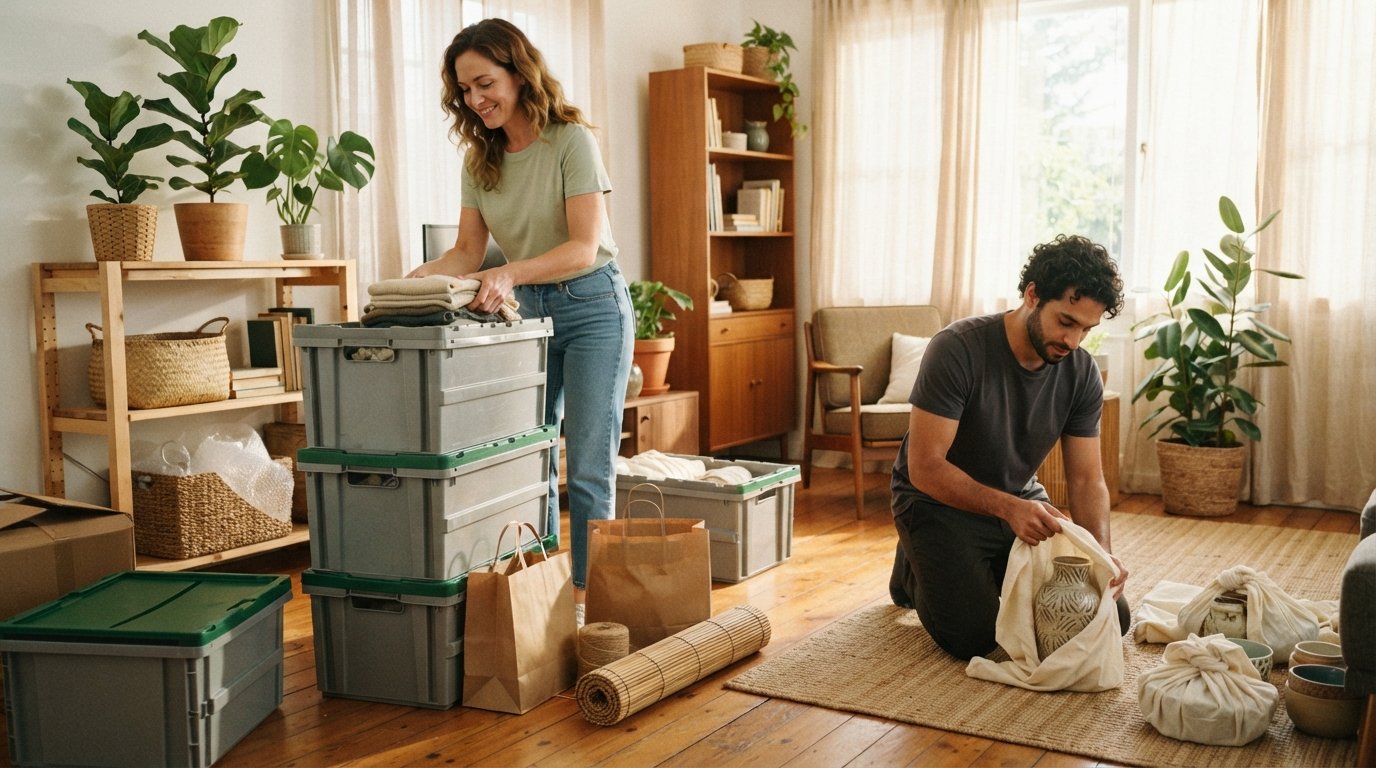
Plastic moving crates are one of the most practical swaps for cardboard boxes. These sturdy bins come with lids and sometimes wheels, and they can be rented from moving companies or specialty services. Because they are designed for repeated use, they eliminate the need for new cardboard entirely.
You can also use what you already own. Suitcases, laundry hampers, storage ottomans, and even drawers from a dresser can hold items during transit. Just be sure to secure drawers with tape or stretch wrap so they do not slide open. For fragile items, line the bottom with a towel or blanket.
If you need to buy containers, look for bins made from recycled plastic. They are durable, stackable, and can be used for storage long after the move. Avoid flimsy bins that crack under weight; they defeat the purpose of reuse.
- Rent reusable moving crates from a local service or your moving company.
- Use suitcases and duffel bags for clothing and soft goods.
- Repurpose storage bins and laundry baskets for non-fragile items.
- Choose bins made from recycled plastic if you must buy new.
Reusable containers work best for items that are not extremely heavy, such as books, kitchenware, and toys. For very heavy items, distribute the weight across several smaller bins to avoid injury and damage.
Biodegradable and Compostable Packing Materials
When you need cushioning, look for materials that break down naturally. Paper packing tape, for example, is a direct replacement for plastic tape. It is made from paper and starch-based adhesive, and it can be recycled with cardboard without separating.
For void fill, use crumpled newspaper, kraft paper, or tissue paper. These materials are widely available and often free. If you want something more structured, consider corrugated cardboard inserts or honeycomb paper wrap. Both are recyclable and provide good protection for fragile items.
Biodegradable packing peanuts made from cornstarch or sorghum are another option. They dissolve in water and can be composted at home. However, they are not always easy to find locally, and they can be more expensive than traditional peanuts. Use them for special items where you want extra protection without plastic waste.
Compostable mailers and bags are useful for small parts, hardware, and accessories. Look for ones certified by organizations like BPI or TUV. Avoid any product labeled "biodegradable" without certification, as the term is loosely regulated.
How to Source Free and Low-Cost Eco Friendly Supplies
One of the best things about eco friendly packing is that many alternatives are free. Start by asking friends, family, and neighbors if they have boxes, bins, or packing paper left over from their own moves. Community groups on social media often have a "buy nothing" or "free stuff" section where people give away moving supplies.
Local businesses are another source. Liquor stores, grocery stores, and bookstores often have sturdy boxes they are happy to give away. Just call ahead to ask what they have and when to pick it up. Avoid boxes that held food or chemicals, as they can attract pests or leave odors.
If you are moving out of a rental, check with your landlord or building manager. Some buildings have a recycling room or a designated area for moving boxes that residents can take for free. This is also a good time to declutter. In our guide on eco-friendly decluttering before a move, we explain how to sort items responsibly so you pack only what you truly need.
For items you cannot find for free, consider renting. Reusable moving crate rentals are available in many cities and often cost less than buying new boxes. They are delivered to your door, picked up after the move, and sanitized between uses.
Packing Techniques That Reduce Waste
How you pack matters as much as what you pack with. Efficient packing means fewer materials and less waste. Start by grouping similar items and using the smallest container that fits. This reduces the need for filler.
Use clothing and linens as padding instead of bubble wrap. Wrap dishes in t-shirts, place towels between plates, and use socks to cushion small fragile items. This protects your belongings and saves space.
Label boxes clearly so you do not have to open them unnecessarily. A simple system like "Kitchen, fragile" or "Bedroom, books" helps you unpack faster and avoids damage from mishandling.
If you hire professional packers, ask them about their eco friendly options. Many moving companies now offer reusable crates, paper tape, and biodegradable wrap. When you request a quote through Moving.Homes, you can specify that you prefer green packing materials and get connected with movers who can help with that request.
Special Considerations for Fragile and Valuable Items
Eco friendly materials can protect fragile items, but you may need to adjust your approach. For dishes and glassware, use a double layer of kraft paper or corrugated inserts. Place a layer of crumpled paper at the bottom of the box, then wrap each item individually, and fill any gaps with more paper.
For electronics, use anti-static bubble wrap made from recycled plastic, or wrap items in cotton towels and place them in a sturdy bin. Avoid packing electronics in direct contact with compostable peanuts, as they may generate static.
Artwork and antiques require special care. Use acid-free paper for direct contact and cushion with clean, lint-free blankets. If you are unsure, consider hiring a professional who specializes in these items. You can request quotes for specialized moving services through Moving.Homes.
For heavy items like books, use small boxes or bins and line them with a piece of cardboard at the bottom. This prevents the bottom from sagging and makes lifting safer.
Where to Find Eco Friendly Packing Supplies
You can find eco friendly packing supplies at several types of retailers. Office supply stores often carry paper tape, recycled boxes, and kraft paper. Home improvement stores may have biodegradable bubble wrap and compostable peanuts. Online retailers offer a wide range, but shipping can add to the carbon footprint, so buy locally when possible.
Moving companies are increasingly offering green packing options. When you compare movers, ask if they provide reusable crates or biodegradable materials. Some companies include these in their full-service packing packages.
If you are planning a home improvement project alongside your move, you might also need to hire contractors for repairs or renovations. FreeQuotes.Contractors connects homeowners with pre-vetted local contractors for services like roofing, plumbing, and painting, which can be useful if you are fixing up a home before selling or after buying.
For a one-stop option, consider a moving supply kit that includes eco friendly materials. These kits often contain recycled boxes, paper tape, and biodegradable wrap. Just check the contents to ensure they meet your needs and avoid unnecessary items.
Making the Switch: A Step-by-Step Plan
Transitioning to eco friendly packing supplies does not have to be overwhelming. Start early and build your supply gradually. Here is a simple plan to follow.
- Assess what you already have. Gather boxes, bins, and paper you own or can borrow.
- Declutter before you pack. Set aside items to donate, sell, or recycle.
- Source reusable containers first. Rent crates or borrow bins from friends.
- Buy biodegradable consumables. Purchase paper tape, kraft paper, and compostable wrap as needed.
- Pack efficiently. Use clothing as padding and label boxes clearly.
- Arrange pickup or return. If you rent crates, schedule a pickup for after your move.
Following these steps reduces waste and often lowers your packing costs. It also makes unpacking easier because you are not dealing with a mountain of disposable materials.
Common Mistakes to Avoid
One common mistake is assuming all "green" products are truly eco friendly. Look for certifications and read labels carefully. Another is using too little padding to save materials, which can lead to broken items and more waste in the long run.
Do not forget about tape. Plastic tape cannot be recycled with cardboard, so switch to paper tape. Also, avoid mixing recyclable and non-recyclable materials in the same box, as this can contaminate recycling streams.
Finally, plan ahead. Eco friendly supplies may not be available at the last minute. Order or collect them at least two weeks before your move to avoid a rush to the store for whatever is left.
Benefits Beyond the Environment
Choosing eco friendly packing supplies alternatives offers practical benefits. Reusable crates are sturdier than cardboard, so your items are better protected. Paper tape is easier to remove, which speeds up unpacking. And because you are reusing and borrowing, you spend less money on supplies.
Many moving companies now highlight their green options as a selling point. When you request quotes, you can ask about their sustainability practices. This not only helps the environment but also supports businesses that prioritize responsible operations.
If you are moving long distance, reducing the weight and volume of packing materials can also lower your moving costs. Reusable bins stack neatly, and you avoid the bulk of empty boxes after unpacking.
Making the switch to eco friendly packing is a small change that adds up. With a bit of planning, you can protect your belongings, save money, and reduce waste all at once.