
Eco Friendly Packing Materials and Reuse Options for Moving
Plan a low-waste move with eco friendly packing materials and reuse options for moving. Call (833)-484-8675 for expert guidance on sustainable supplies.

By Lisa Anderson
Moving is stressful enough without worrying about the mountain of waste you are about to create. The average move generates hundreds of pounds of cardboard, plastic wrap, and Styrofoam, most of which ends up in a landfill. But here is the good news: you can pack your entire home securely while keeping your carbon footprint low and your budget intact. Eco friendly packing materials and reuse options for moving have never been more accessible, and they often outperform traditional supplies in both durability and cost. Whether you are relocating across town or across the country, the choices you make at the packing stage can turn a wasteful chore into a sustainable win. This guide walks you through the best materials, sourcing strategies, and reuse systems so you can move with confidence and conscience.
Why Sustainable Packing Matters More Than Ever
Every year, millions of tons of moving boxes are used once and discarded. According to industry estimates, a typical household move consumes around 100 to 150 cardboard boxes, plus rolls of bubble wrap, tape, and foam peanuts. The environmental toll is significant: cardboard production requires water and energy, and plastic packing materials persist for centuries in landfills. But the benefits of going green extend beyond the planet. Reusable bins and recycled padding often cost less than buying new supplies, and they protect your belongings just as well, if not better. Sustainable packing also reduces the clutter in your new home and simplifies unpacking, since you are not left with a garage full of empty boxes. For families, renters, and homeowners alike, eco friendly packing materials and reuse options for moving offer a practical way to align your relocation with your values.
The market has responded to demand. Rental crate services now operate in most major cities, biodegradable wraps are widely available online, and community groups facilitate box exchanges. Even traditional moving companies are offering reusable bin options as part of their packing services. The key is knowing what to look for and how to integrate these solutions into your moving timeline. In the sections that follow, we break down the best materials, where to find them, and how to handle them after the move.
Reusable Bins and Rented Crates vs. Corrugated Cardboard
The biggest decision in eco friendly packing is whether to use reusable plastic bins (or rented crates) or traditional corrugated cardboard. Both have merits, but for the environmentally conscious mover, reusable options often come out ahead, especially for local moves where you can return them easily. Rented crates are typically made from heavy-duty recycled plastic and are designed to withstand dozens of moves. They stack neatly, protect fragile items from crushing, and eliminate the need for tape. Many rental services deliver the bins to your door and pick them up after you unpack, creating a closed-loop system with virtually zero waste.
Cardboard, by contrast, is recyclable but often ends up in the trash because of tape residue or moisture damage. However, if you source used boxes and reuse them multiple times, cardboard can be a sustainable choice too. The table below compares the two options across key criteria.
- Durability: Plastic bins and crates last for many moves; cardboard weakens after one or two uses.
- Cost: Rented bins typically cost $30 to $60 per week for a bundle; free used boxes cost only your time.
- Environmental impact: Rental bins have a lower carbon footprint over time; recycled cardboard is good but requires energy to reprocess.
- Convenience: Bins stack uniformly and require no tape; cardboard boxes come in varied sizes and need assembly.
- Availability: Cardboard is easy to find free; rental crates are available in most urban areas but may require booking in advance.
For most moves, a hybrid approach works best: use rented crates for heavy or fragile items (books, dishes, electronics) and free or reused cardboard for lightweight, non-fragile goods (clothing, linens, toys). This balances cost, convenience, and environmental impact. If you are planning a long-distance move, check whether the rental company offers one-way drop-off, or consider purchasing a few durable bins that you can keep for future storage. For more ideas on integrating sustainability into your relocation, see our guide on eco-friendly moving tips and sustainable packing materials.
Biodegradable Wraps and Recycled Padding for Fragile Items
Protecting fragile items without plastic is entirely possible. The key is to replace bubble wrap and Styrofoam peanuts with materials that biodegrade or can be recycled curbside. For wrapping dishes, glasses, and small decor, consider these eco friendly alternatives:
- Biodegradable bubble wrap: Made from plant-based plastics (like PLA), it breaks down in commercial composting facilities. Look for brands that are BPI-certified.
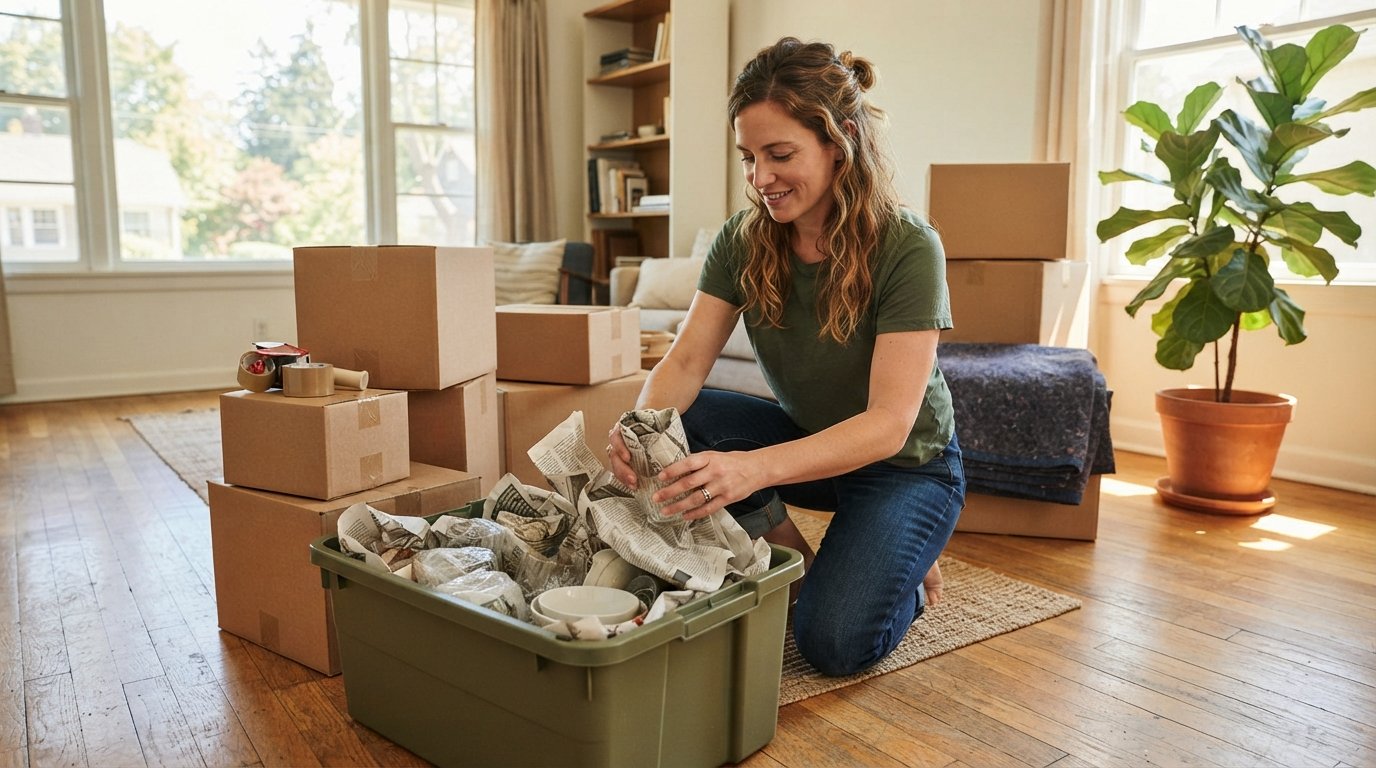
- Recycled paper padding: Crumpled newspaper (with soy-based ink) or recycled kraft paper works well for cushioning. You can also buy recycled paper void-fill.
- Corrugated inserts: Use leftover cardboard to create custom dividers for boxes of glasses or plates.
- Fabric and linens: Wrap fragile items in towels, t-shirts, or blankets you are already moving. This saves space and eliminates the need for paper.
- Biodegradable packing peanuts: Made from cornstarch or wheat, they dissolve in water and are safe for home composting.
When using these materials, apply the same packing principles as with conventional supplies: layer cushioning on the bottom and top of each box, wrap each fragile item individually, and avoid overpacking. For extra protection, place heavier items at the bottom of the box and lighter ones on top. Many eco friendly wraps are just as effective as plastic, but you may need to use a bit more volume to achieve the same shock absorption. Test a small box first to gauge how much padding you need.
If you are hiring professional packers, ask whether they offer green packing options. Some moving companies now provide recycled or biodegradable materials as part of their service. When requesting quotes, specify your preference for eco friendly supplies. Platforms like Moving.Homes can connect you with movers who specialize in sustainable packing practices. Get connected with movers who can help with eco friendly packing materials and reuse options for moving by requesting a free quote.
Where to Source Free or Low-Cost Boxes and How to Verify Condition
Cardboard boxes are the workhorse of moving, and you can often find them for free with a little effort. Here is how to source used boxes without sacrificing quality:
- Check local retailers: Liquor stores, grocery stores, and electronics shops receive merchandise in sturdy boxes and are usually happy to give them away. Call ahead to ask when they typically unload shipments.
- Join community groups: Nextdoor, Facebook Marketplace, and local Buy Nothing groups frequently have moving boxes listed for free. Post a request specifying the sizes you need.
- Ask friends and neighbors: People who have recently moved often have leftover boxes cluttering their garage. A quick message can save you a trip to the store.
- Visit recycling centers: Some municipalities allow residents to take boxes from recycling drop-off points. Check with your local waste management facility.
- Use online marketplaces: Craigslist and Freecycle are good sources for free moving supplies, including boxes, bubble wrap, and packing paper.
Before using any free box, inspect it carefully. Look for signs of water damage, crushed corners, or pest activity. Avoid boxes that have held food or chemicals, as odors and residues can transfer to your belongings. Reinforce the bottom with packing tape if needed. For heavy items, double-box or use a plastic bin. By verifying condition, you ensure your free boxes are as reliable as new ones.
If you need specialized boxes (for mirrors, artwork, or electronics), consider renting or buying reusable crates instead. These are especially useful for items that require extra protection. When planning your move, factor in the time to collect free boxes; it can be a fun treasure hunt, but it requires a few weeks of lead time. For a comprehensive timeline, refer to our moving preparation checklists.
How to Recycle or Donate Packing Materials After Unpacking
Once the move is complete, the last thing you want is a pile of boxes and wrap taking over your new garage. Proper disposal is the final step in a sustainable move. Here is how to handle each type of material:
- Cardboard boxes: Flatten and recycle curbside if clean and dry. If they are still in good shape, offer them for free online or donate to a local moving company that reuses boxes.
- Plastic bins and crates: Return rented bins to the rental company according to the pickup schedule. If you purchased bins, keep them for storage or sell them to another mover.
- Biodegradable wraps: Check your local composting guidelines. Some bioplastics require commercial composting, while others can go in home compost. When in doubt, throw them in the trash (they will break down faster than conventional plastic).
- Packing paper and newspaper: Recycle curbside or use as mulch in the garden (avoid glossy inserts).
- Packing peanuts: If made from cornstarch, dissolve them in water or compost. Otherwise, many shipping stores accept clean peanuts for reuse.
Donating usable materials not only reduces waste but also helps others in your community. Schools, community centers, and local theaters often need boxes and padding for projects. Before you toss anything, post it in a local giveaway group. You will be surprised how quickly someone will pick up a stack of boxes. For items that cannot be reused, follow your municipality's recycling rules to ensure they are processed correctly.
If you are using a full-service moving company, ask if they have a materials take-back program. Some companies will collect used boxes and packing materials after unpacking and reuse them for future moves. This is especially common with eco conscious movers. When requesting quotes, inquire about their sustainability practices. For homeowners planning renovations alongside their move, consider consulting resources like ContractorHomeQuotes for project planning and cost estimates, as moving often coincides with home improvements.
Building a Circular Packing Strategy for Your Move
The most sustainable move is one that treats packing materials as a resource to be circulated, not discarded. By combining reusable bins, free cardboard, and biodegradable padding, you can create a system that minimizes waste and saves money. Start by decluttering before you pack: the less you own, the fewer materials you need. Then, source materials in order of preference: borrow or rent first, find free boxes second, and buy eco friendly new supplies only as a last resort. After the move, prioritize returning, donating, or recycling every item you used.
This circular approach also reduces the stress of packing because you are not scrambling to buy supplies at the last minute. Create a packing station with labeled zones for different materials, and keep a list of where each item will go after unpacking. Involve the whole family in the process; kids can help flatten boxes or sort materials for donation. By planning ahead, you turn a potentially wasteful task into an opportunity to practice sustainability and maybe even teach a few lessons along the way.
Finally, remember that professional help is available if you need it. Many moving companies offer packing services that include eco friendly materials and post-move material removal. If you are short on time or have a large home, hiring professionals can streamline the process while keeping your environmental impact low. Request a free quote from Moving.Homes to compare options and find movers who share your commitment to sustainability. With the right strategy, your move can be a model of efficiency and environmental responsibility.