
Do Movers Pack Clothes in Dressers? What to Expect
Do movers pack clothes in dressers? Discover what stays, what goes, and how to prepare your furniture to prevent damage and surprise fees.

By Jason Adams
You are staring at a bedroom dresser overflowing with clothes, and the moving truck arrives in three days. The question running through your mind is simple: do movers pack clothes in dressers, or do you need to empty every single drawer before they arrive? The answer depends on several factors, including the type of moving service you hire, the condition of your furniture, and the distance of your move. Understanding how professional movers handle dresser contents will save you hours of unnecessary work and help you avoid damaged belongings or surprise fees on moving day.
Most full-service moving companies will transport clothing inside dresser drawers under certain conditions. However, leaving everything in place without preparation can lead to broken drawers, scratched furniture, or crushed items. The key is knowing when it is safe to leave clothes in dressers, when you should pack them separately, and how to prepare your furniture so it arrives at your new home in the same condition it left.
How Professional Movers Handle Dresser Contents
When you hire professional movers, their approach to dresser drawers depends on company policy, the type of move, and the furniture itself. Many full-service movers allow lightweight clothing to remain in drawers because it saves time and reduces the number of boxes needed. However, they typically impose weight limits and require you to remove anything heavy or breakable. In our guide on full-service packing options, we explain how professional packers assess household items and decide what stays and what goes into boxes.
The reasoning behind these policies is practical. Dresser drawers are not designed to carry concentrated weight during a move. When a truck hits a bump or takes a sharp turn, heavy items shift inside the drawer and can break the drawer slides, crack the frame, or cause the entire dresser to tip. Lightweight clothing, on the other hand, acts as padding and generally stays in place without causing structural damage.
Another factor is the distance and terrain of your move. A local move across town involves less vibration and fewer sudden stops than a cross-country journey. For long-distance moves, many companies require all drawers to be emptied because the furniture will be loaded, unloaded, and possibly stored multiple times. The more handling your dresser undergoes, the greater the risk of damage from contents left inside.
Finally, consider the type of dresser you own. A solid wood antique dresser with dovetail joints can handle more weight than a particle board unit from a discount furniture store. If your dresser is already wobbly or has loose hardware, emptying it completely before the move is the safest choice. Professional movers will inspect your furniture and advise you on what is safe to leave and what must be removed.
What You Can Safely Leave in Dresser Drawers
If your moving company permits items to stay in dressers, you need to know exactly what qualifies as safe. Not all clothing and accessories are equal when it comes to surviving a move inside a drawer. The general rule is that only soft, lightweight items should remain, and they should not fill the drawer more than halfway.
Here are the items that are typically safe to leave in dresser drawers during a move:
- Soft clothing such as t-shirts, underwear, socks, and pajamas
- Lightweight sweaters and non-bulky knitwear
- Soft linens like pillowcases and lightweight blankets
- Lightweight accessories such as scarves and fabric belts
These items are safe because they are lightweight, flexible, and unlikely to shift dangerously during transport. They also provide a small amount of cushioning that can protect the drawer itself from internal movement. However, even these items should be packed loosely. Overstuffing a drawer creates pressure on the slides and frame, which can lead to cracks or complete failure when the dresser is lifted.
You should also consider the size and shape of the items. Bulky items like winter coats or heavy denim jeans take up significant space and add substantial weight. Even a few pairs of jeans can push a drawer past its safe weight limit. If you are unsure whether an item is too heavy, pick it up and imagine five or ten of them stacked together. If that mental image feels heavy, pack those items in a box instead.
What You Must Remove Before Moving Day
Certain items should never stay in dresser drawers during a move, regardless of what your moving company allows. These items pose risks to your belongings, your furniture, and potentially the movers themselves. Removing them before moving day is not optional if you want to protect your investment.
The following items must be removed from dressers before movers arrive:
- Heavy items such as books, shoes, boots, and thick denim
- Breakable items including jewelry boxes, glass containers, and electronics
- Valuables such as cash, passports, and important documents
- Liquids, cosmetics, and toiletries that could leak or spill
- Medications and anything you need immediate access to after the move
Heavy items are the primary concern because they can break drawer slides or cause the dresser to become top-heavy and unstable. When movers lift a dresser with heavy drawers, the weight distribution can shift unexpectedly, leading to dropped furniture or injured workers. Breakable and valuable items should travel with you or be packed in dedicated boxes with proper padding. Liquids can leak during transport, staining clothing and damaging the wood inside the dresser.
Medications and essential items deserve special mention. Even if your move is short, you may not have immediate access to your dresser when you arrive at your new home. The truck might be unloaded hours later, or your furniture could be placed in storage temporarily. Keep medications, phone chargers, and daily essentials in a personal bag that stays with you throughout the move.
Preparing Dressers for a Move: Step-by-Step
Proper preparation is the difference between a dresser that arrives intact and one that shows up with cracked drawers and scratched sides. Even if you are leaving clothes inside, you need to take specific steps to secure the furniture and protect it during transport. These steps apply whether you are moving locally or across the country.
Follow this sequence to prepare your dresser for moving day:
- Empty all drawers completely and sort items into keep, donate, and discard piles.
- Decide which lightweight clothing will return to the drawers and which will go into boxes.
- Place lightweight clothing back into drawers, filling each drawer no more than halfway.
- Remove all knobs, handles, and hardware that can be easily detached, and place them in a labeled bag.
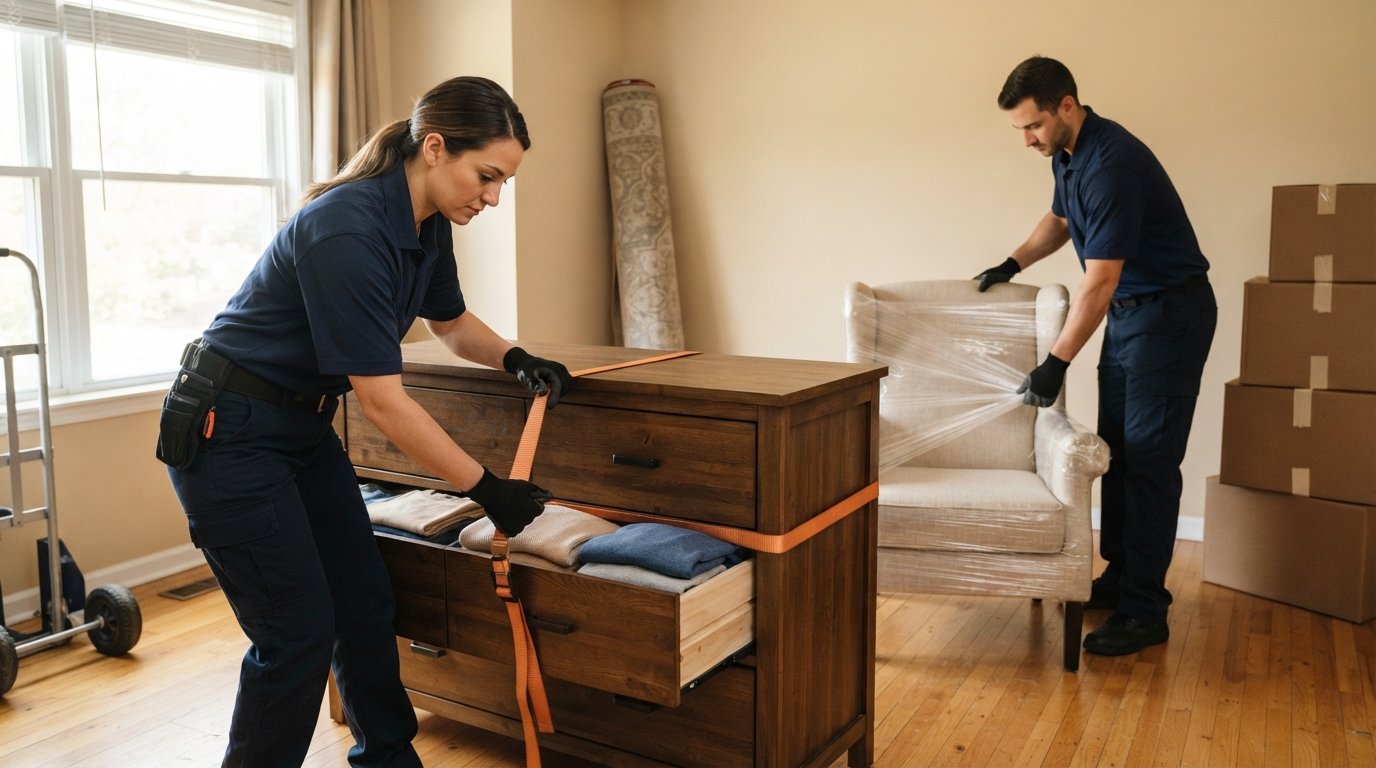
- Secure each drawer with stretch wrap, packing tape, or bungee cords to prevent them from sliding open.
- Wrap the entire dresser in moving blankets or stretch wrap to protect the surface from scratches.
- Use furniture straps or rope to secure the dresser to the wall of the truck during loading.
Removing hardware is often overlooked but can prevent significant damage. Drawer pulls and knobs stick out from the furniture and can catch on walls, doorframes, or other items during the move. If you cannot remove them, wrap them individually with bubble wrap and tape to cushion any impact.
Securing drawers is equally important. Even lightweight clothing can cause a drawer to slide open if the dresser is tilted during loading. Once a drawer opens, it can swing freely and break, or its contents can spill throughout the truck. Stretch wrap around the entire dresser is the most reliable method, but tape applied directly to the drawer edges works as a backup. Just be careful with tape on finished wood, as it can pull off the finish when removed.
When to Consider Professional Packing Services
If the thought of sorting, packing, and preparing every dresser feels overwhelming, professional packing services can handle the entire process for you. Many moving companies offer partial or full packing services where trained packers come to your home, assess your belongings, and pack everything according to industry standards. This option is especially valuable for large homes, senior relocations, or anyone with a tight timeline.
Professional packers know exactly how to handle dresser contents. They will remove heavy items, wrap furniture properly, and secure everything for transport. They also bring their own supplies, including boxes, tape, bubble wrap, and furniture blankets. While there is an additional cost for packing services, the time savings and reduced risk of damage often justify the expense, particularly for long-distance or international moves.
When requesting quotes for your move, ask specifically about packing services and how the company handles dresser contents. Some companies include basic packing in their estimates, while others charge by the hour or by the number of boxes used. Understanding these details upfront helps you budget accurately and avoid surprise charges on moving day. For homeowners who need reliable moving professionals, platforms like FreeQuotes.Contractors connect you with pre-vetted local contractors for a range of home services, ensuring you find qualified help for your relocation needs.
Weight Limits and Furniture Safety
Understanding weight limits is critical when deciding what stays in your dresser. Most dressers are designed to hold a certain amount of weight in their drawers during normal use, but moving introduces forces that far exceed everyday conditions. The jarring motion of a truck, the tilting of furniture during loading, and the stacking of items in the truck all place stress on the dresser frame.
A general guideline is to keep each drawer under 15 to 20 pounds when leaving items inside. This is roughly the weight of a few t-shirts, some socks, and a light sweater. Anything heavier should be packed separately. If you are unsure about the weight, use a bathroom scale to check. Weigh yourself holding the drawer contents, then subtract your weight to get the total. It may seem excessive, but preventing a broken dresser is worth the extra effort.
Furniture safety also extends to the movers themselves. A dresser that is too heavy or top-heavy can cause injuries when lifted. Professional movers are trained to handle heavy furniture, but they rely on you to prepare items properly. If a mover arrives and finds drawers packed with heavy items, they may refuse to move the dresser until it is emptied, which delays your entire move.
Alternatives to Leaving Clothes in Dressers
If you are still uncertain about leaving clothes in dressers, there are several alternatives that offer similar convenience with less risk. These options work well for renters, apartment dwellers, or anyone who wants to minimize the chance of furniture damage during a move.
One popular method is the wardrobe box. These tall boxes come with a hanging rod, allowing you to transfer clothes directly from your closet to the box without removing them from hangers. Wardrobe boxes protect your clothing from dust and wrinkles, and they are easy for movers to stack and transport. They do take up more space than dresser drawers, but they eliminate the risk of drawer damage entirely.
Another option is to use vacuum-sealed bags for soft items. These bags compress clothing into flat, compact packages that can be packed into boxes or suitcases. Vacuum-sealed bags are particularly useful for bulky items like winter coats and comforters, which take up significant space in dressers. Just be aware that compressing certain fabrics for extended periods can cause wrinkles, so plan to unpack and hang these items soon after arrival.
For a hybrid approach, consider leaving only the lightest items in dressers and packing everything else in boxes. This balances convenience with safety, allowing you to save some packing time while reducing the risk of damage. Communicate your plan with your movers so they know what to expect and can advise you on any adjustments.
Communicating With Your Moving Company
Every moving company has its own policies about dresser contents, and those policies can vary based on the type of move, the distance, and the specific movers assigned to your job. Before moving day, have a direct conversation with your moving company about their expectations. Ask whether they allow clothing to remain in drawers, what weight limits they enforce, and whether they provide any packing assistance.
Getting these answers in writing, whether in your moving contract or a follow-up email, protects you from misunderstandings. If a mover tells you one thing on the phone and another on moving day, having documentation helps resolve disputes quickly. It also gives you a clear checklist of what you need to do before the truck arrives.
If you are still in the process of selecting a moving company, use the quote request process to ask about dresser policies. Reputable movers will answer your questions clearly and provide guidance based on their experience. Companies that dodge questions or give vague answers may not be the best choice for your move. Taking the time to find the right mover now saves stress and money later.
Moving is a significant life event, and every detail matters. Understanding how movers handle dresser contents is just one piece of the puzzle, but it is a piece that can save you time, protect your furniture, and reduce the overall stress of relocation. Whether you leave lightweight clothing in drawers or pack everything into boxes, proper preparation ensures your belongings arrive safely at your new home.