

American Telemedicine Association (ATA) Guide: 2026 Standards
Explore the American Telemedicine Association (ATA) Guide to understand telemedicine standards, improve care quality, and avoid surprise costs.

By Mark Johnson
Telemedicine has moved from a niche convenience to a core part of modern healthcare, but navigating its rules and best practices can feel overwhelming. The American Telemedicine Association (ATA) Guide serves as the essential roadmap for patients, providers, and policymakers alike, offering clarity on everything from licensure to reimbursement. Whether you are a remote patient seeking reliable care or a practice looking to expand its digital footprint, understanding these standards is the first step toward safe and effective virtual visits. In this comprehensive guide, we break down the ATA's framework, its practical applications, and how you can use it to improve your healthcare experience.
What Is the American Telemedicine Association (ATA) Guide?
The American Telemedicine Association (ATA) Guide is a collection of best practices, ethical guidelines, and operational standards developed by the leading nonprofit organization dedicated to advancing telehealth. Founded in 1993, the ATA works with clinicians, technology companies, and government agencies to create a cohesive framework that ensures quality and equity in virtual care. The guide is not a single document but a living resource that evolves with technological advancements and regulatory changes, making it the definitive reference for telemedicine standards.
For patients, the guide translates complex medical and legal jargon into actionable advice. It explains what to expect during a virtual visit, how to verify a provider's credentials, and your rights regarding data privacy. For providers, it offers detailed protocols on patient consent, documentation, and cross-state practice. By aligning with the ATA's recommendations, healthcare organizations can reduce liability, improve patient outcomes, and streamline their telehealth programs.
Why Telemedicine Standards Matter for Your Health and Wallet
Telemedicine standards are not just bureaucratic red tape; they directly impact the quality and cost of your care. When a provider follows ATA guidelines, you benefit from consistent clinical practices, which reduces the risk of misdiagnosis or fragmented treatment. Moreover, standards around billing and coding ensure that you are not overcharged for virtual services. The ATA advocates for transparent pricing and parity between in-person and telehealth visits, which means you can often avoid surprise out-of-pocket expenses.
One of the most significant advantages of ATA-compliant telemedicine is its potential to lower healthcare costs. By eliminating travel time and reducing no-show rates, virtual visits are often more affordable than traditional appointments. Additionally, the ATA's push for reimbursement parity has led many insurance plans to cover telehealth at the same rate as in-person care. This financial protection is especially critical for chronic condition management, where regular check-ins are necessary but costly. Understanding these standards empowers you to make informed decisions and avoid billing errors that could strain your budget.
Core Components of the ATA's Telemedicine Framework
The ATA's framework is built on several pillars that ensure telemedicine is safe, accessible, and effective. These components serve as the foundation for any high-quality virtual care program, whether you are a solo practitioner or a large health system.
- Provider Credentialing and Privileging: The ATA requires that all telehealth providers are properly licensed and credentialed in the state where the patient receives care. This protects you from unqualified practitioners.
- Informed Consent: Before any virtual visit, you must receive clear information about the technology used, the potential risks, and your privacy rights. The ATA mandates that consent is documented and easily understandable.
- Standardized Documentation: Medical records from telehealth encounters must be as thorough as in-person visits, including history, physical exam findings, and treatment plans. This ensures continuity of care if you see another provider.
- Data Security and Privacy: ATA standards align with HIPAA regulations, requiring encrypted communication channels and secure storage of your health information.
These components work together to create a trusted environment. For example, when a provider uses ATA-compliant credentialing, you can be confident that they have the necessary training and legal authority to treat you. Similarly, standardized documentation means that your primary care physician can easily access your telehealth records, preventing dangerous medication interactions or redundant tests. The ATA also emphasizes the importance of patient-centered care, ensuring that your preferences and cultural needs are respected throughout the virtual encounter.
How to Choose a Telemedicine Provider Using ATA Guidelines
Selecting a telemedicine provider can be daunting, but the American Telemedicine Association (ATA) Guide provides a clear checklist to simplify the process. Start by verifying that the service uses licensed, board-certified physicians and that they are authorized to practice in your state. Many reputable platforms list their providers' credentials on their websites, but you can also check your state's medical board database for additional confirmation.
Next, evaluate the platform's security features. The ATA recommends that all video consultations occur over encrypted connections, and you should have access to your health records after the visit. Ask about the provider's protocol for handling medical emergencies, such as when a condition requires in-person care. Finally, review the pricing structure carefully. ATA-compliant services will provide upfront cost estimates and accept insurance plans that cover telehealth. If a platform is vague about costs or refuses to share its privacy policies, consider it a red flag.
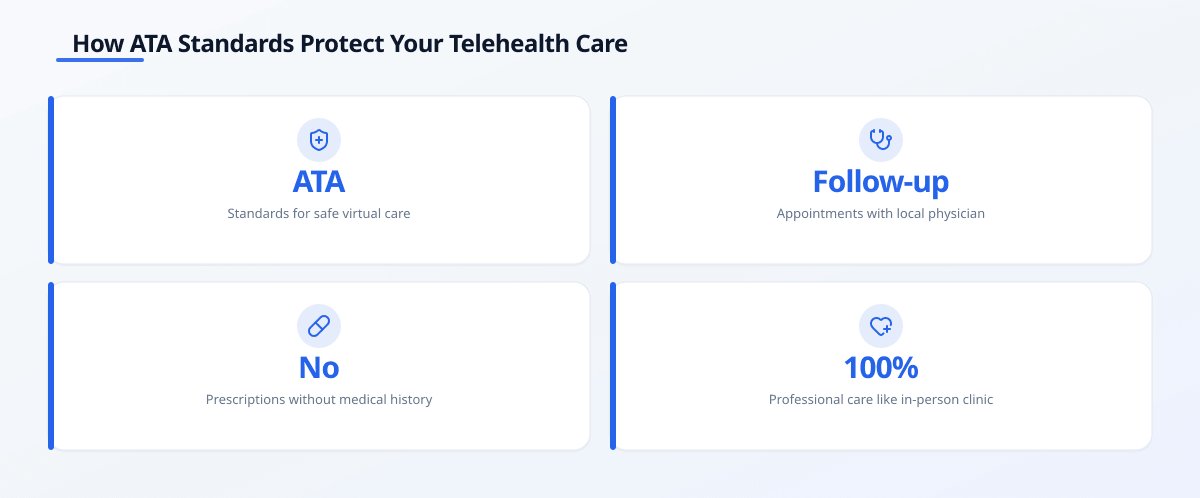
By using these guidelines, you can avoid subpar services that may compromise your health. For instance, a provider that offers virtual prescriptions without a proper medical history is likely violating ATA standards. On the other hand, a service that schedules follow-up appointments and coordinates with your local physician demonstrates a commitment to holistic care. The right telemedicine provider will treat you with the same professionalism and attention as an in-person clinic, giving you peace of mind about your healthcare decisions.
Practical Steps for Implementing ATA Standards in Your Practice
Healthcare providers looking to adopt telemedicine can use the ATA Guide as a blueprint for success. The first step is to conduct a needs assessment to identify which services are best suited for virtual delivery, such as chronic disease management, mental health counseling, or follow-up consultations. Next, invest in a reliable telehealth platform that complies with HIPAA and offers features like secure messaging, e-prescriptions, and video conferencing.
- Develop a Telehealth Policy: Create a document that outlines your workflow, patient eligibility criteria, and protocols for handling technical issues. The ATA provides templates that you can adapt to your practice.
- Train Your Staff: Ensure that all team members, from front desk to clinicians, understand how to use the technology and communicate effectively with remote patients.
- Obtain Malpractice Coverage: Verify that your insurance policy includes telehealth services, as some plans require separate riders.
- Establish a Quality Improvement Plan: Regularly review patient outcomes and satisfaction surveys to identify areas for improvement, aligning with ATA's emphasis on continuous evaluation.
Implementing these steps may require an upfront investment, but the long-term benefits are substantial. Telemedicine can increase patient retention, reduce no-show rates, and expand your reach to rural or underserved populations. Moreover, adherence to ATA standards positions your practice as a leader in innovative care, which can attract new patients who value convenience without sacrificing quality.
Telemedicine and Relocation: Ensuring Continuity of Care
Moving to a new city or state often disrupts your healthcare routine, but telemedicine offers a solution. The American Telemedicine Association (ATA) Guide highlights how virtual visits can bridge the gap between your old and new providers, ensuring that you do not miss essential follow-ups or medication refills. When you move, you can schedule a telehealth appointment with your current physician to discuss your relocation and receive recommendations for local specialists.
However, state licensure laws can complicate this process. Many states require providers to be licensed in the state where the patient is physically located, which means your long-term physician may not be able to treat you after you move. The ATA advocates for interstate compacts that allow providers to practice across state lines, but until these are universally adopted, you may need to find a new local provider. In the meantime, telemedicine can provide transitional care, such as urgent consultations or specialty advice, while you establish a new medical home.
For those moving long distances, this guide on how telemedicine is reshaping American healthcare access offers additional insights into maintaining your health during a transition. By understanding the ATA's recommendations, you can proactively manage your medical records, transfer prescriptions, and schedule virtual appointments that align with your moving timeline. This proactive approach reduces stress and ensures that your health remains a priority amidst the chaos of relocation.
Future Trends and Updates to the ATA Guide
The ATA continuously updates its guidelines to reflect emerging technologies and evolving patient needs. One of the most anticipated developments is the integration of artificial intelligence (AI) into telemedicine platforms. From automated symptom checkers to AI-assisted diagnostics, these tools can enhance clinical decision-making, but they also raise ethical questions about data bias and accountability. The ATA is working on standards that address these concerns, ensuring that AI complements rather than replaces human judgment.
Another growing area is remote patient monitoring (RPM), which uses wearable devices to track vital signs and chronic conditions. The ATA's 2026 guide emphasizes the importance of integrating RPM data with electronic health records, allowing providers to make proactive adjustments to treatment plans. Additionally, the guide is expanding its coverage of telehealth for mental health services, recognizing the surge in demand for virtual therapy and counseling. As healthcare continues to digitize, the ATA remains at the forefront of creating ethical, equitable, and accessible telemedicine standards.
For patients, these updates mean more personalized and efficient care. Imagine a scenario where your smartwatch detects an irregular heartbeat and automatically alerts your cardiologist, who then schedules a virtual consultation within minutes. This level of proactive care is only possible when providers adhere to robust standards that prioritize data accuracy and patient consent. By staying informed about the ATA's evolving guidelines, you can take advantage of these innovations while safeguarding your health information.
Navigating the world of telemedicine is easier when you have a trusted guide. The American Telemedicine Association (ATA) Guide offers a comprehensive framework that protects patients, supports providers, and promotes innovation. Whether you are a patient seeking affordable care or a professional aiming to expand your practice, embracing these standards ensures that you are part of a healthcare system that values quality, safety, and accessibility. As telemedicine continues to evolve, staying aligned with the ATA's recommendations will help you make the most of this transformative technology.